In the verdant foothills just 1 km off Gangtok's National Highway, near the Military Police Golai (MP Golai) outpost, lies Samdur village. Nestled on the southern fringe of an army area, this collection of 5 hamlets - each averaging 50 households - shares an all-weather road with the northern Army Supply Depot. This vital road serves as a clear demarcation: northwards lie the army areas with their steep, construction-unfriendly slopes; southwards sprawl the civilian hamlets. Despite its proximity to Gangtok and official listing under the Ranipool Municipal Ward as ‘urban’, government piped water remains an elusive dream. For generations, residents have depended on age-old spring water sources - a natural bounty now under siege from human activity, climate variability, and faltering recharge mechanisms.
In the verdant foothills just 1 km off Gangtok's National Highway, near the Military Police Golai (MP Golai) outpost, lies Samdur village. Nestled on the southern fringe of an army area, this collection of 5 hamlets - each averaging 50 households - shares an all-weather road with the northern Army Supply Depot.
Historical Dependence on Spring Water
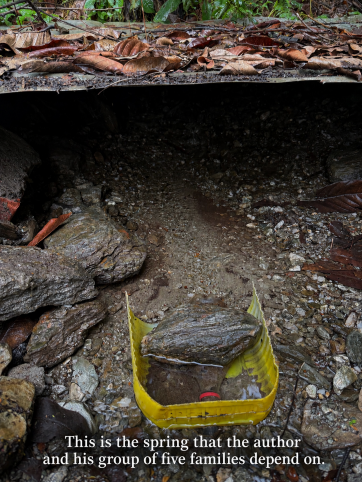
Samdur's water narrative stretches back far beyond modern infrastructure. I relocated here in 2010, but lifelong residents describe an unbroken ancestral reliance on these springs. Emerging from the army area's immediate northern slopes - topographically too rugged for barracks, depots, or any substantial buildings - these sources have reliably sustained the hamlets of Samdur village. Even during harsh winters, when flows naturally diminish, no severe drinking water crises have etched themselves into collective memory. “We've shared news of every hardship across these hamlets”, notes a neighbour whose family has tended the same spring for decades, “but water scarcity has never been among them”.
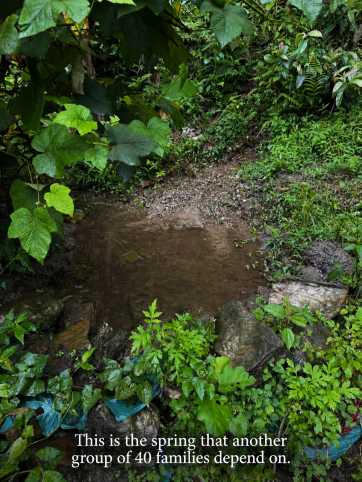
This reliability stands in stark contrast to Gangtok's recurrent monsoon predicaments. Landslides frequently disrupt the capital's primary reservoirs, such as Rateychu and Selep, plunging the city into shortages. Yet, in Samdur, household tanks continue to overflow. During the 2023 city-wide water alert, triggered by extensive slide damage, our springs gushed steadily, filling reservoirs and underscoring the quiet resilience of these rural peripheries. Community management systems enhance this bounty: in my case, five families share a single spring directly through a network of plastic pipes, bypassing intermediate storage. More distant groups channel water into harvest tanks funded by area MLAs, redistributing it equitably via gravity-fed lines. Maintenance remains a communal chore - often unblocking pipes clogged by monsoon mud twice a week - yet the water is free, a "gift of nature" requiring only collective labour and vigilance.
Community management systems enhance this bounty: in my case, five families share a single spring directly through a network of plastic pipes, bypassing intermediate storage. More distant groups channel water into harvest tanks funded by area MLAs, redistributing it equitably via gravity-fed lines. Maintenance remains a communal chore - often unblocking pipes clogged by monsoon mud twice a week - yet the water is free, a "gift of nature" requiring only collective labour and vigilance.
Solty, who is the caretaker of a private land, echoes these sentiments. “Repairs are a nuisance, sure, but shortages? Never crossed our path”, he remarked recently during our short conversation that we had while I was returning from dropping my son at the school bus stop. His family, like many others, including mine, has invested in plastic pipes and tanks - procured sometimes through the area MLA’s largesse but more often from personal pockets. In some hamlets, groups even split into two factions, each accessing distinct springs, blending grassroots self-help with sporadic political support. This patchwork has kept taps trickling since time immemorial, even as residents born here attest to its continuity from their grandparents' era.
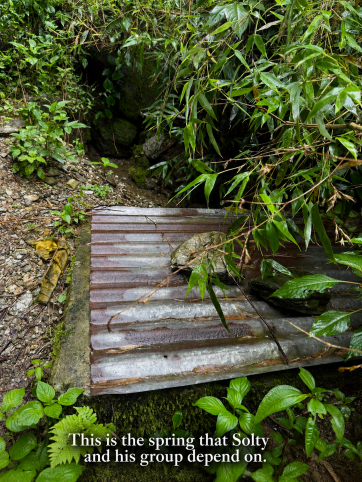
Solty, who is the caretaker of a private land, echoes these sentiments. “Repairs are a nuisance, sure, but shortages? Never crossed our path”, he remarked recently...His family, like many others, including mine, has invested in plastic pipes and tanks - procured sometimes through the area MLA’s largesse but more often from personal pockets. In some hamlets, groups even split into two factions, each accessing distinct springs, blending grassroots self-help with sporadic political support. This patchwork has kept taps trickling since time immemorial, even as residents born here attest to its continuity from their grandparents' era.
The Army's Unintended Gift: Topography and Springs
The army area's unique layout has fortuitously preserved these resources. Steep northern gradients, perforce dismissed as wasteland unsuitable for development, host the majority of springs untouched by construction. Had these slopes been more amenable to building, reinforced concrete (RCC) structures would likely have overtaken them, as witnessed elsewhere in the army area and across Sikkim. Instead, civilians retain access via the shared all-weather road, piping water southward across the invisible border. This default arrangement, shielded by topography rather than policy, has endured for decades, allowing hamlets like those in Samdur to thrive without formal intervention.
Yet, irony permeates the situation. Samdur qualifies as urban under municipal boundaries, lying mere kilometres from Gangtok's bustling core, but it lacks any reliable piped supply. A few years ago, an Asian Development Bank (ADB)-sanctioned project brought hope: pipes were laid, and a harvest tank was constructed at the village's higher reaches. Lines snaked downhill toward homes, promising integration into the urban grid. But the flow? Non-existent. Homes in my hamlet and others remain unconnected; the scheme stalled amid bureaucratic snags, leaving a bitter irony - urban classification, a title without the corresponding amenities.
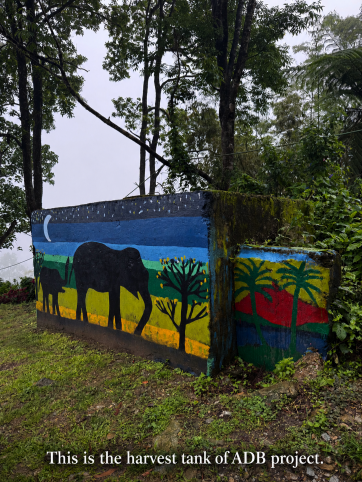
Samdur qualifies as urban under municipal boundaries, lying mere kilometres from Gangtok's bustling core, but it lacks any reliable piped supply. A few years ago, an Asian Development Bank (ADB)-sanctioned project brought hope: pipes were laid, and a harvest tank was constructed at the village's higher reaches. Lines snaked downhill toward homes, promising integration into the urban grid. But the flow? Non-existent. Homes in my hamlet and others remain unconnected; the scheme stalled amid bureaucratic snags, leaving a bitter irony - urban classification, a title without the corresponding amenities.
Emerging Threats: Diminishing Flows and Human Pressures
Recent years have exposed troubling cracks in this system. Spring yields have noticeably waned, appearing visibly less vigorous and signalling an existential risk. “Springs are dying year by year”, has become a familiar refrain among villagers, uttered not cynically but based on empirical observation of daily flows. Multiple factors converge to exacerbate the decline.
“Springs are dying year by year”, has become a familiar refrain among villagers, uttered not cynically but based on empirical observation of daily flows. Multiple factors converge to exacerbate the decline.
Foremost among them are upstream army constructions. What were once temporary galvanised iron (GI) sheet sheds have given way to a frenzy of RCC buildings - complete with extensive excavations and earthworks that disrupt aquifers and subterranean flows. These activities push water tables lower, throttling natural recharge. Before 2015, spring outputs held relatively steady; since then, declines have accelerated, correlating directly with the construction boom.
Climate change compounds these anthropogenic pressures. Sikkim's springs, primarily recharged by monsoon rains, glacial melt, and forest aquifers, now falter under erratic precipitation patterns, prolonged dry spells, and rising temperatures. State government reports document 30-50% yield drops in eastern Himalayan springs since 2000, a trend mirrored precisely in Samdur. Diminished snowpack in upstream catchments starves high-altitude feeders, while even minor deforestation - whether army-related or incidental - erodes soil moisture retention. No severe shortages have materialised yet, buffered by our small scale and conservative usage, but the trajectory alarms residents as populations inch upward and Gangtok's tourism spillover adds peripheral strain.
Community Ingenuity Amid Government Gaps
Where grand schemes falter, residents demonstrate remarkable ingenuity. MLA grants occasionally fund tanks and pipes, but hamlet groups shoulder the rest: rotational repair schedules, equitable distribution protocols, and emergency fixes. My five-family quintet manages its spring directly, minimising losses; harvest-dependent clusters in other hamlets rotate maintenance duties, trekking to unclog monsoon blockages through muddy paths. The reward? Pure, free water, untainted by treatment chemicals.
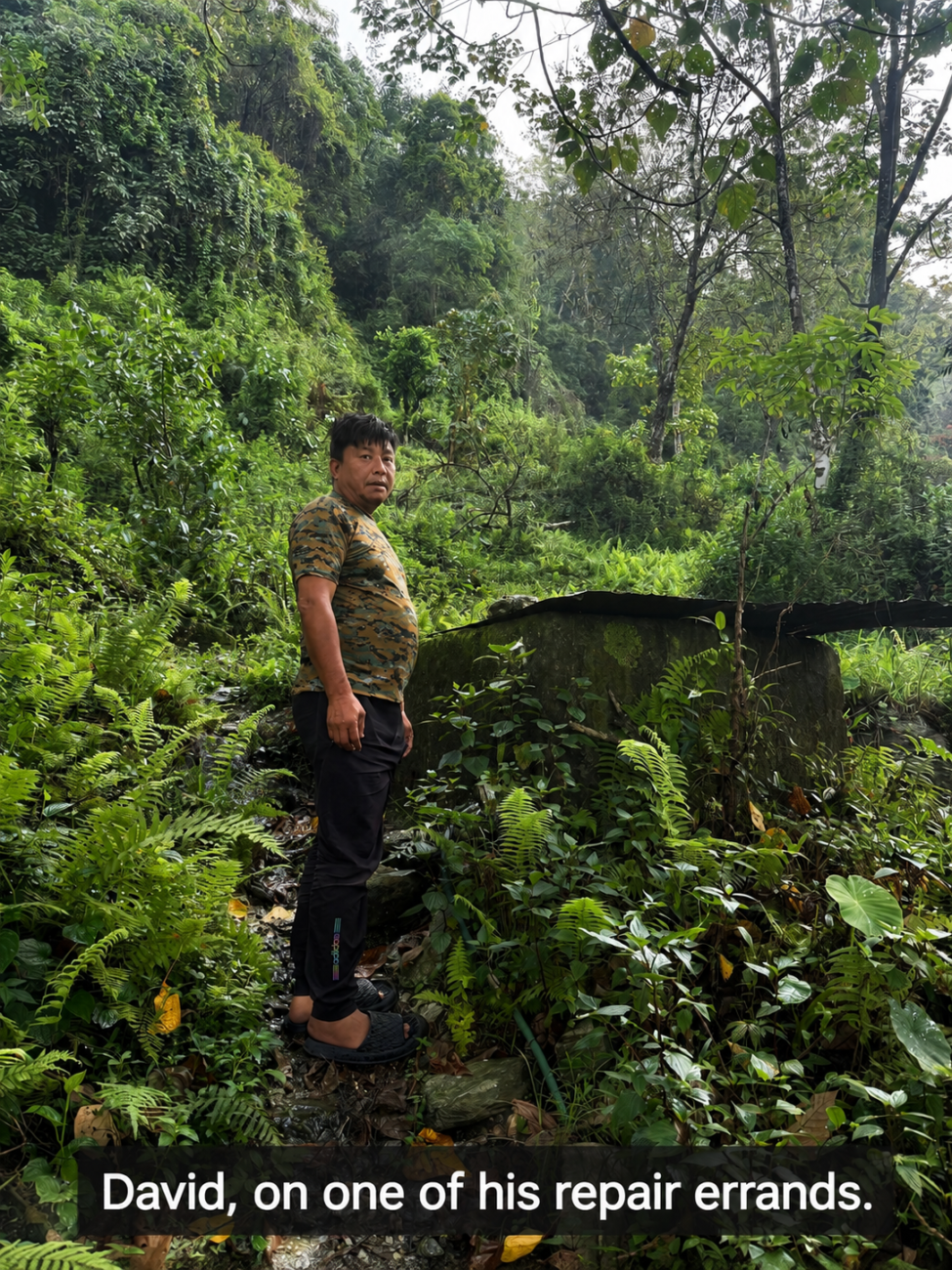
One such stalwart is David - real name Dawa Tamang, but barely anyone recognises that; "David” echoes universally throughout the village, let alone our hamlet. A bulky Tamang lad, he single handedly cleared a major landslide blockage last July, spending hours knee-deep in slurry while others “sent prayers”.
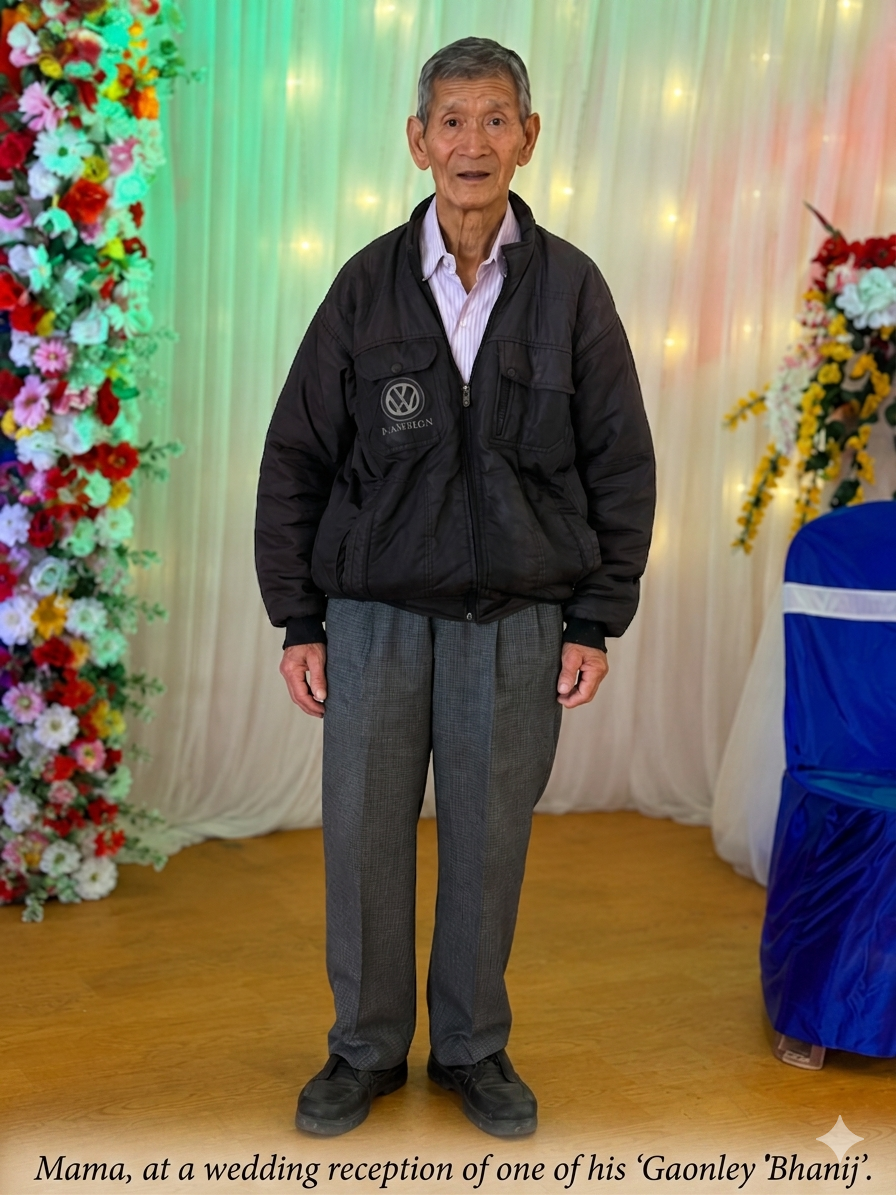
Then there's Mama, actually uncle to one village boy but dubbed "Mama" by all, for all practical purposes, the vernacular “Gaonley Mama” village father figure. His real name is Chandra Bahadur Rai, but hardly anyone recalls that name. With his battered toolkit and endless yarns, he orchestrates rotas, mediating squabbles over pipe shares. Last monsoon, I joined them on a dawn repair: hacking roots from our intake pipe, we bantered through the muck, emerging triumphant with restored flow.
In Samdur, informal Dzumsa-like structures have emerged organically around figures like David and Mama, proving adaptable and scalable within our modest hamlets. Yet, as springs fade, the limits of communal effort become stark: labour-intensive repairs cannot reverse hydrological decline indefinitely.
This approach echoes North Sikkim's venerable ‘Dzumsa’ traditions - village councils that self-govern resources through consensus and custom. In Samdur, informal Dzumsa-like structures have emerged organically around figures like David and Mama, proving adaptable and scalable within our modest hamlets. Yet, as springs fade, the limits of communal effort become stark: labour-intensive repairs cannot reverse hydrological decline indefinitely.
Policy Ironies and Pathways Forward
Samdur's proximity to Gangtok lays bare profound absurdities. Tagged as urban yet chronically underserved, it exemplifies peri-urban neglect in Sikkim's development narrative. The ADB project’s aborted pipes symbolise systemic failures: funds sanctioned, half-built infrastructure abandoned, and zero delivery to end-users. State water plans, overseen by the Public Health Engineering Department (PHED), prioritise Gangtok's core despite mandates for 24/7 supply across urban wards.
There is a proverb: “There is always darkness beneath the lamp”. A lamp may illuminate the room around it, yet the small circle directly beneath its flame often remains in shadow. Samdur village, in many ways, lives within that shadow cast by the bright lamp of Gangtok.
There is a proverb: “There is always darkness beneath the lamp”. A lamp may illuminate the room around it, yet the small circle directly beneath its flame often remains in shadow. Samdur village, in many ways, lives within that shadow cast by the bright lamp of Gangtok. We are only a few kilometres from the National Highway, and our hamlets fall officially under the Ranipool Municipal Ward. On paper, we belong to the orbit of the city. In lived reality, however, Samdur occupies a quieter and more uncertain edge - close enough to witness development, yet distant enough to remain only partially touched by it.
The story of our roads captures this contradiction most clearly. The only dependable all‑weather road in the area was built not by the state government but by the army authorities. It runs along the southern boundary of the military land, almost like a line separating two worlds. The villagers must still climb upward to reach it, for the hamlets themselves lie scattered lower down the slopes. Once one leaves that road behind, the terrain changes quickly into narrow footpaths, mud tracks, and unfinished stretches that become difficult during the monsoon. Years ago, work began on a small road project for one of the hamlets. Even today, it remains incomplete, suspended between promise and abandonment. Other hamlets continue without any direct motorable access at all.
Electricity, too, arrives in Samdur with hesitation. The power lines are present, but during the early mornings and evenings, when demand increases, the voltage weakens so much that ordinary appliances falter into silence. Bulbs dim unexpectedly. Induction cooktops flicker. A microwave hesitates before refusing to start. In all fairness, water presents a different picture, though. For generations, the springs around Samdur have sustained the hamlets with remarkable generosity. Even during winter, severe shortages have been rare. Because of this, the absence of a formal piped water system cannot be described only as neglect. The reliability of the springs created a kind of quiet self‑reliance among the villagers. Without the pressure of an acute crisis, demands for large‑scale intervention never gathered urgency. In this sense, nature itself softened the edge of political necessity.
Yet roads and electricity belong to a different category altogether. They depend not on the moods of springs or seasons, but on planning, sustained investment, and administrative attention. And perhaps that is why the old proverb still lingers in conversation here. The darkness beneath the lamp is not some ancient curse or irreversible condition. It exists because the light has not yet fully reached there. Samdur’s story is therefore less about grievance than about a visible imbalance. It is an emphatic affirmation of the belief that places standing closest to the glow should not remain unseen forever.
Practical pathways forward exist if pursued with resolve. While Samdur continues to face shortcomings in other essential services, such as roads and electricity, as elaborated earlier, the scope of this discussion remains with water, because water is where both the village’s vulnerabilities and possibilities become most visible. Reviving the ADB infrastructure with local oversight - empowering hamlet committees for last-mile connections - could bridge the gap swiftly. Army-civilian collaboration offers promise: joint watershed protection agreements to restrict upstream builds near critical springs. Rooftop rainwater harvesting, already mandated in Sikkim's building bylaws, remains underutilised; my own home's tank overflows unused during monsoons, a missed opportunity for supplementation.
Practical pathways forward exist if pursued with resolve. While Samdur continues to face shortcomings in other essential services, such as roads and electricity, as elaborated earlier, the scope of this discussion remains with water, because water is where both the village’s vulnerabilities and possibilities become most visible. Reviving the ADB infrastructure with local oversight - empowering hamlet committees for last-mile connections - could bridge the gap swiftly. Army-civilian collaboration offers promise: joint watershed protection agreements to restrict upstream builds near critical springs. Rooftop rainwater harvesting, already mandated in Sikkim's building bylaws, remains underutilised; my own home's tank overflows unused during monsoons, a missed opportunity for supplementation.
Proven interventions nearby provide blueprints. Climate-resilient recharge pits - trenches that divert surface runoff back into aquifers - have boosted yields in Rumtek village. Community micro-grids, powered by solar pumps to elevate spring water into elevated tanks, enhance reliability without grid dependence. On the policy front, reclassifying peri-urban hamlets like Samdur for priority funding and integrating them into Gangtok's master plan would align rhetoric with reality. Sikkim's ‘Jal Jeevan Mission’, targeting 100% piped coverage by 2024, has left Samdur lagging.
A Turning Point at Golai
Samdur's springs, once seemingly eternal, now signal urgent peril. Their decline - scarred by construction, stressed by climate - threatens a foundational lifeline for 200-250 households across our hamlets. Yet, community grit persists: from Solty's steadfast stewardship to our relentless repair rotations, it buys precious time. As Gangtok's crisis-prone taps falter annually, Samdur's hamlets quietly offer counter-lessons in nature-endowed, human-maintained resilience. At MP Golai's symbolic turn, we stand at a hydrological crossroads. Sustain these springs through vigilant protection and innovative augmentation, or risk urban shadows engulfing rural oases. For now, water still flows - thinner, but freely. Tomorrow demands a clear vision: blending ancestral tradition, accessible technology, and unyielding tenacity to quench Samdur's thirst for the long term.
At MP Golai's symbolic turn, we stand at a hydrological crossroads. Sustain these springs through vigilant protection and innovative augmentation, or risk urban shadows engulfing rural oases. For now, water still flows - thinner, but freely. Tomorrow demands a clear vision: blending ancestral tradition, accessible technology, and unyielding tenacity to quench Samdur's thirst for the long term.
Nyima Tenzing holds a PhD in Economics. His research interests lie at the intersection of history, politics, and economics, where he explores the complex and often overlapping dynamics that shape social and economic realities. He maintains Nyima Tenzing-Writing & Stories on Facebook. He can also be reached at nyima.tenzing@gmail.com



The Govt. seriously needs to look into these basic necessities . As a resident of Samdur all I can say is that there has hardly been any change when we shifted here in 2011 till now .Road conditions are the same and no PHE water connection till now.