The Scent of Survival
"आमा छ्या, कस्तो गनाएको!" ("Mom, yuck, it stinks!")
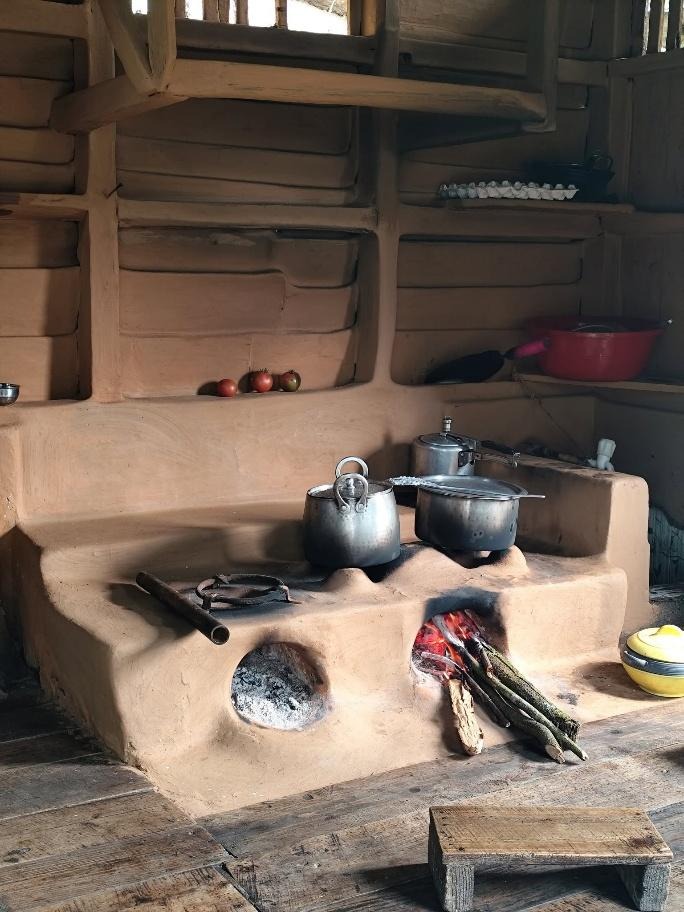
I crinkled my nose, pulling my face back in immediate, dramatic disgust. My lips curled, my eyes watering slightly as the sharp, fermented smell hit my face the moment I stepped into the kitchen. There, in a shadowy corner near the mud Chulha (hearth), sat a dark, leaf-wrapped bundle. Standing beside it was my mother. Unbothered by the pungent cloud, she simply looked up at my theatrical display, her face softening into a warm, knowing smile. She reached down with steady, practiced hands, gently turning the warm leaves as if tending to a fragile secret, completely at home in an aroma that made me want to bolt back out toward the open veranda.
It was my early, dramatic introduction to Kinema. It was in a small, quiet moment in a single kitchen, in Kurseong, but like many childhood memories, its true meaning took years to settle. Standing years later, on a distant balcony, that memory unwinds into something far deeper than a childhood reaction. What felt like an unbearable stink, was, in reality, a reassuring proof that while the cold winter winds swept down the spurs of the hills, our Kitchen was alive. It was warm and working.
Across the Eastern Himalayas, this relationship between climate, home and survival forms a shared ecological baseline. The geography of these hills offers little room for waste. When the heavy monsoon recedes and cold winter settles over the mountains, fresh produce quickly becomes a luxury and thus to live on these slopes, the indigenous communities of the regions, including the Kirat (Rai and Limbu), Lepcha, and Bhutia, developed an intimate and long-lasting relationship with time, smoke and natural micro-flora.
Across the Eastern Himalayas, this relationship between climate, home and survival forms a shared ecological baseline.
Vernacular Science of the Hearth
The traditional Himalayan pantry is built on a deceptively simple ecological premise: when fresh greens and grains are abundant during brief harvest season, harvest them and when they are scarce, transform them so they outlast the season. In the high-altitude rural homes of Sikkim, Kalimpong and the Darjeeling Hills, this transformation was never achieved through the modern synthetic preservation or refrigeration. Instead, it relied on a localized alignment with natural microbial cycles, solar energy and wood smoke.
While urbanization across Darjeeling, Gangtok and Kalimpong has gradually replaced the traditional mud hearth (Chulha) with modern LPG stoves, the Chulha remains the ancestral prototype of these entire culinary systems, radiating heat to dry crops and creating the exact micro-climate needed to culture wild yeasts and fungi. Even in homes, where physical hearths have given way to modern counters, the lingering logic of the Chulha endures whenever a jar of Gundruk is set out to catch the sun or a warm bundle of Kinema is carefully insulated in a cozy corner. Tracing these foodways across Sikkim, Kalimpong and Darjeeling Hills reveals that the Chulha, whether as an active rural stove or an enduring urban memory, was a site of profound vernacular science.
Gundruk and Kinema
This essay follows two of the pantry’s most distinct techniques: Gundruk and Kinema, not as a complete inventory of the mountain kitchen but as two entry points into one shared ecological logic.
When the post-monsoon harvest yields its abundance of mustard greens (rayo ko saag) or radish leaves (mula ko saag), nothing goes to waste. Wilted in the sun, then packed tight into jars under heavy stones, the greens sour into gundruk as their pH quietly drops (Tamang, 2016). The real test comes at drying: late-autumn nights bring a damp cold that can undo days of careful curing, so the half-dried mats are carried back indoors each evening to rest near the Chulha's residual warmth. Buried and cured the same patient way, crushed radish root becomes sinki.
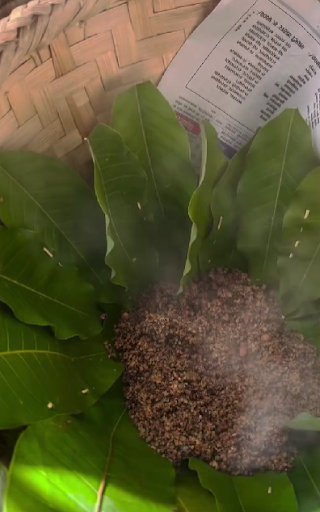
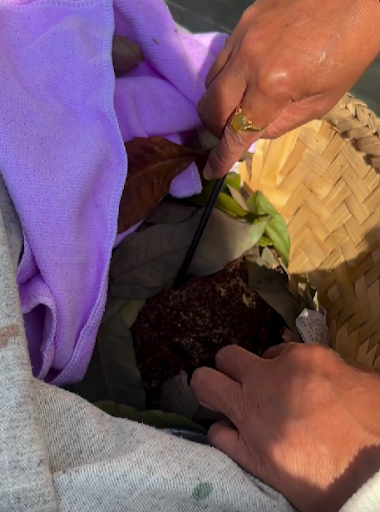
Kinema works the opposite chemistry. Soaked, boiled soybeans, crushed and mixed with a pinch of clean wood ash, are wrapped in oak or banana leaf and tucked into a warm nook against the Chulha's masonry- the ash nudging the mixture just alkaline enough for Bacillus subtilis to thrive, though no one making it has ever needed to know the bacterium's name to get it exactly right.
Fluid Geographies and the Politics of the Kitchen
The chulha does not recognize a border, and neither does the food that comes out of it. Modern cartography draws a firm administrative line between the states of Sikkim and the hill districts of Kalimpong and Darjeeling, but the ridges rising above the Teesta and Rangeet rivers were never drawn with those divisions in mind. Sikkim remained a separate Himalayan kingdom until its merger into the Indian Union in 1975 (Sinha, 1975; Lama, 1994), while Darjeeling and Kalimpong came under colonial administration across the nineteenth century- Darjeeling ceded in 1835, Kalimpong following in 1865 (Besky, 2014). A household in Kurseong or Mirik ferments its soybeans with the same underlying microbial logic and method as a kitchen in Namchi, Geyzing or Pedong, but rarely in identical form. The leaf a Kalimpong household reaches for to wrap its Kinema maybe Oak, a household two ridges over in West Sikkim may reach instead for fern or banana leaf, whatever grows nearest. Life in borderlands like this one has always run on networks more flexible than the territorial lines drawn across them, as the scholar Willem van Schendel has observed of the wider Himalayan margins (van Schendel, 2002).
The chulha does not recognize a border, and neither does the food that comes out of it.
This shared culinary grammar carries a political weight that the region's current reality makes hard to ignore, and it shows up in the same shape on both sides of the line. On the Darjeeling side, tea carries a Geographical Indication tag guaranteeing its origin and exclusivity (Geographical Indications of Goods [Registration and Protection] Act, 1999). On the Sikkim side, Large Cardamom and Dalle Khursani chili carry the same protection. Gundruk and Kinema, made and eaten identically on both sides of a border neither food recognizes, have never received anything comparable from either government.
This shared culinary grammar carries a political weight that the region's current reality makes hard to ignore, and it shows up in the same shape on both sides of the line.
On the Darjeeling side, that gap has a number attached to it. Tea plantation workers in the hills earn roughly ₹202 a day, a figure that sits starkly below the state's own minimum agricultural wage floor. Tea estate land itself isn't owned by the people who work it, held instead under a leasehold system dating back to the 1955 Land Reforms Act- the state retains ownership; the company merely leases the ground it grows on. Cultural standing offered from above, while the harder claim land a family can actually call its own - stays withheld: this is recognition without redistribution, to borrow the philosopher Nancy Fraser's phrase for exactly this kind of incomplete justice (Fraser, 1995).
That fragility compounds each time the hills go still. Decades of the Gorkhaland movement have brought recurring bandhs to these same tea estates - the kaman, as they're known here - total shutdowns, sometimes lasting weeks, once, in 2017, stretching to 104 days before it was called off (Associated Press, 2017). A pantry of fermented Gundruk and Kinema, laid in before the trouble starts, is one of the few things a called strike cannot touch. The politics of these hills may divide over what Gorkhaland should ultimately mean, but the hearth has never once waited to find out.
Sikkim's version of the same incomplete recognition looks different in its details but familiar in its shape. Limbu and Tamang communities already hold Scheduled Tribe status in both Sikkim and West Bengal, recognition secured under a 2002 constitutional amendment (Scheduled Castes and Scheduled Tribes Orders [Amendment] Act, 2002). What remains outstanding is a separate list entirely: eleven sub-tribes in Darjeeling and twelve in Sikkim still petitioning for that same recognition, with Sikkim's chief minister personally coordinating with Darjeeling's representatives to press both sets of claims together ("Sikkim, N Bengal Leaders Unite," 2024). Two governments, two different mechanisms of withholding, the same underlying pattern.
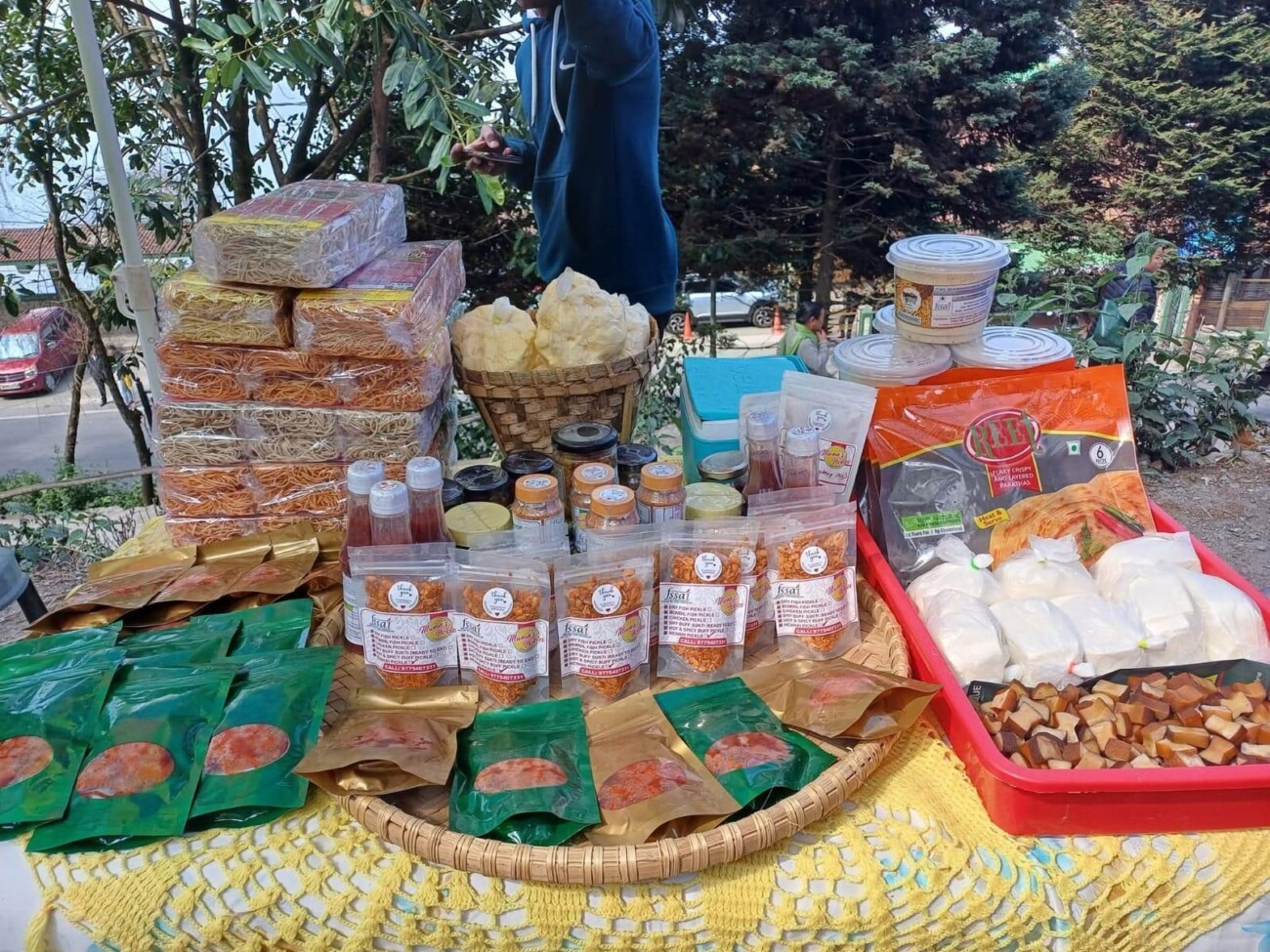
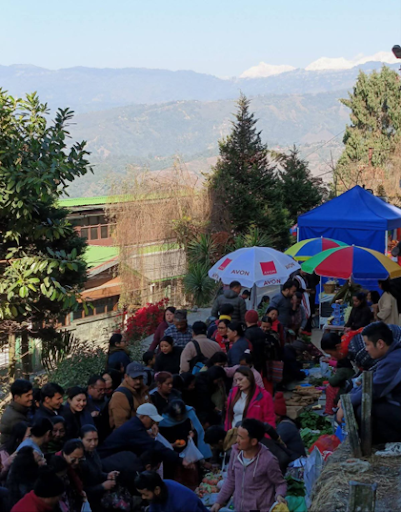
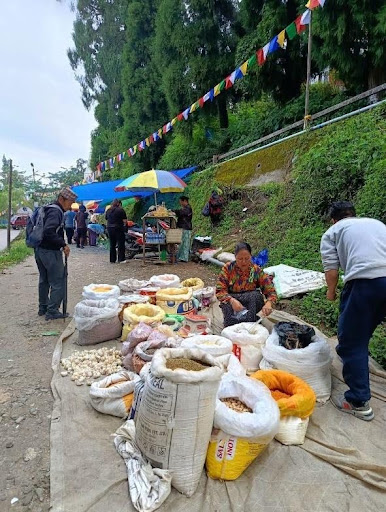
If the state manages recognition from above while withholding welfare on both sides of this border, the region's haats are the countermove, and they always have been. Rangpo and Jorethang, both in Sikkim, and Kalimpong's own Thursday market on the Bengal side, moved hill produce between valleys long before any of them were formal state boundaries. The Sunday Gorkha Haat carries that legacy forward today, and increasingly through women's hands. Many of its stalls are organized through self-help groups, the same collective savings-and-credit model that has become the primary vehicle for rural women's economic participation across India (Raghunathan et al., 2019) including, by some accounts, among tea garden women in this very district, women otherwise confined to wage labor on someone else's land. The kinema sold at a Sunday stall is, for many of them, the first income they have ever earned that no employer's ledger touches.
Unseasonal Rainfall and a Broken Season
Every technique described so far in this essay, this ecological logic, depends on a single,unspoken assumption, that the mountains would keep their appointments.
None of this was guesswork, as the previous sections have argued. It was precision. But precision of this kind carries a hidden cost, it only works if the climate keeps its side of arrangement. It increasingly does not.
The Hindu Kush Himalaya Assessment found that the region has warmed at a rate nearly matching, and in places exceeding, the global average (Wester et al., 2019; Krishnan et al., 2019). The scale of what that warming can unleash was made brutally clear even as this essay was being written: in late August 2026, a glacier collapse near Nepal's border with Tibet killed hundreds and left well over a thousand people missing, a stark reminder that the instability in Sikkim and Bengal is not a local misfortune but a single, region-wide system coming under strain. At the household level, what a food microbiologist calls a viable range of temperature and humidity is, at the hearth, simply "the right week." When that week arrives wet, the biology does not forgive the delay. Greens left too long in unseasonal humidity rot before they can ferment.
“It was so sunny in the morning; by two in the afternoon, it was pouring," my mother told me over the phone. "केही त हुँदैन आजकाल," she said. Nothing goes right these days.
Her frustration points to something larger than one ruined batch of greens: a mountain climate that no longer keeps the rhythm this whole architecture was built around. Dashain, in my memory, was always a bright, cloudless thing - marigolds, kites, and monarch butterflies drifting lazily over the cosmos flowers my mother grew along the fence. And always, without fail, the dashain kira - the small, rust-red insect that seemed to arrive with the festival itself, appearing on grass blades. I haven't seen one in years. Somewhere in the last decade, Dashain started arriving wet instead - kites grounded and the butterflies simply absent. It is a small, personal instance of something ecologists have a colder name for: phenological mismatch.
Her frustration points to something larger than one ruined batch of greens: a mountain climate that no longer keeps the rhythm this whole architecture was built around.
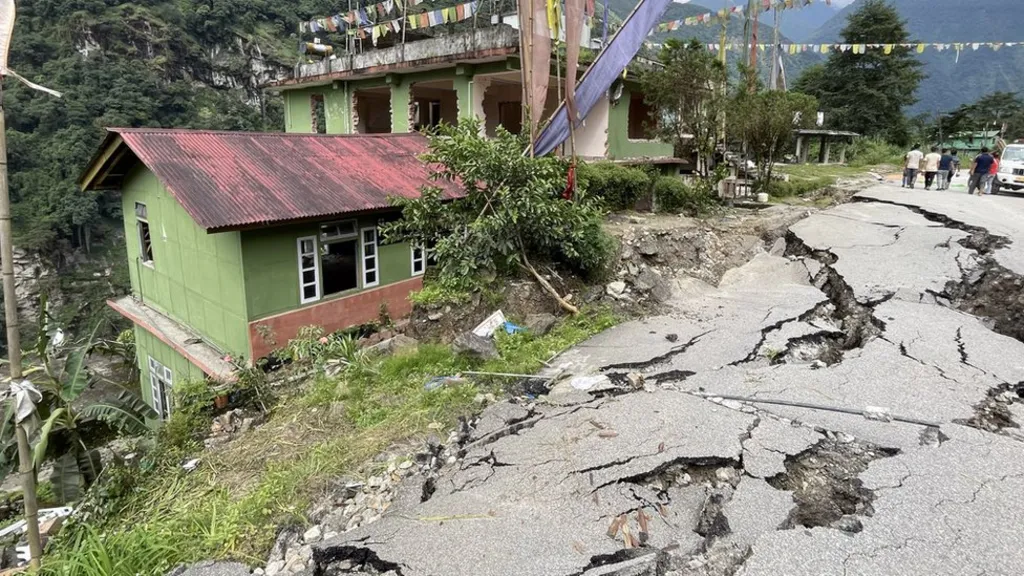
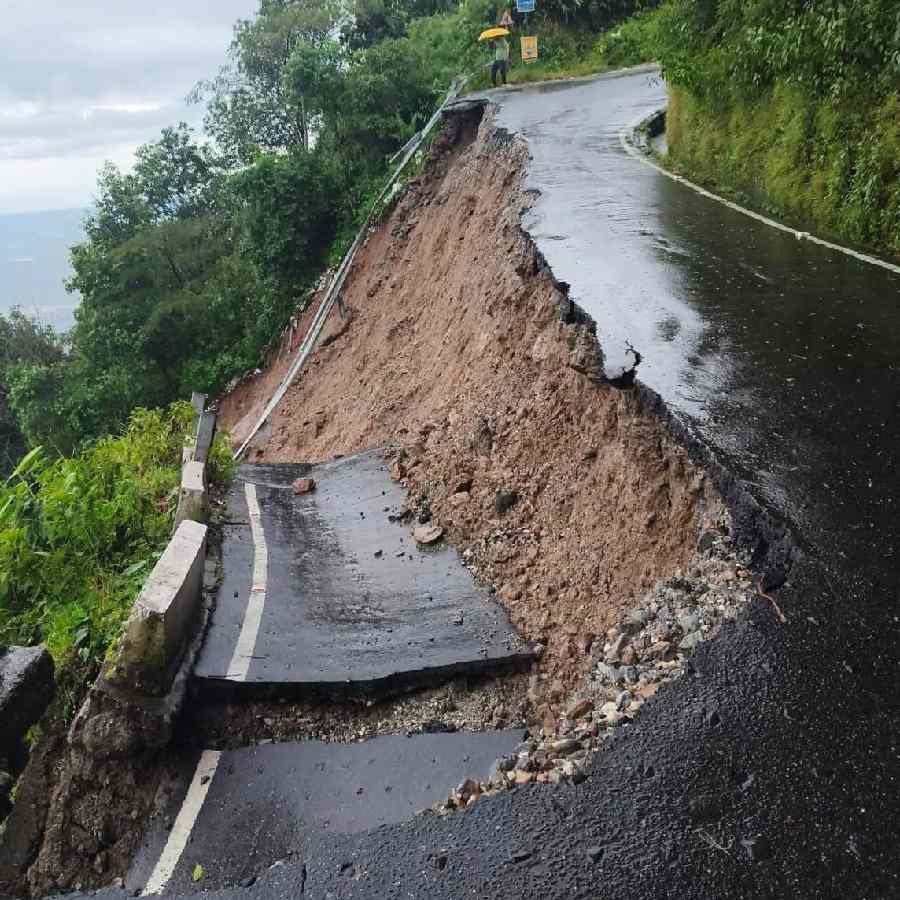
In October 2023, a glacial lake outburst above North Sikkim killed fifty-five people, according to the state's own post-disaster assessment, and wiped-out vital infrastructure including the Teesta III dam (SSDMA, 2023). In October 2025, torrential rain across Mirik, Kurseong, and Kalimpong collapsed the Dudhia bridge and forced the closure of NH 10 - the very corridor that connects the hills to the plains ("West Bengal Floods," 2025).
This is where the climate disruption stops being a story only about a mismatched harvest and becomes the story of the market itself. A haat cannot open if the road to it has washed out. The disruption is not only ecological but economic, severing a household’s income from its harvest as surely as it severs one hill town from another. What is at risk, then, is not a single harvest but the archive this essay opened with, a knowledge that cannot be reprinted once its conditions change, only practiced back into existence against a climate, and a road network that no longer offer the cues they once did.
What the Hearth Remembers
When you stand beside the Chulha in a mountain kitchen, whether in a rain slicked village in West Sikkim, a terraced farmstead in Kalimpong, or a quiet wooden home in Kurseong, you realise that memory in the Eastern Himalayas is an active, living technology. The mud and stone Chulha was never merely a domestic stove, it was the heart of the mountain home. The logic of the Chulha was never confined to one household, or one state, it repeats itself, with local accents, across landscapes. And now, for the first time in generations, that inherited system faces a threat it was never built to negotiate, not human error, but a climate that no longer keeps the appointments this whole architecture of survival was calibrated against. What is at stake, together, is not nostalgia for a taste, but a distributed, hyper-local ecological literacy and the resilience of a people already relearning it under stress.
Even as sleek and modern cooktops have claimed their place in our kitchen, the Chulha is never cast aside, quietly tended, because some flavors and some warmth simply refuse to be cooked on a gas flame. So, when homesickness hits me in a far distant city, I find myself calling home, slightly embarrassed to want this badly and saying:
“आमा, किनेमा पठाइदिनु न?”
(Mom, please send me some Kinema.)
References
Associated Press. (2017, September 27). Indian protesters end strike in Darjeeling after 104 days.
Besky, S. (2014). The Darjeeling distinction: Labor and justice on fair-trade tea plantations in India. University of California Press.
Fraser, N. (1995). From redistribution to recognition? Dilemmas of justice in a "post-socialist" age. New Left Review, 212, 68–93.
Geographical Indications of Goods (Registration and Protection) Act, 1999.
Krishnan, R., Shrestha, A. B., Ren, G., et al. (2019). Unravelling climate change in the Hindu Kush Himalaya: Rapid warming in the mountains and increasing extremes. In P. Wester, A. Mishra, A. Mukherji, & A. B. Shrestha (Eds.), The Hindu Kush Himalaya assessment (Chapter 3). Springer International Publishing.
Lama, M. P. (Ed.). (1994). Sikkim: Society, polity, economy, environment. Indus Publishing.
Rai, D. C., & Sarkar, A. K. (2016). Traditional fermented beverages of the Himalayan region. Journal of Ethnic Foods, 3(2), 96–102.
Raghunathan, K., Kannan, S., & Quisumbing, A. R. (2019). Can women's self-help groups improve access to information, decision-making, and agricultural practices? The Indian case. Agricultural Economics, 50(5), 567–580.
Sikkim, N Bengal leaders unite to demand tribal status for 12 left-out communities. (2024, October 7). The Statesman.
Sikkim State Disaster Management Authority (SSDMA). (2023). Post disaster needs assessment: Glacial lake outburst flood, Sikkim 2023.
Sinha, A. C. (1975). Politics of Sikkim: A sociological study. Thomson Press.
Scheduled Castes and Scheduled Tribes Orders (Amendment) Act, 2002 (Act No. 10 of 2003).
Tamang, J. P. (2016). Ethnic fermented foods and beverages of India. Springer India.
Thapa, N., & Tamang, J. P. (2015). Functionality and therapeutic values of fermented foods. In J. P. Tamang (Ed.), Health benefits of fermented foods and beverages (pp. 111–168). CRC Press.
van Schendel, W. (2002). Geographies of knowing, geographies of ignorance: Jumping scale in Southeast Asia. Environment and Planning D: Society and Space, 20(6), 647–668.
West Bengal floods: Death toll rises to 28. (2025, October). Outlook India.
Wester, P., Mishra, A., Mukherji, A., & Shrestha, A. B. (Eds.). (2019). The Hindu Kush Himalaya assessment: Mountains, climate change, sustainability and people. Springer International Publishing.
Prayash Bantawa Rai hails from Kurseong, West Bengal, and holds a Master’s degree in International Relations from Jadavpur University, Kolkata. A 2024 Fellow with the Foundation for Universal Responsibility of HH the Dalai Lama, his research interests explore Himalayan borderland dynamics, exile politics, gender, and linguistic identity. He currently works as an educator in community development programs and is preparing to pursue his doctoral research.



Such a beautiful perspective. The way you've connected memory, culture, and the ecology of our hills is genuinely special. Thought-provoking and deeply rooted in where we come from.