“We grew with the land, it’s in our blood….
It feels like my culture is receding with the glaciers, with the land,”
- Cheyenne Ozînjâ θîhâ, one of the six artists on their journey to paint the Rocky Mountains, in the film Rockies Repeat (2021).
The spectre of climate change looms large across diverse spheres of our lives, demanding attention from every sector of society, including the arts, to confront the urgency of our shared environmental fate. The climatic changes are primarily driven by anthropogenic activities and years of carbon emissions. The consequences of climate change are far-reaching, including glacier melt, extreme weather events, and biodiversity loss.
A documentary film, Rockies Repeat (2021), offers a thought-provoking exploration of climate change through the lens of art. Set in the Canadian Rockies of Alberta and British Columbia, the film offers a unique perspective on climate change by utilising art as a means of perception and expression, its concerns resonating along the length of the wider Rocky Mountain range that stretches from Canada through the United States to New Mexico. This review aims to delve into the documentary's exploration of climate change, focusing on climate communication, the artist's perception, the indigenous communities' relationship with the landscape, and its broader connection to the Himalayan and mountain ecosystem.
Communicating Climate
A study by Feygina et al. (2010) identifies psycho-emotional barriers, such as denial and system-justification tendencies, that hinder people's willingness to engage with climate-related issues. It suggests that visual artworks may be more effective at addressing these barriers than verbal or written communication, as they allow viewers to interpret the message in a more personal and subjective manner (Roosen et al., 2017). Unlike other forms of communication, art may respect viewers' autonomy and allow them to draw their own conclusions, thereby enhancing motivation and behaviour change (Chatzisarantis & Hagger, 2009). In Rockies Repeat, the artists stand in front of the mountains and glaciers, discerning where a century after Catharine Robb Whyte (in the 1930s) captured the landscapes of the Rocky Mountains in her paintings. As the six female artists trek through the Rocky Mountains with crystal-clear waters, director Caroline Hedin’s storytelling shines as she brings to life the narratives of emerging female artists, painting a picture of how a changing climate has transformed those same vistas. Through interviews, visual imagery, and artistic interpretation, the film invites audiences to consider how human activities are reshaping the environment and the implications for future generations.
In climate narratives, there is a tendency to overlook loss and mourning in discussions of solutions, despite their heavy emphasis in narratives about the problem itself. Randall (2009) suggests that integrative climate communications should address the loss experienced by many individuals due to climate change, while also emphasising positive action. The film presents artwork, such as painting and glass art, as a means to help individuals acknowledge and navigate their sense of loss, facilitating a meaningful mourning process and aiding emotional resolution.
On Perceiving Climate Change
The environment has always been a source of inspiration for artists, and climate change has been a topic of interest since Palaeolithic cave representations. But let’s not forget that access to art and aesthetics is now a matter of privilege. In the 1920s, painter Catharine Robb's wealthy upbringing provided direct access to exceptional training and opportunities. She travelled across countries and continents exploring art and artwork. Married to an aspiring artist, Peter Whyte, in 1930, the couple moved to Banff National Park and spent some of the most memorable times of their lives painting the Rocky Mountains. The artists in the film, through their creative work, grapple with the complexities of change in the landscapes, expressing awe, concern, and urgency. The bright blue colours of the sky in Catherine’s painting are contrary to the hazy landscape that the artists perceive at present inviting viewers to see the world through artists' eyes, Rockies Repeat instils empathy, reflection, and a deeper appreciation of the interconnectedness of all life forms. The film often uses innovative metaphors, analogies, or narratives that climate communication still lacks, as many people still perceive climate change as an abstract issue with little immediate danger.
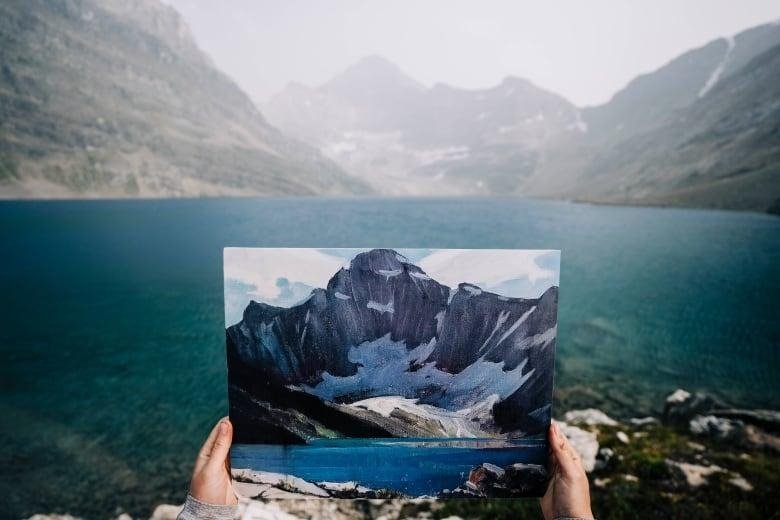
"Catharine Robb Whyte's original painting lines up with the current view of Lake McArthur in Yoho National Park," by V. North, 2021, CBC
Indigenous Communities and Their Affinity with the Landscape and Ecosystem
A notable aspect of Rockies Repeat is its exploration of the relationship between indigenous communities and the land. Indigenous people who have inhabited the Rocky Mountains region in Canada for thousands of years have developed deep connections to the landscape and its ecosystems. The narratives of the mountain communities evoke climate knowledge and spiritual beliefs from the people who have sustained harmonious relationships with the natural world, relying on its resources for survival and well-being.
The film delves into the challenges faced by indigenous communities in the wake of climate change, as narrated by indigenous artists, who explain how rising temperatures, melting glaciers, and altered precipitation patterns have threatened ways of life and disrupted ecosystems on which native people depend. Although traditional land-based cultures and spiritual practices continue to fuel global environmental debate, they have undergone significant changes due to human influence over the past century (Lepcha, 2021). Likewise, Linda Hogan says, "what once victimised us is now a special area of religious studies" (2013). One can wonder how indigenous ethos and environmental wisdom are being integrated into global efforts for sustainability. These mountain communities, like others, throughout the world, the Andes, the Himalaya, and the Arctic are expressing a need for healing, restoration, and wholesomeness.
Climate art in the Himalaya
Rockies Repeat emphasises the broader implications of climate change for the global community. While the documentary focuses on the Canadian Rockies of Alberta and British Columbia, its message resonates far beyond, reminding viewers that climate change is a universal challenge that requires collective action. By highlighting the interconnectedness of ecosystems, economies, and societies, the film addresses the importance of global cooperation and solidarity in addressing climate change.
Artists take a constructive approach to remind us of the importance of grassroots and restructuring modern systems from scratch.
This serves as a critical reminder of the power of art to illuminate complex issues, transcend the boundaries of language and inspire action. Through its exploration of climate change in the Rocky Mountains, the documentary invites viewers to consider their own relationship with the environment and the role they can play in shaping a more sustainable and just future.
The Himalayan region, being home to a plethora of biodiversity and ethnic communities, has its own story to tell. Started in 2023, the highland art exhibition in Ladakh, “Sā Ladakh”, goes beyond generating climate awareness by presenting outright climate optimism. It was recently held in August 2026, marking the third edition. The art exhibition aspires to create opportunities for local communities and foster relationships that will last long after the show has ended. Artists take a constructive approach to remind us of the importance of grassroots and restructuring modern systems from scratch.
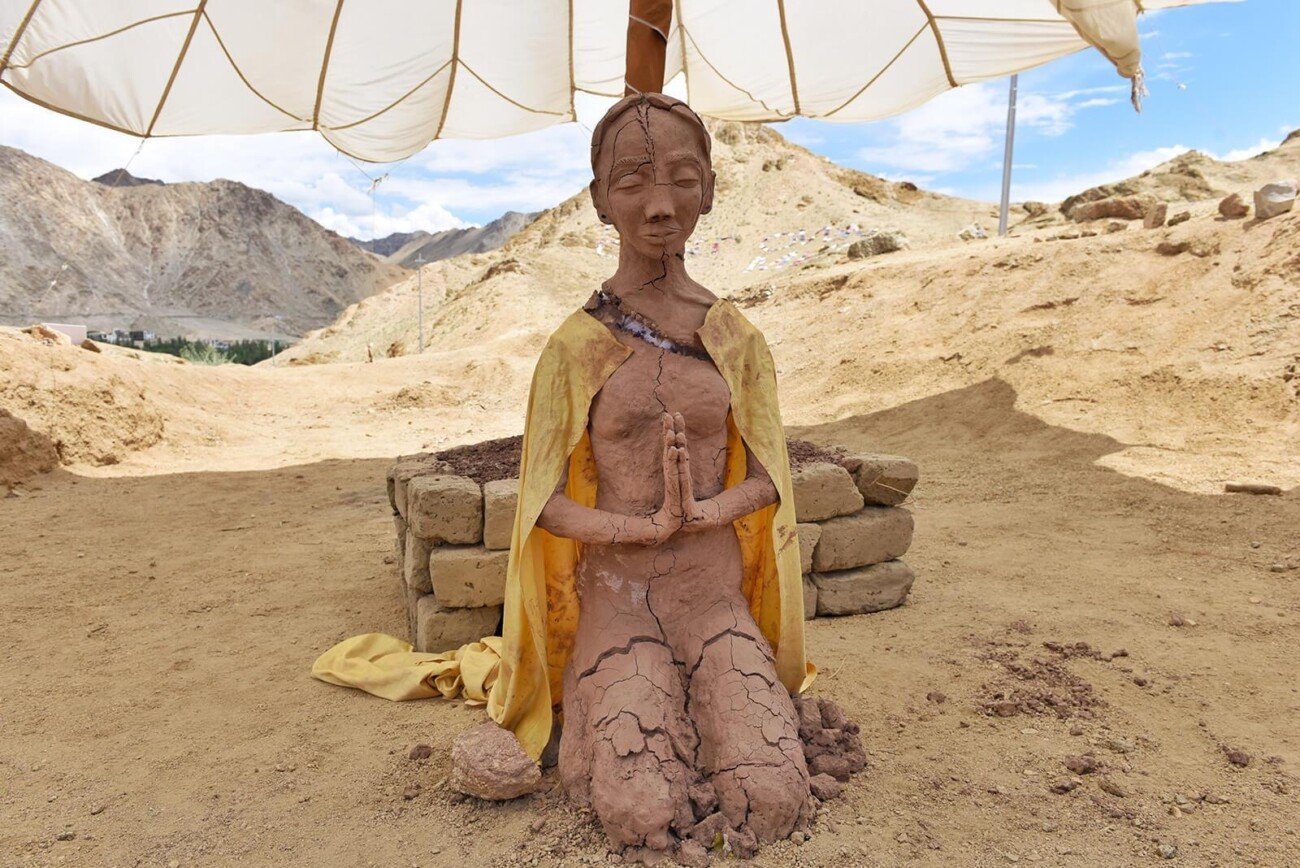
From "What if we prayed to the mountains?," by karma Sonam Tashi, 2023, as featured in Sā Ladakh, Stir World
An indigenous Lepcha artist, Alyen Foning, from Kalimpong, creates an art installation and a visual folk narrative that gives voice to the region's primary water body, the river Teesta. Her art creates a sense of her spiritual ties to the Himalayan mountains and rivers. Words will do very little justice to how she harmoniously blends textiles and the consonance of design to evoke our ecological connection to nature and her ancestral roots.
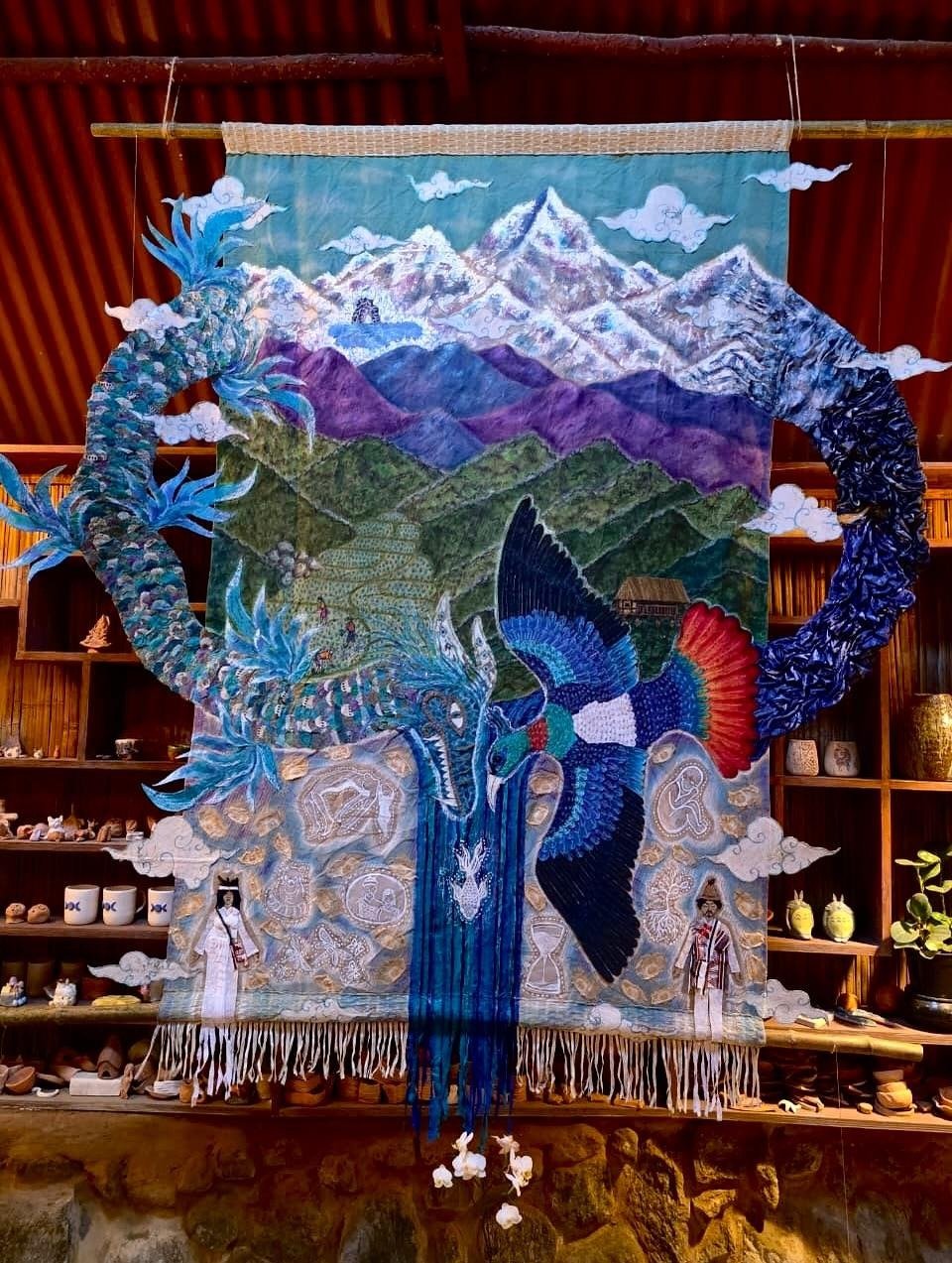
From "Remembering Teesta- The Sacred keeper of stories," by A. Foning, 2025, Instagram
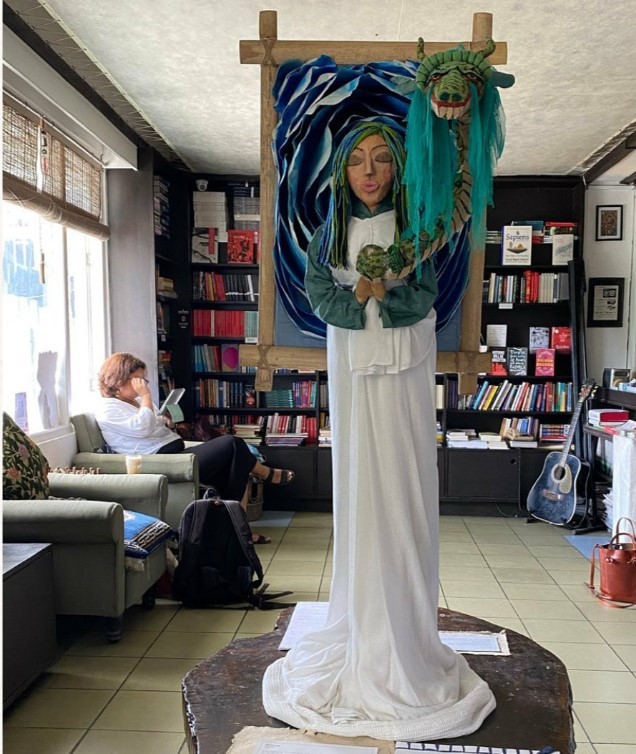
From "The Veil: Story of the Muun," by A. Foning, 2022, Instagram
In the highlands of Nepal, leaking roofs and rising damp have not only destroyed the historic Thanka art but also the cultural heritage tied to it. Journalist and filmmaker Tulsi Rauniyar (2024) captures the restoration of Thanka at the Gompas in Mustang, Nepal. Women, men, and younger people come together to restore the Thanka/s, which have now become part of their small income source.
The Artist's Perception, which, to the documentary's narrative, is the perspective of the featured artists, who serve as both observers and interpreters of the changing landscape. The glaciers are sacred, the heart and home of the perennial water source in our region. The recent catastrophic events in Nepal (2025) and Teesta (2023) in Sikkim and Darjeeling Himalaya have brought us to question the ever-growing anthropogenic encounters on who has to bear the brunt of climate change. The loss of lives, livelihoods, and where people were swept all away to the unknown in a region which is already economically vulnerable in the global south. The Lest We Forget: The Teesta Disaster by Darjeeling Himalaya Initiative is one such artistic representation and photo exhibition that took place in cold December of 2023 in Kalimpong and was hosted by the Shared Futures conclave in December of 2025 in Gangtok, Sikkim.
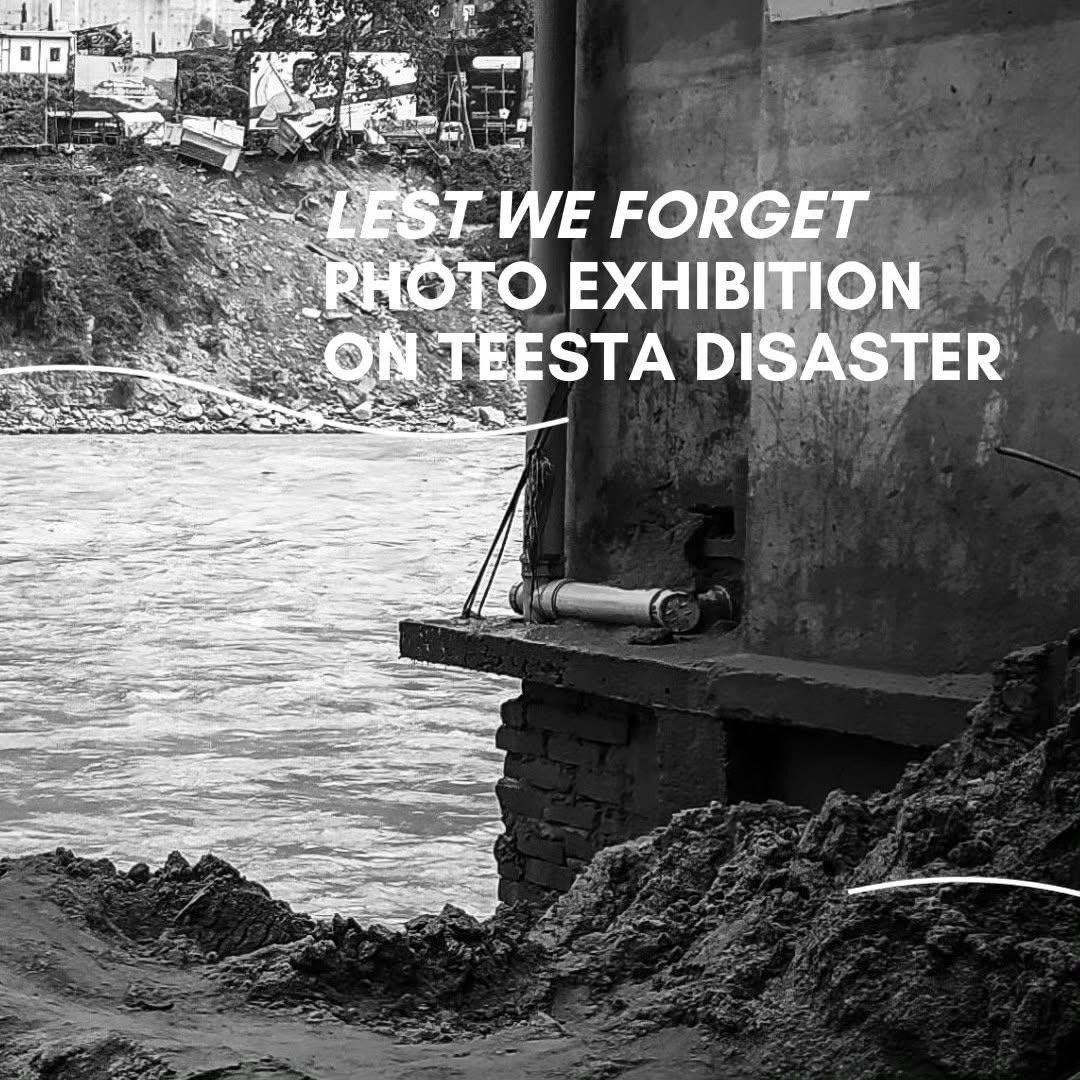
From "Lest We Forget: The Teesta Disaster," by Darjeeling Himalaya Initiative, as featured in Reading Himalaya, 2025
With visual representation piquing interest in this era of technology and conveying its effectiveness as a means of communication. These are just a few examples of how art can be used to communicate about and act on environmental issues. This also paves the way for future work, since visual narratives play a substantial role in conveying knowledge to a wider audience.
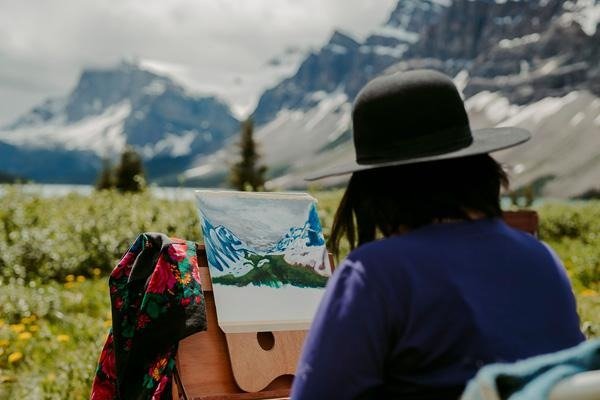
From "Indigenous artist painting the landscape in 'Rockies Repeat,'" 2021, Akimbo
*Disclaimer: The author has used an AI tool (Grammarly) to refine and check the grammar of this article.
*The photograph on the mast head has been sourced from Photo Insiders: Rockies Repeat, Alpine Club of Canada.
Yashika is from Kurseong. Growing up hiking in the hills sparked her curiosity about human-nature relationships, and her research now draws on her roots in these mountains. She holds a master’s degree in anthropology from Sikkim University and is a doctoral researcher at IIT (ISM) Dhanbad. As a Fellow with the Mountain Sentinels Alliance, she explores climate knowledge and the lived experiences of mountain communities in the Eastern Himalaya through visual ethnography.