In a verdant Sikkimese village, a man named Anum Anga lived. He was known for his hunting skills. He revelled in his hunting prowess; his wife, Anom Chekit, struggled to keep their household in order.
“The corn is ripe and ready to be harvested; the field needs to be mowed and ploughed again, yet he shows no interest in the field,” Anom Chekit lamented, cradling her youngest child while preparing a meal. “What kind of head of the house is he?! All he cares about is hunting and fishing. How long must I bear this burden alone?” On the other side of the kitchen, her three children huddled around a small fire, while their mother continued her grumbling, "Your father only knows how to hunt animals in the forest and catch fish from the rivers. Who taught him these useless skills? Working in the field feels like a curse, he says. God, must I always keep reminding him to tend to our lands?"
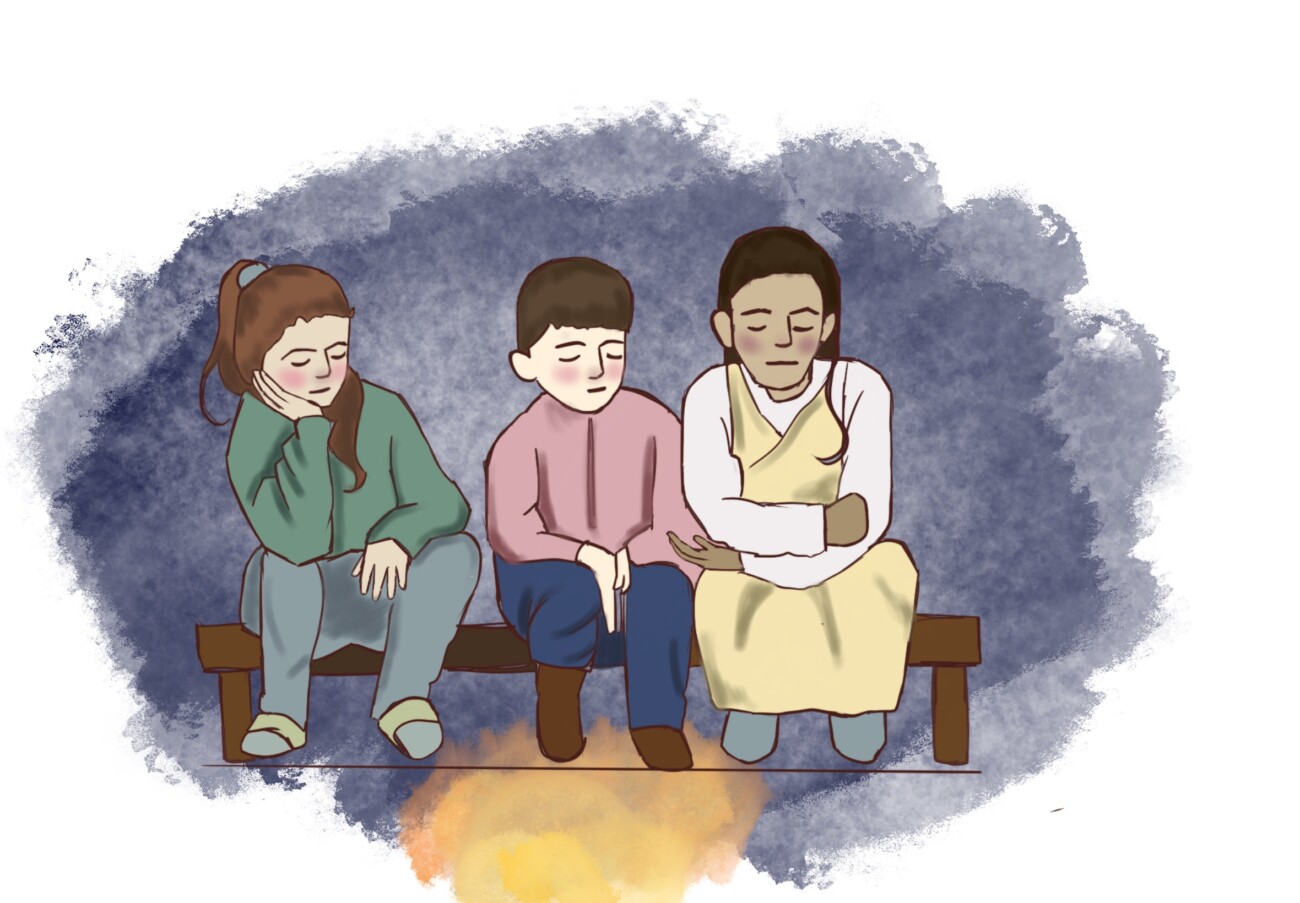
Anum Anga returned from the forest. His old gun slung over one shoulder, and a fox in his hand. He was covered in leaves and blood from leech bites. His clothes were caked with mud; he most likely slipped on his way home in the rain. He hadn't had a meal in almost a week. So he ignored the chaos of his house and his wife's misery. Instead, he ravenously devoured the stale rice and chilli paste, his eyes red with hunger.
When Anom Chekit saw the fox, her eyes lit up, relieved at the thought of having meat for a meal. “Despite the monsoon season, you've managed to bring home meat!" she said. "I feared the forest spirits had finally come to claim you. Thanks to our neighbour Choda, who bought in some Chee yesterday. It helped ease my mind.”
She poured some tea into his cup.
“Didn’t you find any Dorbee? Not even Prongdong or Purmyak. It’s the perfect season; I am sure you must have found them in abundance?” she asked, hopefully.
With his mouth full, Anum Anga gave her a disapproving glare. "I brought this meat with all my hard work, and you still ask for vegetables? Next time, I'll only bring wild vegetables for you!"
Angry, he pushed away his plate. Anom pacified her child in her lap and sighed. “But what about the cornfield? If we don’t harvest it soon, it will rot.”
Exhausted from his journey, he ignored her and went to sleep.
After his nap, he cooked the fox meat and shared it with his family, his pride glowing over the meal.
“Hah! The God of the Forest has blessed me with this powerful gun,” he bragged. “I am telling you, Anom, no animal can escape me!”
The next day, Anum Anga had his breakfast, packed his bag with his fishing gear along with a Tubhjyang (bamboo basket), and walked towards River Rungklong.
As he left, he sneered at Anom, “You housewives have no work. Get someone to help with the field, and get it done.”
Heartbroken by his words, Anom thought of the life that she might have had if she had accepted the man her parents had chosen for her, rather than eloping with Anum Anga. Lighting the fire in the hearth, she thought, “Unlike my younger sister, who eventually married him, I'm not educated either. She's living in far greater comfort. As for me, comfort and wealth remain strangers." With a heavy sigh, she resigned herself to her chosen life.
She snapped out of her reverie as their neighbour, Regho Anue Ramit, arrived with a bag of ripe pears.
“Aye Kyong met song! Are you awake? Better wake up; your cornfield needs harvesting!” she called out.
Anom came out of her room to greet her. “Ah! Anue, what brings you here? You didn’t have to bring these!” she exclaimed as she accepted the pears and ushered Anue in. “Our home is a bit messy, Anue. I hope you don't mind”. Anom offered her the tea she had been warming. “And, oh! We have Chee too. Please have some while I prepare some snacks for you.”
Anue Rammit took off her headscarf and drank the Chee. “The Chee is strong! Quite bitter and sour. What snack are you making for me, by the way?” she asked, sniffing the air as Anom fried the meat with herbs. She suddenly recognised the smell and chuckled with joy, “Fox meat! That too in these rains. You are lucky to have a good hunter for a husband.”
"Yes, Doma's father brought it yesterday. He considers household chores a burden; hunting animals and catching fish are his skills!" Anom replied.
The eldest child comes in with a Pogoreep, hands it to his mother, and says, “Today Appa is going to catch a lot of fish. I am so excited !”
“Aha! Is that right?” Anue asked as she sipped the Chee.
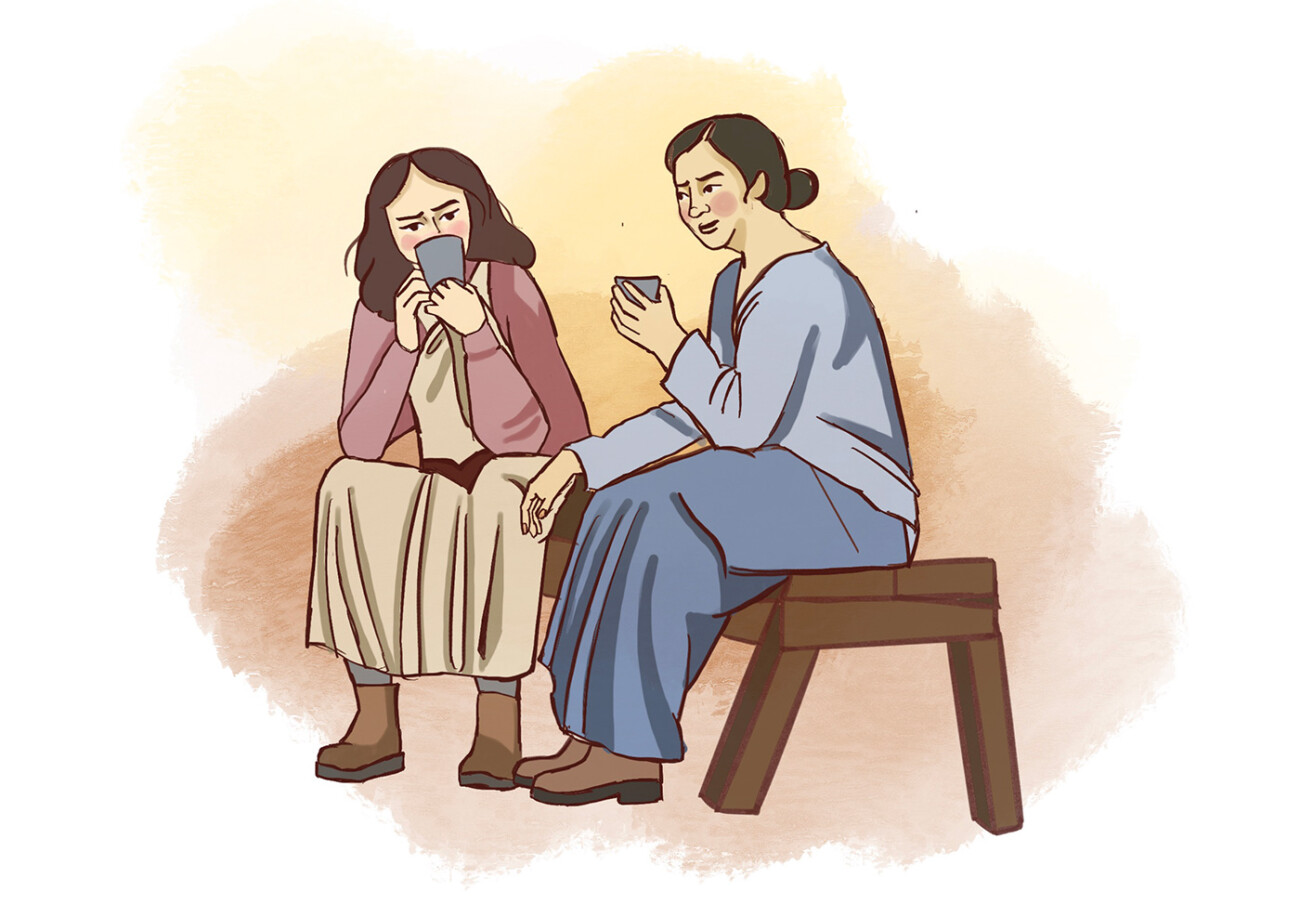
“I had a nightmare, Anom”, Anue Ramit said, suddenly looking worried. “I dreamt the street dogs were crying and our cows ran away! My children found them tied to their posts this morning, but the dream felt strangely ominous.”
Hearing this, Anom shared her own dream, “I too had one today! Then I woke up to find our daughter crying in her sleep, utterly inconsolable. Anum comforted her, promising to bring back fish. He’s on his way to the river now.”
They sipped their Chee in silence, each brooding over uneasy thoughts, hoping the nightmares were nothing more than fleeting fears.
Anue set down her plates and glasses. "I should head home now, Anom. I would like to catch Doma's father to discuss building a fence around our house. Maybe next time I see him”, she said with a shrug.
"Yes, he's quite skilled with that," Anom replied, wrapping some guavas in a handkerchief. "Please take these for your kids." They exchanged farewell smiles, and Anue left with the guavas. Meanwhile, on the banks of the River Rungklong, Anum Anga, with his friends Aching and Angok, lounged on a big rock. Content with their day’s catch, their baskets were brimming with freshwater fish!
Suddenly, Anum Anga broke the silence,
“Friends, let’s catch some more. We still have time. Last night, I dreamt that we caught a haul!”
They all agreed and went to a nearby pond, positioning themselves on a rock overlooking the river. Anum observed the waters and instructed his friends, “There! I see plenty of fish right there. Let's prepare our gear.”
The men wasted no time.
Aching hurried to gather Tuknyal* leaves known to have a numbing effect on fish. Meanwhile, Angok skillfully mashed the leaves into a paste and handed it to Anum. Anum swiftly positioned himself at the pond's opposite edge, reeling in fish with remarkable speed. Within moments, the trio had a bountiful haul.
Then Anum Anga saw a giant fish wedged under the pond's near end. Driven by greed, he waded into the water to free it. Meanwhile, atop the hill, his friends were pounding local leaves on a large rock balanced precariously on a small pebble.
Unfortunately, the pebble gave way, sending the massive rock crashing into the pond.
Angok and Aching heard a cry.
"AIYYYYYAAA!"
Both were startled and hurried down to search for Anum, shouting, "Doma Appa*, where are you?"
Anum Anga’s cry echoed far, even into the village, but he could not be found.
The water turned red, and a heavy stillness fell. It was clear. Greed and neglect bring dire consequences, even in the bountiful forest.
That day, the villagers learned the importance of 'balance’, the true cost of forest meat, and the profound impact of hunting wild game. Anum Anga's fate served as a poignant reminder to only take what is necessary and maintain a harmonious equilibrium between tending our own fields and respectfully borrowing resources from the wilderness.
Written by Norden Sambomu Lepcha
Translated into English by Lungmying Lepcha
1st Edited by: It's Wild Out Here
GLOSSARY:
- Doma Appa - Doma’s father.
- Tuknyal - Mugwort.
- Pogoreep - Also known as Totola ko phool (in the local language).
- Chee - a locally brewed fermented drink.
- Dorbee - mushroom in Lepcha.
- Prongdong - A variety of bamboo shoot in Lepcha.
- Purmyak - A variety of bamboo shoot in Lepcha.
- Aye Kyong met song! - "Hey, neighbouring folks!"
Norden Sambomu Lepcha is a writer from Sikkim writes in Lepcha language. He is best known for his short story 'Punjok Mun Afar' or 'The Cost of the Forest Meat', which is featured in Lepcha textbooks for Classes IX and X.
About the translator: Lungmying Lepcha is a young writer and visual storyteller from Gangtok, Sikkim. Rooted in her Lepcha heritage, her work explores myths, folklore, oral traditions, and everyday cultural practices through poetry and creative nonfiction. She hopes to preserve and share her community’s stories with a wider audience through words and visuals, creating meaningful connections across cultures.