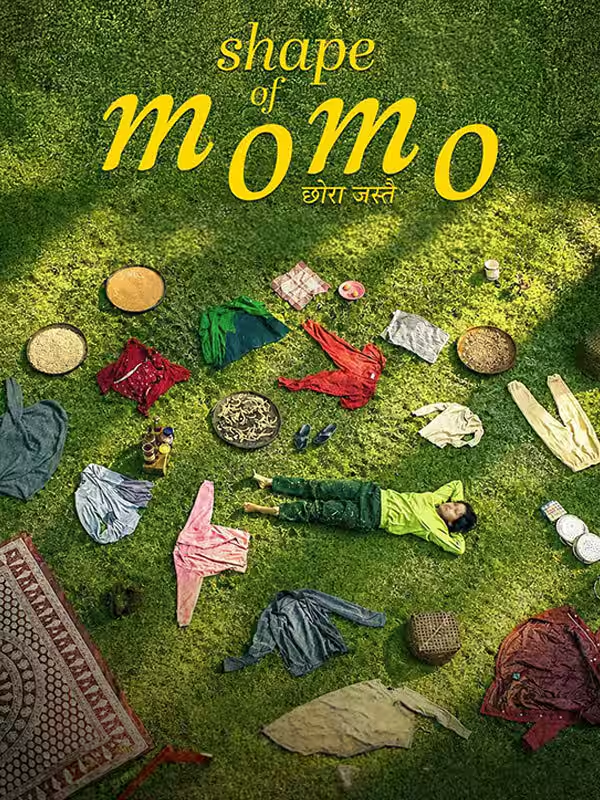
Shape of Momo (Nepali subtitle: Chhora Jastai) arrives as a film that asks more of its audience than most contemporary regional dramas: it invites sustained attention to the textures of everyday life so that the larger structures shaping that life become visible. Directed by Tribeny Rai, a filmmaker from Sikkim whose film has already found traction at major festivals including Seattle and Busan, the movie is notable not only for its formal choices but for what it represents - an emergent voice from Sikkimese Nepali-language cinema making its way onto influential international platforms. That trajectory is not accidental; it reflects a mix of craft and connections, but it also signals a broader shift in how regional cinemas from India’s northeast are being seen.

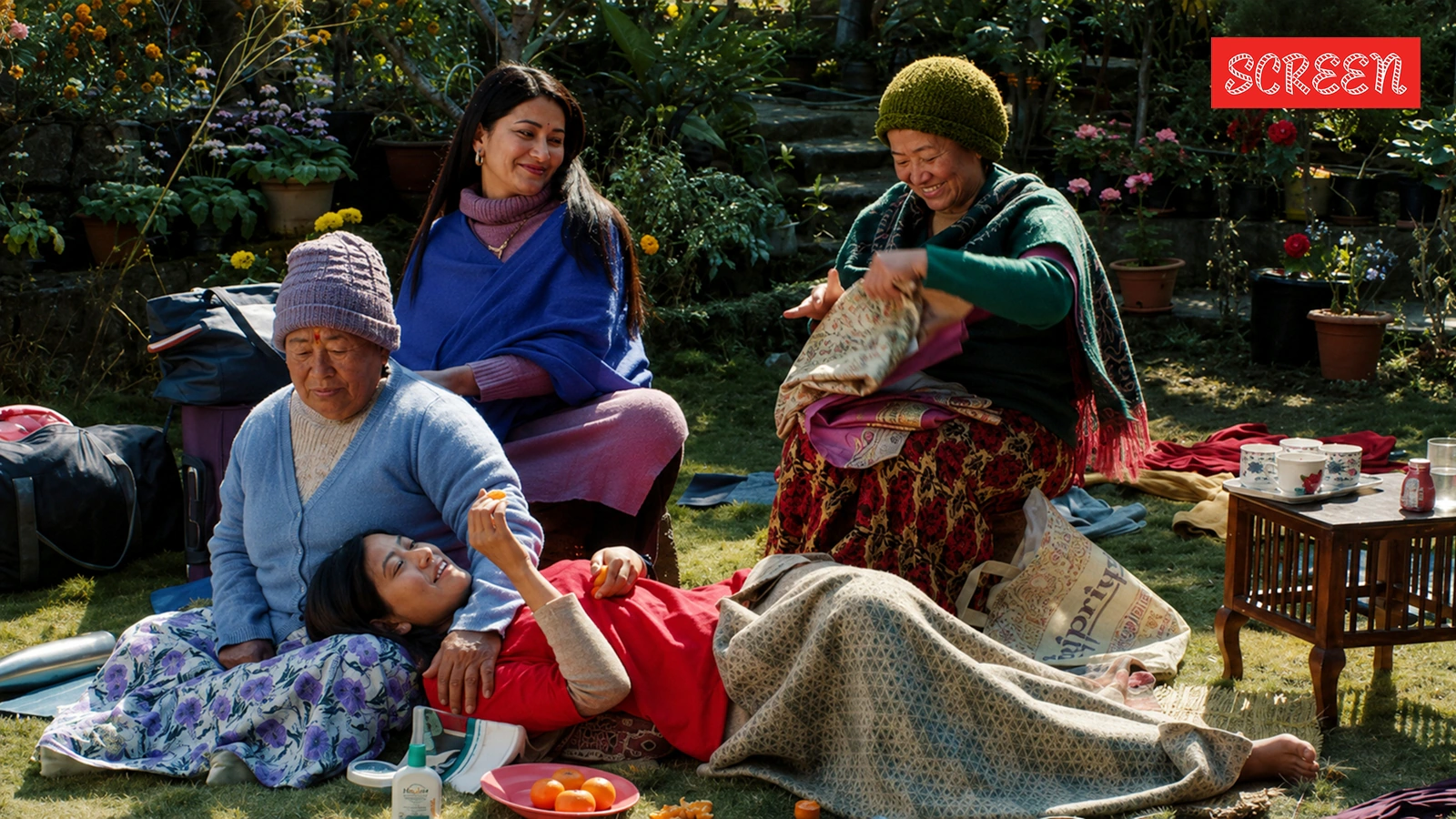
At the centre of the film is a young woman who returns to her native village in Sikkim after a period of living in Delhi. Her ‘homecoming’ could have been handled as a familiar urban-rural contrast or a triumphalist rediscovery of roots. Instead, Shape of Momo treats the return as a series of calibrations - between body and landscape, kinship and obligation, desire and community expectation. The film uses the protagonist’s re-entry into village life to examine how social norms are reproduced day after day, in gestures and silences more than in overt confrontation. This is not melodrama; it is cumulative social pressure rendered in small, precise scenes.
Shape of Momo treats the return as a series of calibrations - between body and landscape, kinship and obligation, desire and community expectation. The film uses the protagonist’s re-entry into village life to examine how social norms are reproduced day after day, in gestures and silences more than in overt confrontation.
The film’s understanding of ‘return’ is especially compelling because ‘return’ itself is never innocent. Migration alters perception. Distance changes thresholds of tolerance. Urban life does not necessarily liberate the protagonist, but it equips her with comparison. What she encounters upon returning is not an unfamiliar world but a familiar world newly visible. The camera repeatedly emphasises routines she once accepted without question. The result is subtle but effective: critique emerges not through confrontation but through altered attention.

Astonishingly spare moments make the film’s emotional work. When the grandmother casually mentions having heard of surgery to alter sex from female to male, the line lands like a centuries-old ache momentarily voiced; the remark condenses generations of female angst into a single, destabilising phrase. That compact sequence reveals how cultural fantasies about gender can be both surreal and deeply felt.
The film’s strength is its refusal to moralise. Rather than presenting patriarchy as an abstract enemy to be defeated...Shape of Momo shows how gendered rules are woven into survival strategies, economic scarcity, and intergenerational habit.
A recurring motif in the film is ‘work performed and work withheld’, alongside the gendered assumptions tied to both. The narrative shows how a female-only household can be subtly held ransom by its own tenants and male domestic helpers who defy the household in small ways with impunity, their leverage resting on the threat of withdrawing labour that only a man is socially permitted or physically expected to provide. The family’s reluctance to enforce order is not merely deference; it is a pragmatic calculation about labour that men must provide. This attention to labour broadens the film’s critique. ‘Patriarchy’ appears not only as ideology but as infrastructure. Bodies, tasks, and obligations are distributed unevenly. Dependence reproduces hierarchy. The film’s strength is its refusal to moralise. Rather than presenting patriarchy as an abstract enemy to be defeated, Shape of Momo shows how gendered rules are woven into survival strategies, economic scarcity, and intergenerational habit.
‘Women’s agency’ is depicted as nuanced and imperfect. The protagonist is neither an emblem of feminist purity nor a victim in a tearjerker. She is resourceful, often constrained, sometimes complicit in the very practices that limit her. Even education and relative economic power do not guarantee emancipation: the tenant’s son, who benefits from the household’s generosity, nonetheless refuses the protagonist social recognition and respect, a small but telling instance of how gender status hierarchies and entitlement persist irrespective of material dependence.
Yet the film also insists that change is possible in modest, cumulative ways. ‘Small acts’ become metaphors for shifting norms: the protagonist’s morning jog becomes a quiet study of progress. On her first run, she notices a woman doing her morning walk on her building terrace; the second time, the woman has moved to jogging on the terrace, and the third time, she is jogging on the road. This progression - deliberate, gradual, but salient - signals how public space can be reclaimed one step at a time. These gestures illustrate the film’s thesis that resistance is often incremental rather than transformative overnight.
The film makes a careful case that ‘patriarchy’ is not only about individual men’s choices but about systems that make certain choices costly to resist. The protagonist is often labelled “wrong” simply for questioning what her community has normalised; the film powerfully conveys that in patriarchal contexts, the “wrong” frequently operates as the preserved “right,” and realignment efforts face unnameable yet insurmountable odds.
The film makes a careful case that ‘patriarchy’ is not only about individual men’s choices but about systems that make certain choices costly to resist. The protagonist is often labelled “wrong” simply for questioning what her community has normalised; the film powerfully conveys that in patriarchal contexts, the “wrong” frequently operates as the preserved “right,” and realignment efforts face unnameable yet insurmountable odds.
If the film has a limitation, it is the occasional opacity of its storytelling cadence. Viewers seeking a tightly plotted arc may find the film slow; Rai’s patience is deliberate, but it demands active spectatorship. Yet that slowness ultimately becomes one of the reasons the film travels well across contexts. ‘Slow cinema’ asks viewers to inhabit rather than consume. In an era increasingly governed by acceleration and summary, Shape of Momo insists that understanding social life requires duration.
Shape of Momo does not offer easy answers; it leaves its audience with a sharper sense of how patriarchy endures, and how resistance might begin, not with grand gestures but with small, sustained acts of reimagining everyday life.
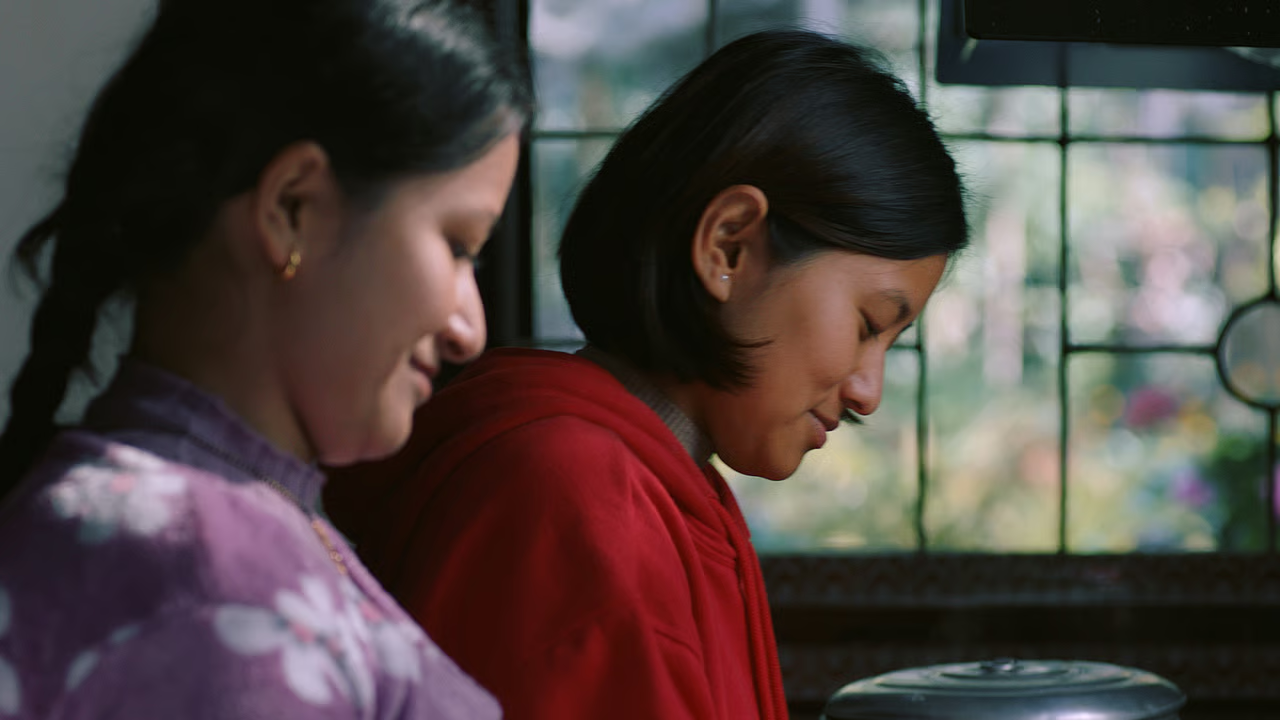
For readers of social commentary, that deliberateness is a virtue: the film is a document for study, a prompt for discussion rather than a consumption object that yields instant moral clarity. Tribeny Rai’s film will be discussed for some time as both an aesthetic achievement and a cultural milestone. Quiet and resolute, it trusts detail over declaration and seeks to convert empathy into critique by way of lived observation. Shape of Momo does not offer easy answers; it leaves its audience with a sharper sense of how patriarchy endures, and how resistance might begin, not with grand gestures but with small, sustained acts of reimagining everyday life.
For decades, Nepali-language films from northeastern India - from Sikkim to Darjeeling and beyond - have existed largely at the margins of the national film conversation. Filmmakers worked with limited budgets, localised distribution networks, and small audiences; their work rarely entered the national or international limelight dominated by mainstream Indian cinema. Shape of Momo’s festival circuit visibility, therefore, matters as more than an individual success. It arrives at a moment when festivals and digital platforms are changing the dynamic: films with strong regional specificity and universal thematic depth are increasingly likely to travel, attracting attention from producers, mentors, and distributors who can amplify local stories. In that context, Shape of Momo exemplifies how a film from Sikkim, when backed by craft and the right network, can move beyond parochial viewing to create institutional pathways for others.

Shape of Momo exemplifies how a film from Sikkim, when backed by craft and the right network, can move beyond parochial viewing to create institutional pathways for others.
At the same time, the celebration of festival visibility should not obscure a more difficult question: ‘Who eventually gets to watch the film?’ International recognition creates legitimacy, but legitimacy and accessibility are not identical things. A film can circulate through prestigious institutions and remain unseen by the very communities from which it emerges. This contradiction is especially visible in the case of regional cinema from mountain societies, where exhibition infrastructure has not kept pace with cultural production.
Although the movie has the backing of renowned people who possess deep networks in the world of film production, programming, and circulation, its long-term fate may depend more on platforms than on red carpets. Festival exposure generates conversation, but conversation alone does not guarantee sustained viewership. In all probability, the film may discover its widest and most enduring audience once it debuts on digital streaming platforms. The reach of digital distribution far exceeds that of brick-and-mortar theatres, especially for films that emerge from small linguistic markets and geographically dispersed communities.
This possibility should not be understood as an admission of theatrical weakness. Rather, it reflects a structural transformation in contemporary viewing culture. Streaming has increasingly become the second life of independent cinema. Theatres create prestige and event value; digital circulation creates memory, repetition, and discovery. A viewer who misses a theatrical screening may still encounter a film months later through recommendation algorithms, social discussion, or word of mouth. Such delayed encounters often produce longer cultural afterlives than initial theatrical windows.
This possibility also illuminates a difficult reality about cinema economies in the eastern Himalayan region. Almost the whole of Sikkim’s population may feel invested in watching the film for obvious reasons: regional pride, linguistic familiarity, curiosity, identification, and recognition of place. Yet interest does not automatically translate into ticket sales.
This possibility also illuminates a difficult reality about cinema economies in the eastern Himalayan region. Almost the whole of Sikkim’s population may feel invested in watching the film for obvious reasons: regional pride, linguistic familiarity, curiosity, identification, and recognition of place. Yet interest does not automatically translate into ticket sales. One could plausibly imagine that only a relatively small proportion of interested viewers would actually end up entering a theatre. The reasons are less cultural than infrastructural. Modern theatre infrastructure remains sparse outside the capital region and a few urban centres. Distance, transport costs, scheduling constraints, and the absence of convenient exhibition spaces quietly shape viewing behaviour. Similar limitations extend into neighbouring hill regions such as Darjeeling and Kalimpong, where audiences often remain culturally connected but physically distant from formal screening networks. These realities can be deeply frustrating for filmmakers because they expose a paradox: there may be enthusiasm for regional cinema without adequate means to consume it.
The reasons are less cultural than infrastructural. Modern theatre infrastructure remains sparse outside the capital region and a few urban centres. Distance, transport costs, scheduling constraints, and the absence of convenient exhibition spaces quietly shape viewing behaviour. Similar limitations extend into neighbouring hill regions such as Darjeeling and Kalimpong...These realities can be deeply frustrating for filmmakers because they expose a paradox: there may be enthusiasm for regional cinema without adequate means to consume it.
That frustration became unexpectedly tangible at the screening itself. When the end credits appeared, Tribeny Rai and a few members of the cast unexpectedly entered the theatre to thank those of us who had come to watch the film. The gesture was warm and gracious, but it left me conflicted. I was happy to see the filmmaker and her team receive direct acknowledgement from the audience; at the same time, there was something faintly melancholic about seeing an artist compelled to assume the role of marketer to sustain the life of the work.
Such limitations also reveal something larger about contemporary capitalistic market structures. Exhibition follows expected returns. Investors build screens where populations are dense and purchasing patterns are predictable. Smaller linguistic regions become economically difficult to serve even when cultural demand exists. Under these conditions, the smallness of market size can hold the success of the artistic expressions ransom. The issue is not necessarily a lack of audience but a lack of infrastructure capable of converting dispersed interest into measurable revenue.
And perhaps that same logic applies to the future of the film itself: not through one triumphant opening weekend, but through accumulated encounters across festivals, theatres, classrooms, streaming catalogues, and conversations - small, sustained acts through which a regional story gradually becomes part of a larger cultural imagination.
And perhaps that same logic applies to the future of the film itself: not through one triumphant opening weekend, but through accumulated encounters across festivals, theatres, classrooms, streaming catalogues, and conversations - small, sustained acts through which a regional story gradually becomes part of a larger cultural imagination.
Dr. Nyima Tenzing holds a PhD in Economics. His research interests lie at the intersection of history, politics, and economics, where he explores the complex and often overlapping dynamics that shape social and economic realities. He maintains Nyima Tenzing-Writing & Stories on Facebook. He can also be reached at nyima.tenzing@gmail.com



An interesting perspective. I hope the film makes some money on the OTT platforms.
Thank you for your thoughtful review. I really appreciate the way you engaged with the film. It means a lot to know the film resonated with you and prompted reflection. I’m grateful you took the time to write about it with such care. Your support truly means a lot.
Well written and analysed