Birey first laid his eyes on Sumnima at mathlo gaon (upper village). She had her head covered with a piece of cloth, and a rough coconut rope, namlo, was pressed to her head supporting a doko (cane basket) which was filled with dry bamboo wood. It was a dastoor (custom) for villagers to contribute to the wedding house with anything that they could afford or spare. Some villagers contributed sugar, while some gave firewood and dry bamboo for the fuel. Fourteen-year-old Sumnima had never been to this part of the village. Her miteani (friend) Sushila’s cousin was getting married. The teenagers attracted quite a gathering with their giggles and flushed cheeks.
Sushila enjoyed the attention she was receiving, but Sumnima was a quiet and timid bird who disliked the stares of strange men. Perhaps this was the reason why Bir Bahadur Rana, also known as Birey of tallo gaon (lower village), couldn’t take his eyes off her. Sumnima wasn’t extraordinarily beautiful but she was, in her own way, a different face among the sea of beautiful red cheeks, a beauty worthy of a second glance. She was a bud in a garden that had yet to bloom, and any flower that’s differently beautiful and rare either attracts bees or thieves.
The wedding feast lasted for five days, after all it was the wedding of the wealthiest man in the village, Tek Bahadur Rai, a self-made man. At twenty-one he had vowed to be a Bramhacharya but when he saw Manjari, his future wife, he could not deny his heart.
They had been inseparable as toddlers, and their parents had decided to formally cement their friendship; they called it “miteani saino”, meaning friends for life.
Manjari and Sushila were first cousins who had grown up in the same household. When the time for their parting approached, Manjari begged her cousin Sushila to stay back after the wedding ceremony. Sushila agreed, and so did Sumnima; wherever Sushila was, Sumnima would be by her side. They had been inseparable as toddlers, and their parents had decided to formally cement their friendship; they called it “miteani saino”, meaning friends for life.
Birey’s infatuation with Sumnima grew stronger by the day, and he often found himself lingering around Tekh Bahadur’s house. At eighteen, Birey was a strapping young man with a carefree attitude towards life. He was the only child of the village priest, and his mother did everything to ruin him. When he confided in his mother about his love for Sumnima, she advised him to win her over at any cost. In those days, it was socially acceptable to abduct a girl with the intention of marriage, it was called “salee/soltini cheknu”. Birey decided to take this route to win Sumnima's heart.
Birey’s uncle, Dhaney who was a misogynist, had warned him about Limbu girls. Dhaney’s opinion of girls, and especially Limbu girls, had been coloured by his own experience with his Limbuni wife who had eloped with someone else a decade ago. Dhaney had been left devastated and had started drinking to cope with his heartbreak and shame. The local liquor affected his system and his face was sagged and pensive, a portrait of a man with many regrets. Despite being in his fifth year of sobriety, his hands still trembled.
Dhaney warned Birey again. He considered women the most underrated and potent weapon that God had created to tempt and torture men. Despite Dhaney's warnings, Birey was determined to go through with his plan.
Sumnima had already overstayed her welcome at the mathlo gaon, where she was adored by the household for her gentle nature. That very evening, while filling the gagri from the dhunge dhara (water fountain) she decided to return home but little did she know that her destiny was about to take a drastic turn.
The two men circled around her, their eyes fixated on her every move. Sumnima felt a knot form in her stomach, a feeling of unease spreading through her body. She desperately searched for a way out, but they were closing in on her.
As the evening grew dark, her vision grew weaker and blurry. On the way back from the dhara, she saw Birey’s silhouette at the amliso ghari, (thicket of wild broom grass). As she approached him, she saw him grinning. “Ah bhena po raicha” (ah it’s brother-in-law) she thought. She and Sushila had a private joke about Birey. Unbeknownst to Birey, Sushila considered him as her husband, so Sumnima considered him bhena (brother-in-law). Dhaney stood beside him. She read hatred all over Dhaney’s face, yet she moved with grace.
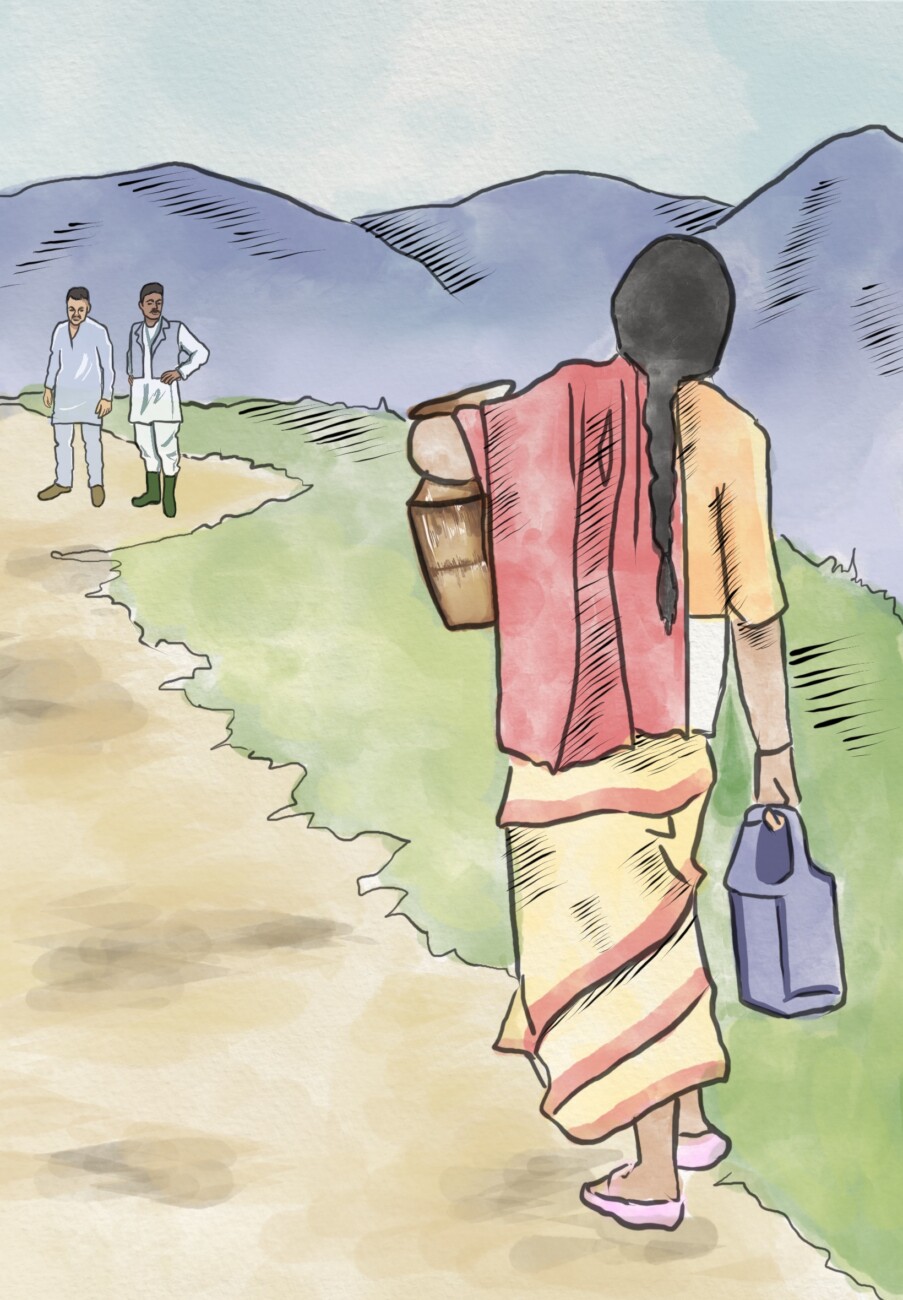
The two men circled around her, their eyes fixated on her every move. Sumnima felt a knot form in her stomach, a feeling of unease spreading through her body. She desperately searched for a way out, but they were closing in on her. The weight of the brass gagri was becoming unbearable, but she couldn't let go of it. She knew the consequences if she did. They didn't touch her, but the menace in their eyes was enough to make her blood run cold. They continued to move forward, and she continued to move backwards, until she realised with horror that she had crossed the fountain and was now in Birey's village. She was in unfamiliar territory, and her heart began to race with fear.
Sumnima saw the fire burning at the chula; an old woman squatted beside it in the open kitchen. The mud hut was the first house of the village. She placed the gagri on the floor and ran towards the woman and wept. The old woman held her and tried to console her. "You are home," the lady told Sumnima. It then dawned on her; it was a planned abduction. The reality hit her hard and she felt a mix of fear and anger. She couldn't believe that Birey would do such a thing to her.
“Ek diye, dui diye, teen diya…” ( given once, given twice, given thrice) Sumnima’s father would then say, his head bowed And with these words, he would make his daughter a stranger.
When her father learned of her disappearance, he wept, but was relieved to hear that she had been married and not mauled by wild beasts. Three days later, Birey's father, Dhaney, and a few members of their community went for “chor ko sor” (literal translation thief's voice), a customary practice where the groom goes to the bride's home to inform and ask for her hand in marriage. The answer was already known - there would be no denial. Following the custom, they spoke in poetic words, reciting the same old story of a bee entering a garden to pluck a flower when it was actually a plea of the thief to be forgiven for stealing the flower.
“Ek diye, dui diye, teen diya…” ( given once, given twice, given thrice) Sumnima’s father would then say, his head bowed And with these words, he would make his daughter a stranger.
Sumnima's heart sank as she realised the true nature of men and the value of women in her society. She felt like she had been slaughtered and sold like property, colonised like a piece of land. She was powerless, knowing there was no turning back. Her hope was lost, and the future seemed bleak. It was as if her fate had been decided for her, without her consent.
The news of Sumnima’s wedding was not well-received by Sushila, who felt betrayed and attempted to end her life by drinking kerosene. When the janti (wedding band/ procession) crossed her house, she spat at them in disgust.
Her hope was lost, and the future seemed bleak. It was as if her fate had been decided for her, without her consent.
It was a miracle that Sumnima had survived a year with Birey, whose infatuation had long faded. She was no longer a flower bud but had thorns now. Birey was abusive verbally and physically towards Sumnima; the marriage had taken its toll on her, and her misery was etched on her glum, freckled face. She was no longer her father's daughter but solely her husband's possession. A year after her abduction, Sumnima's belly swelled, some said twins, while others thought a son. But for Sumnima, it didn't matter. The child was like a parasite living inside her body, and all she wanted was to get it out of her system.
This world was not meant for women.
Her miscarriage was not an accident. Pregnant and bloated, she worked hard for her husband’s family, but was mentally tortured by her mother-in-law’s verbal insults and physically abused by her husband. It was meant to happen. It was only Dhaney who pitied her. He’d help her chop the wood and fill water. Despite their abrasive start, they shared an unusual camaraderie. Sumnima was initially scared of Dhaney, whose demeanour was that of a dangerous predator. This impression had warded off unwanted interaction and relationships for many years. However, Sumnima soon realised that he wasn’t the loathsome creature that she thought he was. Dhaney was just a lonely giant. She started preparing his evening tea at her chula and they spent their evenings sipping tea in silence.
The baby was stillborn. It was a girl. Although Sumnima despised the unborn baby, she was the only one to weep for her child. She understood that death was indeed a blessing for her daughter. This world was not meant for women. She mourned for a week and after the second week, things were back to usual. Her mother-in-law enrolled her in the plantation where she was taught to pluck tea leaves. Her weekly wages were not hers, her husband spent it on groundnuts and on soltini’s ( term used for a coquette) cleavage.
That evening, her husband didn’t plead for the bonus with words. Her body was covered with bruises, her eyes were purple and blue. Yet, she didn’t cry.
When Sahib from the plantation decided to give a Dasai bonus, Sumnima decided to take action. She dug a hole in the ground and hid her money there. That evening, her husband didn’t plead for the bonus with words. Her body was covered with bruises, her eyes were purple and blue. Yet, she didn’t cry.
Dhaney’s pity for Sumnima grew into an infatuation and when they met next, Dhaney gave her red glass bangles and proposed a plan for her salvation. Her eyes were teary. She had never received gifts in her life. This act of kindness melted her heart and gave Dhaney courage and hope for a new beginning.
The following evening, the chula wasn’t lit, darkness and silence engulfed the kitchen. The old mother-in-law couldn't find her daughter-in-law in the house. When she found that Sumnima’s clothes had gone missing, she understood. Birey gathered a search party with a khukuri in one hand and a burning torch in another. When he saw a lock at Dhaney’s house, it didn't take him long to piece together what had happened.
Sumnima and Dhaney returned to the village after two years. Sumnima had put on weight, her face was now milky fair, the tan long gone, and only a few freckles on her nose remained. Her cheeks were peach pink and soft as dough. Dhaney himself had put on a healthy weight, his salt and pepper hair had begun to show signs of age.
Sumnima’s father welcomed her with open arms. Dhaney called the samaj mukhia and paid the jari kar (tax paid to the first husband by the second). Fortune had smiled on Dhaney; he had saved enough to pay the wedding tax, making Sumnima officially his wife, with no rights over her from Birey or the society. This was the ultimate display of his love. Birey happily accepted the money while Sumnima stood in silence, realising once again how women were bought and sold among men.
Sumnima’s father welcomed her with open arms. Dhaney called the samaj mukhia and paid the jari kar (tax paid to the first husband by the second).
Birey too had married Sushila and had a son. It took him a month, but he finally agreed to call Sumnima his aunt. Sushila and Sumnima buried the hatchet and reconciled. Sumnima and Dhaney returned to Dhaney's ancestral house, where they invested in cows and goats with the remaining money they had earned in Ilam, Nepal. They grew vegetables in the garden, and their dairy farming made them one of the wealthiest families in the village. However, their happiness was short-lived as Dhaney passed away shortly.
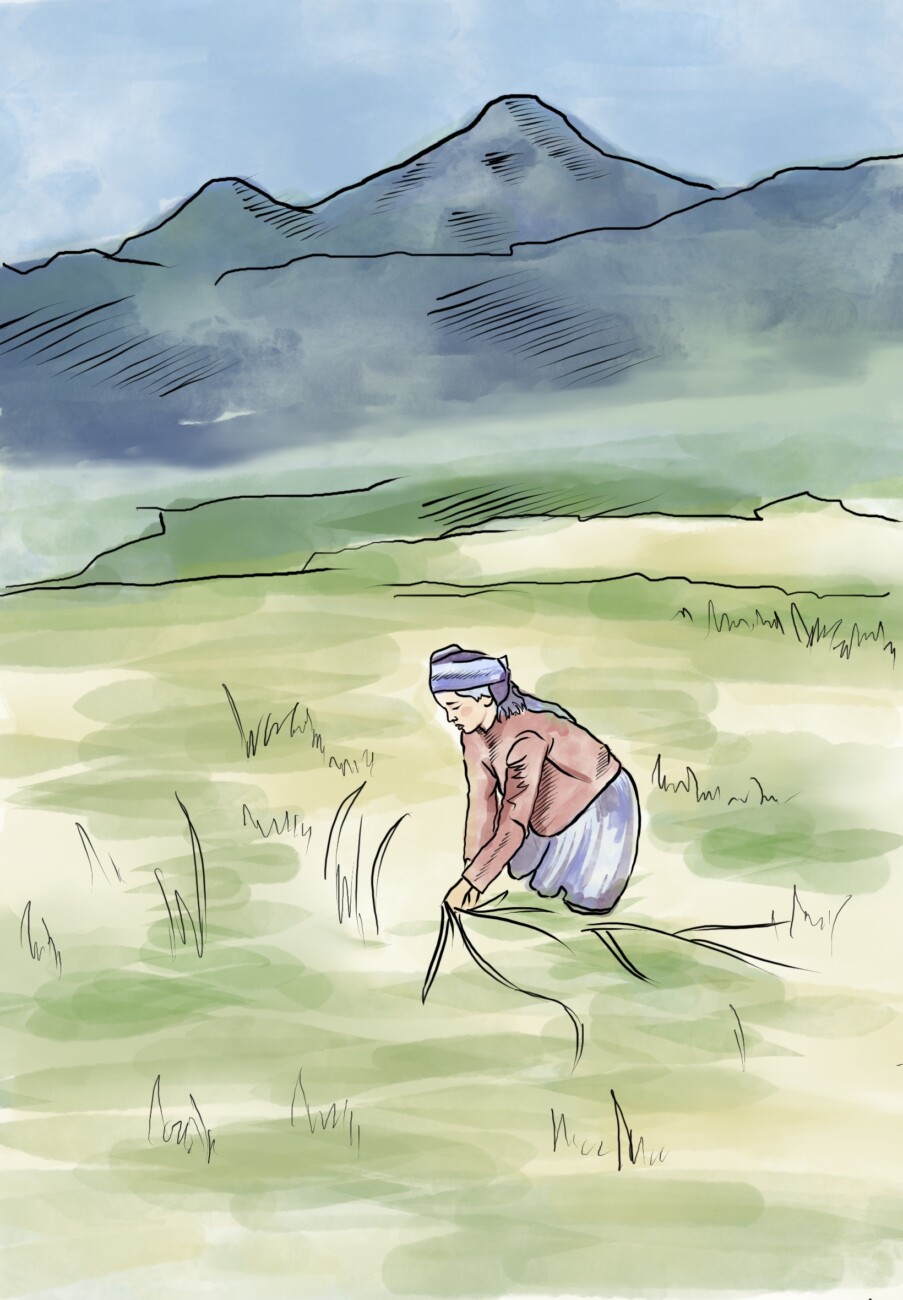
With her husband dead, Sumnima was yet again another commodity that many wanted to acquire. As per custom, Birey paid hushu danda (tax for a returned wife) to the Mukhia, and ensured Sumnima's propriety as a returned wife.
With her husband dead, Sumnima was yet again another commodity that many wanted to acquire. As per custom, Birey paid hushu danda (tax for a returned wife) to the Mukhia, and ensured Sumnima's propriety as a returned wife. Despite this being an outdated tradition, nobody was willing to bend or break it, and once again, Sumnima was not consulted in the matter. Money exchanged hands among men, and Sumnima returned to Birey's household. He still referred to her as his aunt. Sushila had no objection to this, as it was the truth accepted by all that wherever there was Sushila, they would find Sumnima there.
Endnote
1.Previously published in Sonia Thapa's Melodies of Muglan, 2024 and Beneath Magnolia Skies (Writings from Sikkim and Darjeeling Hills), 2025.
Sonia Thapa is an English teacher and the author of two short-story collections, This One is For You and Melodies of Muglan. She also has a poetry collection titled In Verse, I Am Free. In addition to her writing, she runs a podcast where she recites famous sonnets and performs readings of her own stories.


A tale that smiles through ritual while revealing the ledgers beneath, churning kinship’s poetry into a sly inventory of possession — until the brutal truth surfaces: “This world was not meant for women.”
Narration that settles like a ledger of petals and ash, and Suveksha's tender unsparing illustrations colouring its silence and shadows.
A heartrending and eloquent story that lays bare the plight of women in our society, beautifully complemented by the illustrations. The line “This world was not meant for women” continues to resonate.