"जसले मह काढ्छ, उसले हात चाट्छ" - "One who harvests the honey gets to lick it off their hands."
This timeless Nepali proverb reminds us that genuine effort alone yields genuine rewards. Few livelihoods embody this wisdom more beautifully than beekeeping.
Across the Himalayan foothills, generations of beekeepers have worked in rhythm with nature's calendar, observing flowering cycles, reading weather patterns and nurturing bee colonies through changing seasons. Their relationship with bees is built not on domination but on cooperation. The harvest is more than honey; it is sustenance, healing, culture and memory. Each drop carries the taste of wildflowers, forest edges, village gardens, and the landscapes that sustain both pollinators and people.
Their relationship with bees is built not on domination but on cooperation.
In the tea-growing hills of Darjeeling, this enduring practice continues to buzz quietly beneath the shadows of sprawling tea estates. Here, amidst one of the world's most celebrated tea landscapes, a community of beekeepers is demonstrating how traditional knowledge, scientific innovation and conservation can come together to create a more resilient future.
A Livelihood Hidden in Plain Sight
The tea landscapes of Kurseong, Mirik and Darjeeling are often associated with mist-covered slopes, often shrouded with exotics like Camellia sinensis (tea plant) and Cryptomeria japonica (Dhuppi). Yet beneath this familiar story lies another one; that of beekeepers tending colonies of the indigenous Asian / Indian honeybee, Apis cerana indica.
Today, this story is becoming increasingly important. Darjeeling's tea industry, long the economic backbone of the hills, faces multiple challenges including but not limited to fluctuating global markets and climate variability. For thousands of tea garden workers and their families, these pressures translate into uncertain livelihoods and limited opportunities for income enhancement.
In this context, diversified livelihoods are no longer merely desirable; they are essential. Beekeeping offers one such opportunity. It requires relatively little land, modest investment and can be integrated seamlessly into the tea landscape without competing for productive space.
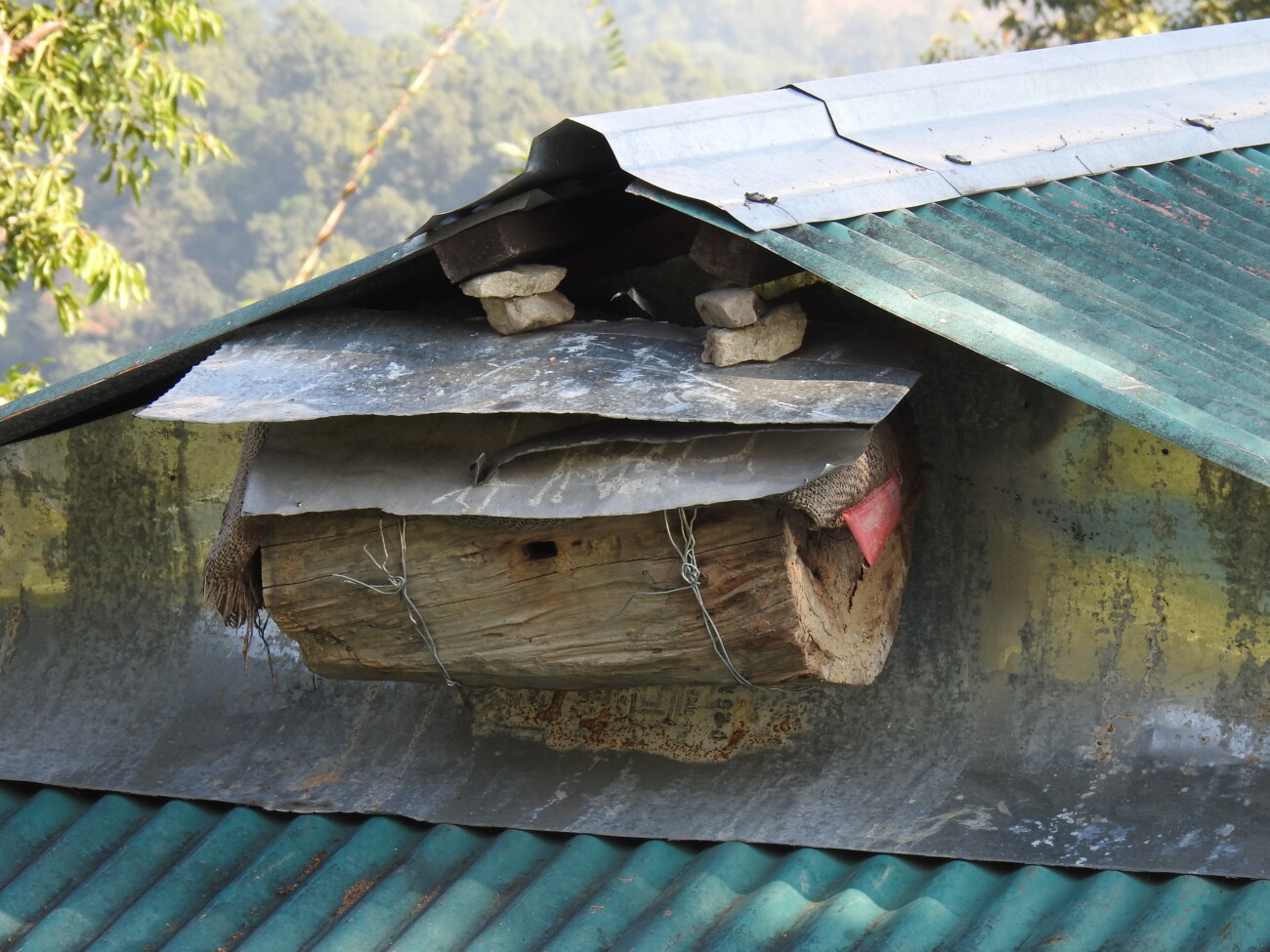
Photo: Abishek Pradhan, WWF-India
Unlike many agricultural enterprises, beekeeping requires remarkably little space.
A recent baseline assessment conducted among beekeepers from Ambootia Tea Estate, Makaibari Tea Estate and neighbouring villages revealed that beekeeping serves as an important supplementary livelihood for many households. Most participants were tea workers or depended on casual daily wage labour for their primary income. For these families, beekeeping offers an opportunity to diversify livelihoods without requiring large landholdings or substantial investments.
Unlike many agricultural enterprises, beekeeping requires remarkably little space. A few hives tucked beside a home or near a kitchen garden can produce valuable honey while simultaneously supporting pollination across the landscape.
The assessment also revealed that the average beekeeper manages only a small number of colonies. While some households maintain larger apiaries, most operate just one or two hives. This reflects the reality that beekeeping in the region remains largely small-scale and household-based, often integrated with other livelihood activities rather than functioning as a standalone enterprise.
Guardians of Indigenous Bees
The star of this story is not merely honey, but the bee itself.
The indigenous Apis cerana, commonly known as the Asian honeybee or Indian honeybee, has co-evolved with Himalayan ecosystems for centuries. Unlike imported honeybee species that are often promoted in commercial apiculture, Apis cerana is adapted to local climatic conditions, seasonal fluctuations and native flowering plants.
The indigenous Apis cerana, commonly known as the Asian honeybee or Indian honeybee, has co-evolved with Himalayan ecosystems for centuries.
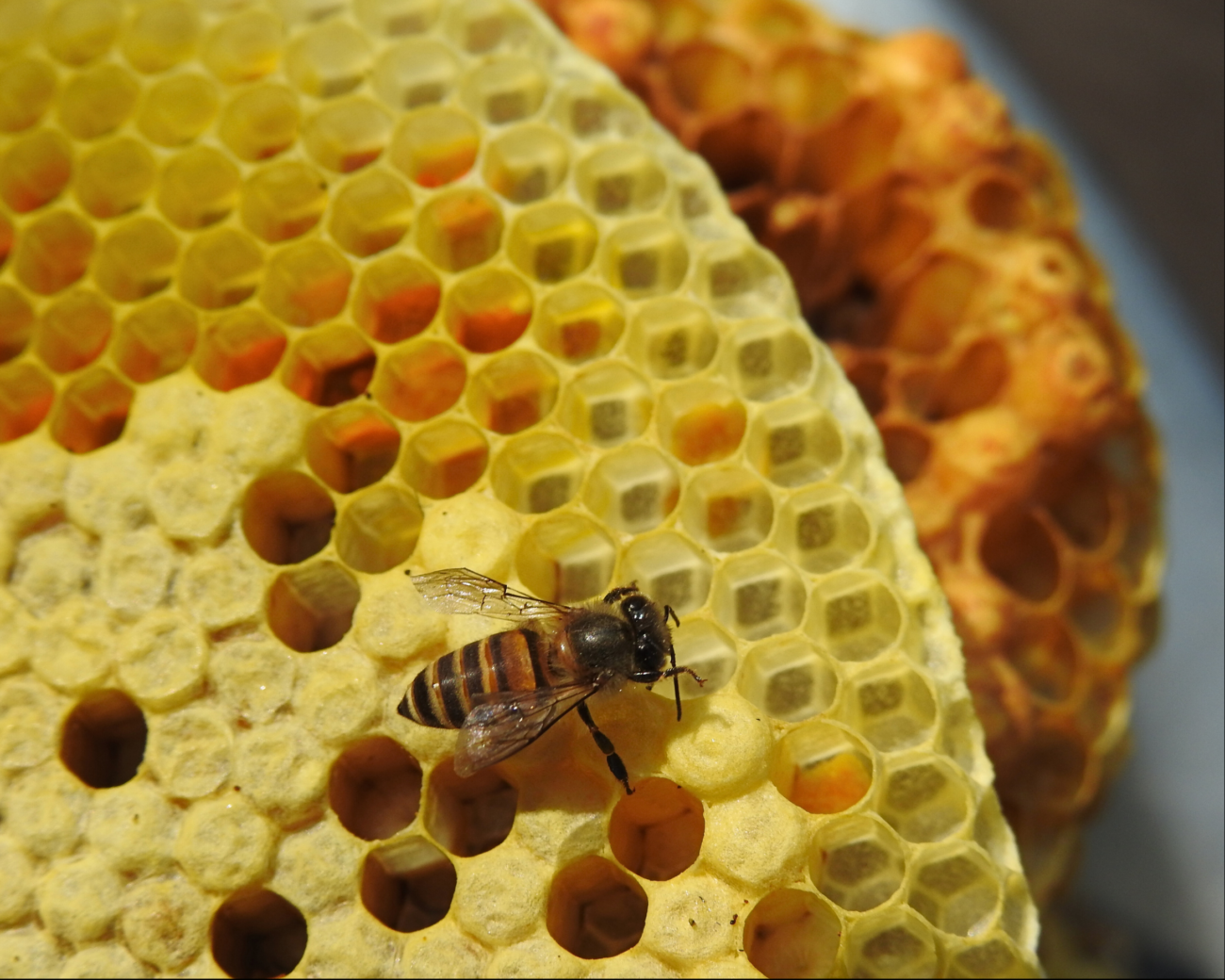
Photo: Abishek Pradhan, WWF-India
Traditional beekeepers have long understood these relationships. Their knowledge encompasses where bees forage, which plants flower in different seasons, how colonies behave before swarming and when honey can be harvested without compromising colony survival.
Today, this knowledge remains invaluable. Yet modern challenges; including habitat simplification, declining floral diversity, changing weather patterns, and chemical use in horticulture and floriculture require additional skills and support.
This is where scientific apiculture enters the picture.
WWF-India has been supporting beekeepers across the Darjeeling tea landscape through a combination of training, supporting and monitoring. Since 2024, more than ninety beekeepers from Ambootia Tea Estate, Makaibari Tea Estate and neighbouring villages have been trained in scientific apiculture and improved colony management.
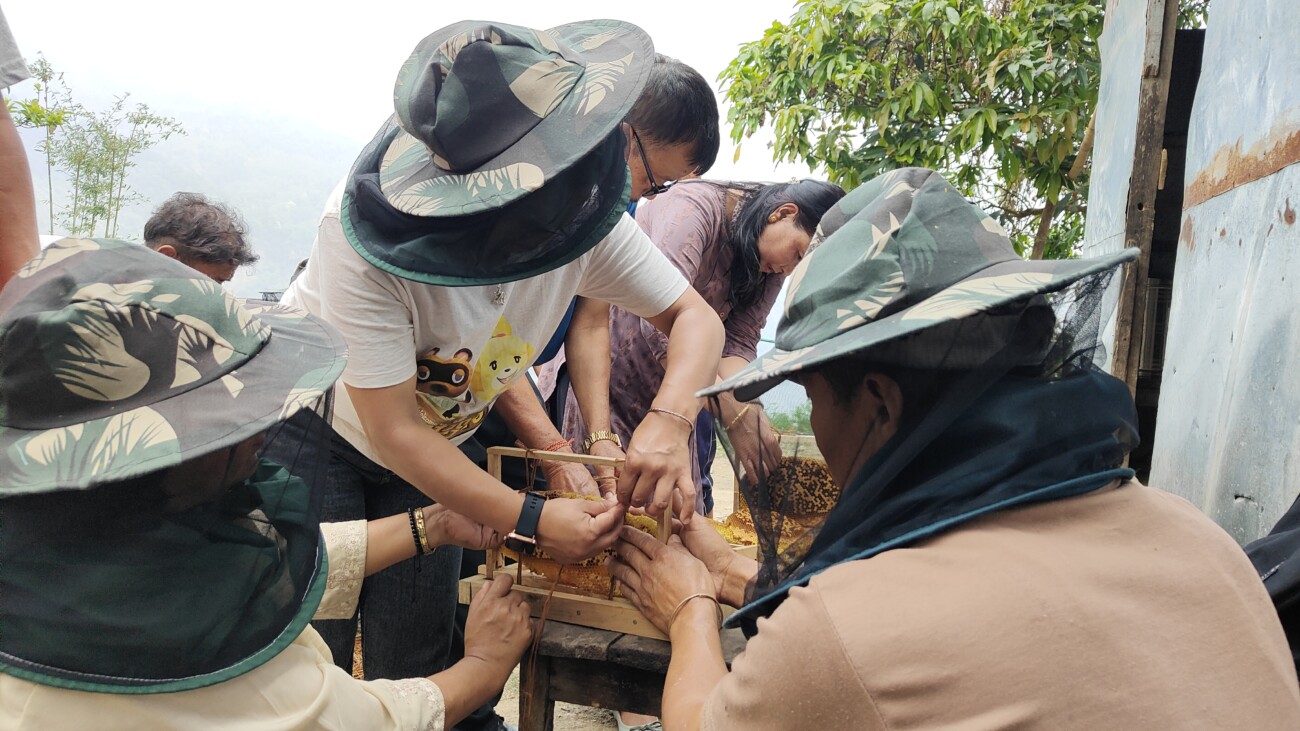
Photo: Abishek Pradhan, WWF-India
WWF-India has been supporting beekeepers across the Darjeeling tea landscape through a combination of training, supporting and monitoring.
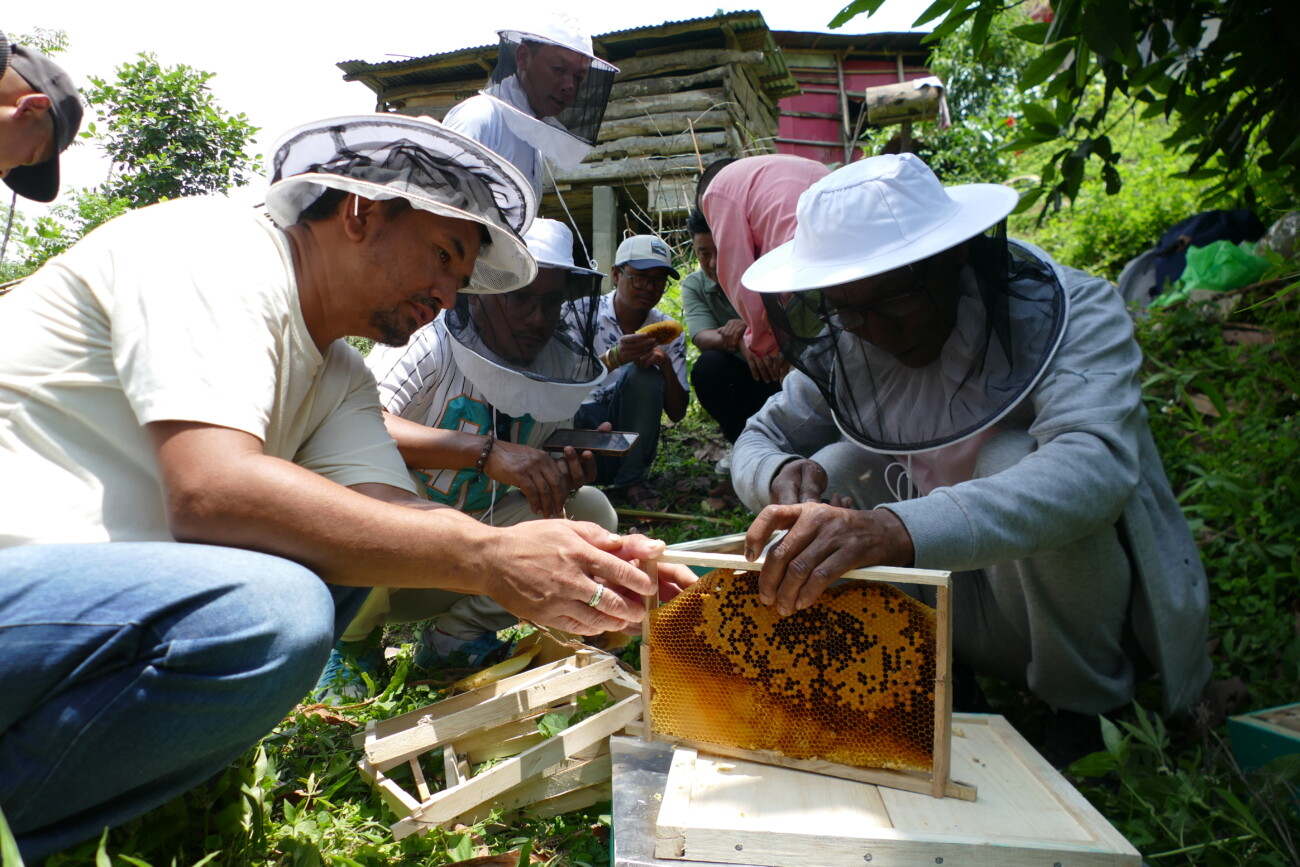
Photo: Abishek Pradhan, WWF-India
The support extends beyond training alone. Beekeepers have been provided with ISI-standard bee boxes, protective equipment such as bee veils and gloves and access to community-owned honey extractors that enable hygienic and efficient post-harvest processing. WWF-India is also working closely with beekeepers to co-develop standard operating procedures (SOPs) for honey production, extraction, handling and storage. These measures aim to improve quality, consistency and traceability, much critical for establishing a premium community-owned honey enterprise.
Importantly, the objective is not to replace traditional wisdom. Rather, it is to combine generations of local knowledge with scientific understanding to create more resilient and productive beekeeping systems.
Tradition meets Innovation
For generations, many Himalayan beekeepers maintained colonies in traditional log hives crafted from hollowed tree trunks. These hives remain culturally significant and have played an important role in conserving indigenous bees.
However, modern frame hives such as the Newton Hive and adapted Langstroth-type systems offer several advantages. Unlike traditional log hives, frame hives allow individual combs to be inspected without disturbing the entire colony. This enables beekeepers to monitor colony health, detect disease or pest problems early and undertake timely management interventions.
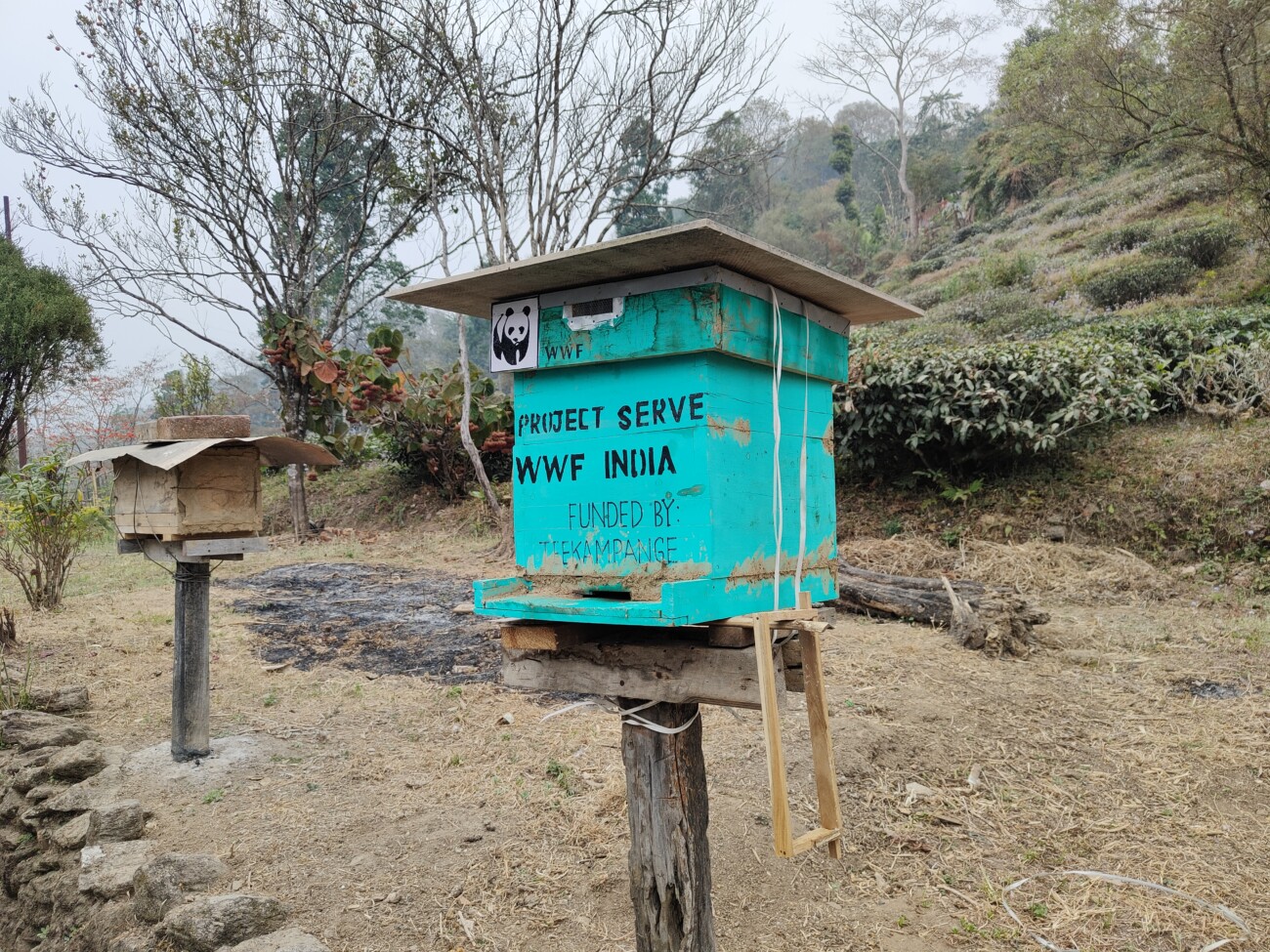
Photo: Abishek Pradhan, WWF-India
Unlike traditional log hives, frame hives allow individual combs to be inspected without disturbing the entire colony.
Frame hives also facilitate non-destructive honey harvesting. Honey can be extracted from selected frames, without damaging the comb and allowing colonies to retain adequate food reserves. This reduces stress on the bees and supports stronger colony survival. Research from comparable Himalayan landscapes like Bhutan has shown that Apis cerana colonies managed in modern frame hives can produce higher honey yields than those maintained in traditional hives under similar conditions.
For many beekeepers in Darjeeling, the transition is therefore not a departure from tradition but an evolution of it. The bees remain the same, the ecological knowledge remains relevant and the relationship between beekeeper and colony endures. What changes are the tools that help keepers care for their colonies more effectively and harvest honey more sustainably.
Honey with a Story
For consumers, honey is often just another product on a shelf. For Himalayan beekeepers, however, honey is the reflection of a place.
The multifloral honey produced in Darjeeling's tea landscapes carries the signature of a diverse ecological mosaic; tea gardens, homestead gardens, forest edges, wild shrubs, flowering trees and native understory plants. Each flowering season contributes to the flavour, aroma and character of the harvest.
Each flowering season contributes to the flavour, aroma and character of the harvest.
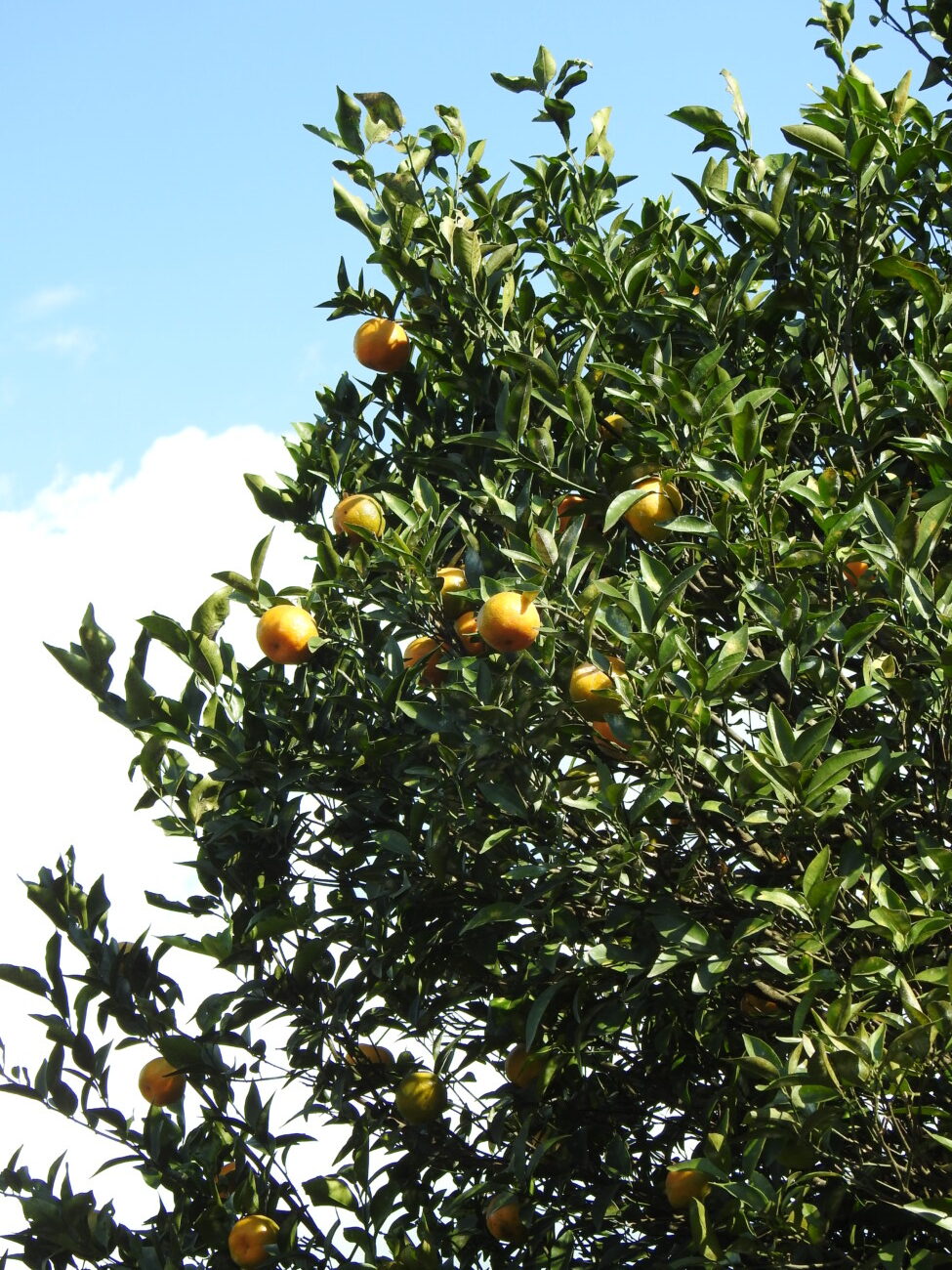
Photo: Abishek Pradhan, WWF-India
Most beekeepers in the region harvest honey twice a year, during the spring and autumn flowering seasons. Their honey is typically sold directly within villages, neighbouring communities or local markets. Some producers travel to nearby towns such as Kurseong, Sonada and Sittong to find buyers.
Despite the high quality and unique origin of their product, many beekeepers receive relatively modest returns. The baseline assessment found that honey is commonly sold without branding, labelling or formal market positioning. As a result, producers often capture only a fraction of the value that consumers are willing to pay for premium indigenous bee honey.
This gap presents both a challenge and an opportunity.
Around the world, consumers are increasingly seeking products that are authentic, traceable, minimally processed and environmentally responsible. Darjeeling's Apis cerana honey possesses all of these qualities naturally. With appropriate quality assurance, branding and market access, community producers have the potential to capture greater value from their harvests while retaining ownership of the enterprise.
Pollinators and Landscapes
The future of beekeeping depends on far more than hive management.
Healthy bee populations require healthy landscapes. Pollinators need continuous access to nectar and pollen sources throughout the year. In landscapes dominated by monoculture plantations, this requirement can become a significant challenge.
Healthy bee populations require healthy landscapes. Pollinators need continuous access to nectar and pollen sources throughout the year.
Recognising this reality, the emerging vision for Darjeeling's honey enterprise should extend beyond production alone and seek to strengthen the ecological foundations that make honey production possible in the first place.
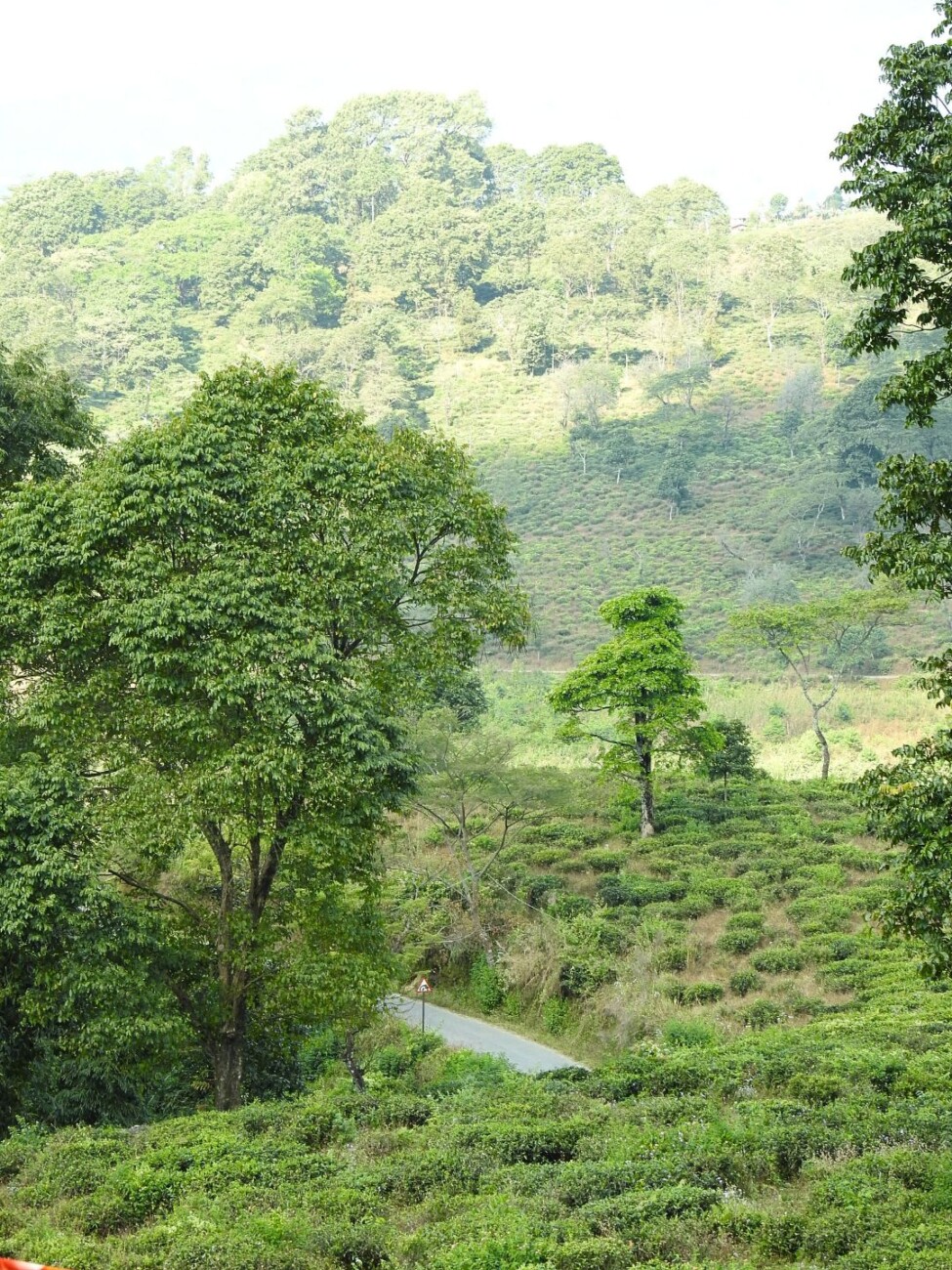
Photo: Abishek Pradhan, WWF-India
Reduced reliance on chemical herbicides and pesticides can create safer environments for bees while improving broader ecosystem health.
Native flowering trees, shrubs and herbs can help provide forage across seasons. Homesteads, community lands and farm boundaries can become important pollinator habitats. Reduced reliance on chemical herbicides and pesticides can create safer environments for bees while improving broader ecosystem health.
In this sense, every hive becomes more than a source of honey. It becomes an indicator of ecological wellbeing.
When pollinator populations thrive, it suggests that flowering resources remain abundant, landscapes retain diversity, and communities continue to maintain connections with their natural surroundings. When bee populations decline, they often signal deeper ecological challenges that require attention.
The Keepers of the Buzz
Perhaps the most important lesson emerging from the tea landscapes of Darjeeling is that conservation and livelihoods need not be competing priorities.
The beekeepers of Ambootia, Makaibari and neighbouring villages are demonstrating that economic opportunity can be aligned with ecological stewardship. By linking income generation to the health of pollinator populations, communities gain a direct stake in maintaining biodiversity and restoring habitats.
The beekeepers of Ambootia, Makaibari and neighbouring villages are demonstrating that economic opportunity can be aligned with ecological stewardship.
The success of this approach depends not only on bees but on people ‘the keepers’ who monitor colonies, share knowledge, observe flowering cycles and continue traditions that have endured across generations.
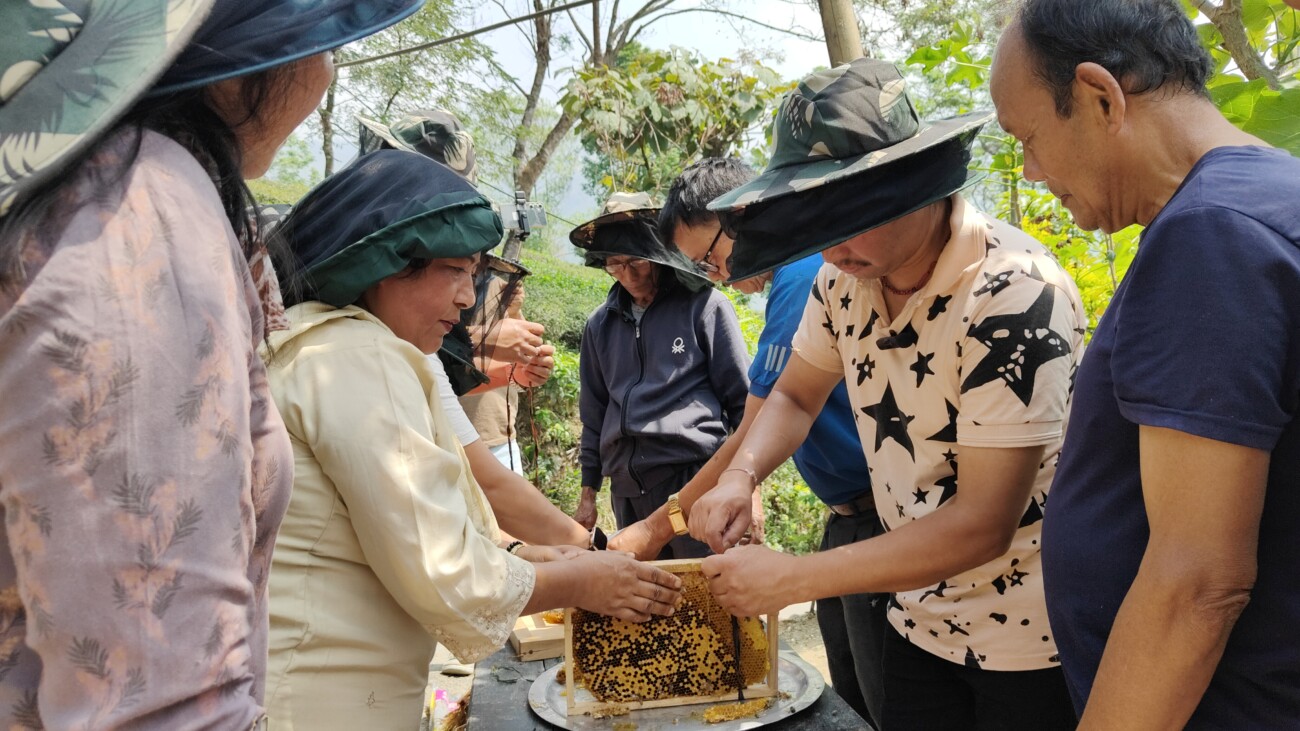
Photo: Abishek Pradhan, WWF-India
Their work often goes unnoticed. Yet every thriving colony, every successful harvest and every spoonful of honey tells a story of patience, care, and coexistence.
In the hills, honey has never been only about production. It is about sustaining relationships between people and pollinators, forests and farms, tradition and innovation.
As the buzz of Apis cerana continues across the tea landscapes of Darjeeling, it carries with it a hopeful message: that resilient livelihoods and thriving ecosystems can grow together, one hive at a time.
The future of these landscapes may well depend on preserving these sweet connections between the pollinators and their keepers.
Abishek is a community-based practitioner working in the Eastern Himalayan region, engaging with ecology and social development. His work is rooted in close engagements with forest-fringe and tea-plantation adjacent communities in Sikkim-Darjeeling Himalaya. Presently, He is working with the Darjeeling Field Office of WWF-India as Project Officer -COMMUNITIES, focused on reducing immediate anthropogenic stress on the natural ecosystem and promoting regenerative livelihoods. He has worked on fuelwood demand reduction, responsible tourism, apiculture and promoting local food systems.



Loved reading this! Such a nice piece and a lovely way of looking at something that’s been quietly happening for so long!
I am glad you liked it Nomika!
Very well detailed article brother.
Much needed attention to this species.
Love the way you showacased everybit of apiculture and supporting the local stakeholders. 🐝
Thank you for the appreciation Shuvam, matters a lot!
Thank you for publishing, Sikkim Project team.
Very happy to read this! And very happy to work for Teekampagne who initiated and funds project SERVE which is so wonderfully organised by WWF-India 🙂
This milestone would have been impossible without three decades of unwavering support from Teekampagne 🐝
Well written bhai.👍
Thank you for reading, Da.