AN OCTET OF STORIES: LIVES OF THE NEPALI-SPEAKING DIASPORA
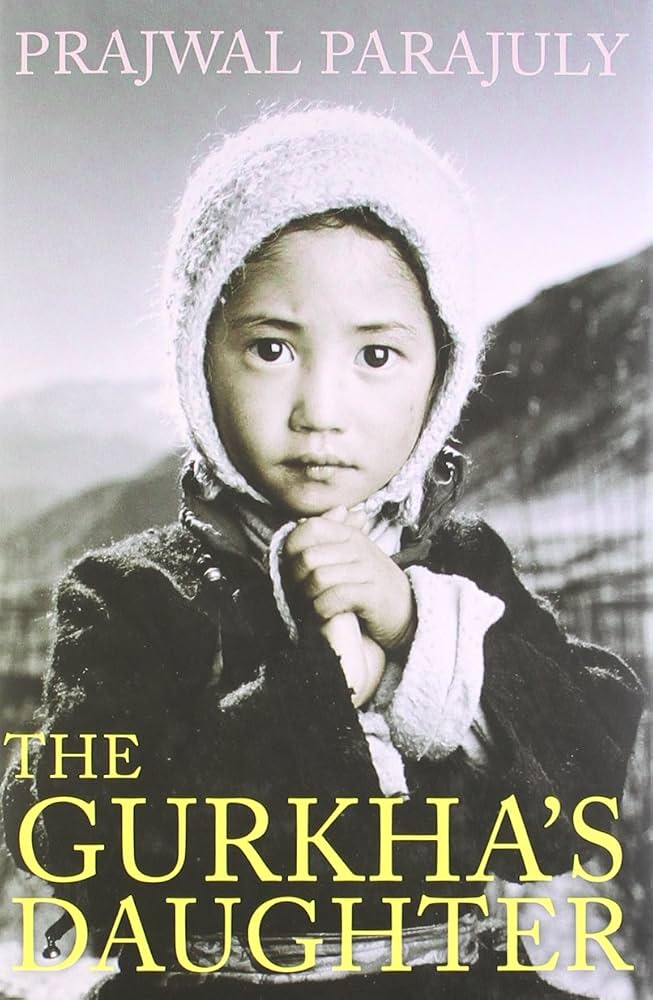
The Gurkha’s Daughter by Prajwal Parajuly. Penguin India (2012). ISBN: 9781848662759
The Gurkha’s Daughter by Prajwal Parajuly is a collection of short stories that portray the lives of people living along the Himalayan region. Parajuly’s literary fiction exposes subtle, discriminatory social practices, using insightful narratives to spark introspection about the everyday biases we often perpetuate subconsciously. Although the Eastern Himalayan region spans across political borders, it shares many commonalities, chief among them the Nepali language. This compilation of eight separate stories centres on themes of caste, colour, and religion-based discrimination, patriarchy, domestic violence, and conflicting standards of morality. These practices have become so intrinsic to daily life that we rarely give them a second thought.
The first four stories are set in India and its neighbouring countries, Nepal and Bhutan. A noticeable shift occurs in the latter four, which move the setting to Manhattan in New York. This geographical movement is not merely a change of backdrop. Parajuly uses it to examine how the same hierarchies of caste, class, and belonging travel with the diaspora and take on new forms in a foreign environment.
Parajuly touches upon the theme of caste discrimination. The caste system, rooted in the ancient Varna framework and later reinforced through the rigid jati hierarchy, gradually evolved into a hereditary social order that determined an individual’s occupation and social status. Although modern constitutional principles reject caste-based discrimination, its influence remains deeply embedded in everyday life through social interactions, marriage practices, access to resources, and economic inequalities. Through Supriya’s upbringing in “A Father’s Journey,” we witness how deeply ingrained prejudices against inter-caste marriage can pave the way for a miserable future, sacrificed at the altar of supposed incompatibility. Parajuly does not present this as an isolated family tragedy. He illustrates how the weight of community expectation quietly destroys personal happiness, forcing readers to confront the personal cost of conforming to social mores.
In the same vein, patriarchy continues to drive gender inequality despite decades of social and legal progress. This historical system of male dominance still shapes political, social, and domestic structures, manifesting today in unequal access to education, gender-based violence, and an unfair division of household labour. Intersecting with the caste system, patriarchy has become so deeply ingrained in our collective consciousness that its influence is often invisible, hidden within cultural traditions and unconscious biases. Together, these systems stand as some of the most formidable obstacles to dignity and social justice today.
These intersecting forces of caste, colour, and patriarchy are sharply illustrated in the story “The Cleft”. Kaali, the house help of Parvati, is a dark-skinned girl with a cleft lip from Dooars region of the Indo-Bhutan border. The omnipresence of caste and colour-based discrimination is evident in the comments directed at her. She is labelled “uncivilised” because she belongs to an Adivasi tribe and has been named Kaali solely due to her dark complexion. Derogatory remarks about her cleft lip are hurled at her with unsettling casualness. The story also reveals how certain professions, such as that of a darji (tailor) are looked down upon because they are traditionally associated with lower-caste groups.
Patriarchy further compounds this discrimination through the strong preference for male children. Daughters are often viewed as liabilities and sons as assets, a mindset that explains why Kaali was given away to Paravati for free, regarded as just another mouth to feed. By presenting these humiliations through ordinary domestic interactions rather than dramatic confrontations, Parajuly reveals the violence of everyday humiliation and prejudice that routinely shape the lives of the marginalized. This makes the stories all the more disturbing and tragic. Patriarchy’s deep entrenchment in society is further revealed through other characters’ experiences. Ravi from “No Land is Her Land” remarries solely because his first wife was unable to give him a male child. He then marries Anamika only to secure a male offspring, and abandons her when she fails to do so. Patriarchal norms have become so normalised in society that women are expected to identify themselves solely within the bounds of family and household; to think beyond the threshold of the home risks ostracism. Against this backdrop, the courage of Sarita from the story “The Cleft” is noteworthy as she takes the initiative to reinvent herself and even considers divorce, a highly stigmatised concept in the society depicted. Parajuly uses these contrasting female characters to show both the crushing weight of tradition and the quiet, costly price of resistance. Through such portrayals, he invites readers to consider the impact of different styles of parenting and the importance of education and exposure in challenging social evils like patriarchy.
Through a range of interconnected stories, Parajuly exposes the gap between idealised notions of unity and the harsh social realities of discrimination, exclusion, and cultural constraint that shape life in the Eastern Himalayan region and beyond. He captures the hollowness of the concept of “unity in diversity”, an idea that may sound pleasing but is largely divorced from reality. It is merely an illusion. Closely linked to this is the outsider-insider dilemma. This dynamic is at play in the story “Let Sleeping Dogs Lie,” where the indigeneity of the outsider is often questioned, leaving them oppressed and disadvantaged. As one character sharply reminds another: “…Just because I talk to you like you’re not a paanwalla, like you’re one of us, doesn’t mean you can talk ill of my friend. Try to stay in your place.” (p. 57). The line lands with quiet brutality, revealing how conditional and fragile acceptance can be.
The stories also confront deeply rooted cultural taboos and everyday prejudices. The poignant narrative of “A Father’s Journey” tenderly depicts the orthodox customs surrounding menstruation. It explores how a once-endearing bond between a father and his daughter gradually becomes strained under the weight of rigid traditions. The emotional distance grows between them leading to a slow erosion of their intimacy. In “Missed Blessings,” the complexities of human behaviour are laid bare, capturing a deep-seated resistance to change, volatile emotional regulation, and an underlying apprehension of proselytisation. Meanwhile, “No Land is Her Land” depicts the gruelling plight and stereotypes a woman faces, constant questions surrounding her honour, the hardships of single parenthood, and the challenges of making ends meet, especially in refugee camps. Superstition further clouds rationality and plagues childhood innocence in the titular story “The Gurkha’s Daughter,” where transferring one’s bad luck to another appears to be a suitable option, even if the receiver is a dear friend or miteri/mitini ( a form of fictive kinship common in the Himalayan region). Parajuly handles this encounter with subtlety, showing how language can both bridge and obscure differences.
Questions of language, identity, and belonging receive equally nuanced treatment. There is a widespread assumption that anyone who speaks Nepali must be from Nepal. In reality, a large Nepali-speaking community thrives just across the border in India, possessing its own unique accents and dialects. This dynamic takes centre stage in “The Immigrants” when Sabitri, from Ilam, Nepal, meets Amit, a resident of Darjeeling, India. Because of their shared language, Sabitri automatically views Amit as a fellow countryman. Yet, as the story highlights, Nepali is native to many parts of India, especially the Himalayan belt. Placed in a foreign environment, these two characters look past their borders and find deep comfort in their shared cultural roots.
These stories resonate powerfully with readers from the Himalayan regions because they mirror everyday realities. Through these tales, Parajuly addresses harsh social realities such as caste discrimination, patriarchal oppression, and the struggles of refugees. Each story aims to dismantle cultural stereotypes while highlighting the complexities of domestic life and human relationships. Moreover, the stories are notable for their open-ended conclusions, leaving the final resolution of these emotional journeys to the reader’s imagination and discretion.
These eight stories of the Nepali-speaking communities living across India, Nepal, Bhutan, and America offer us a snapshot of the lives of different individuals. Parajuly’s insights are perceptive, and he writes with raw honesty. By focusing on the characters rather than the fabled landscape, he offers an insightful study of the desires, dreams, and cultures that shape lives in the region. The Gurkha’s Daughter is a wonderful collection that reveals his creativity. It succeeds not because it resolves the inequities it depicts, but because it refuses to. It contributes significantly to the region’s literature. Yet its themes are of universal relevance, marking a unique contribution to contemporary South Asian literature.
Choden Bhutia is an Assistant Professor at Akui Kamalabala Women’s College, Bankura University. In her free time, she enjoys experimenting with culinary techniques from different cultures, spending time with friends and family, and trying new things outside her comfort zone.