Failed Solutions and the Unfinished Present - Resettlement, Deportation, and Political Imprisonment
Abstract
This is the second of a two-part article revisiting the Lhotshampa crisis. Part I traced the historical formation of the Lhotshampa community in southern Bhutan, its administrative unmaking through the 1985 Citizenship Act and the 1988-89 census, the testimonial archive through which the crisis has most often been narrated, and its place within a wider South Asian pattern of exclusionary citizenship politics. Part II picks up where that account left off, examining why fifteen rounds of bilateral verification between Bhutan and Nepal failed to produce a single repatriation; why the third-country resettlement of more than 113,000 refugees between 2007 and 2016, though a considerable humanitarian achievement, has been widely misread as a resolution of the underlying citizenship dispute rather than its geographic redistribution; and why that dispute reopened, with unusual clarity, in 2025-2026, when the United States began deporting Bhutanese-born refugees whom Bhutan itself refused to receive. A final section examines the continued detention, and in one recent case the death in custody, of Bhutan's remaining political prisoners, before closing with a modest, jointly directed recommendation for the institutions that oversaw resettlement as a supposedly durable solution.
Failed Repatriation and the Politics of Verification
For more than a decade after the camps in eastern Nepal filled in the early 1990s, repatriation - not resettlement-was the explicit and overwhelmingly preferred objective of both the refugees themselves and the government of Nepal, which lacks any domestic legal framework for refugee protection and is not a signatory to either the 1951 Refugee Convention or its 1967 Protocol (Neikirk & Nickson 2024). Bhutan and Nepal conducted some fifteen rounds of bilateral negotiations over this period without producing a single repatriation (Human Rights Watch 2007). The most consequential of these negotiations, a Joint Verification Team established in 2001, spent roughly two years assessing the case files of refugees in a single camp, Khudunabari, sorting them into seven categories ranging from bona fide Bhutanese citizens forcibly evicted through several intermediate classifications to non-Bhutanese (Human Rights Watch 2007; Neikirk & Nickson 2024). In 2003, Bhutan announced that roughly 75 percent of those reviewed were found to have a legitimate claim to Bhutanese origin (Neikirk & Nickson 2024), a finding that, on its face, substantially undercuts the government's broader public position that the great majority of camp residents were not genuine citizens, and that ought to have provided a workable basis for at least a phased repatriation.
Bhutan and Nepal conducted some fifteen rounds of bilateral negotiations over this period without producing a single repatriation (Human Rights Watch 2007).
No repatriation followed. The reasons are best understood as a convergence of incentive failures rather than a single act of bad faith. For Bhutan, the political costs of admitting a precedent-setting return of even a partial refugee population-implicitly conceding the citizenship claims the state had spent the preceding decade denying-were substantial, particularly given the absence of any external mechanism capable of compelling compliance: Bhutan is not a party to the 1951 Refugee Convention, the 1954 Convention Relating to the Status of Stateless Persons, or the 1961 Convention on the Reduction of Statelessness, and the international legal venues theoretically available-the International Court of Justice, which requires state consent to jurisdiction, and the International Criminal Court, whose jurisdiction in any case postdates the relevant events-offered the refugees no practical avenue of legal compulsion (Neikirk & Nickson 2024). For Nepal, hosting the camps for over a decade while declining to grant local integration created its own perverse incentive to treat resettlement, rather than repatriation, as the path of least resistance once it became available. For the wider international community, sustained diplomatic pressure on Bhutan-a small, strategically unthreatening, and reputationally cooperative state-never developed the urgency that comparable refugee-producing crises elsewhere generated, a disparity that refugee advocacy organizations have explicitly noted in their own policy submissions (Neikirk & Nickson 2024).
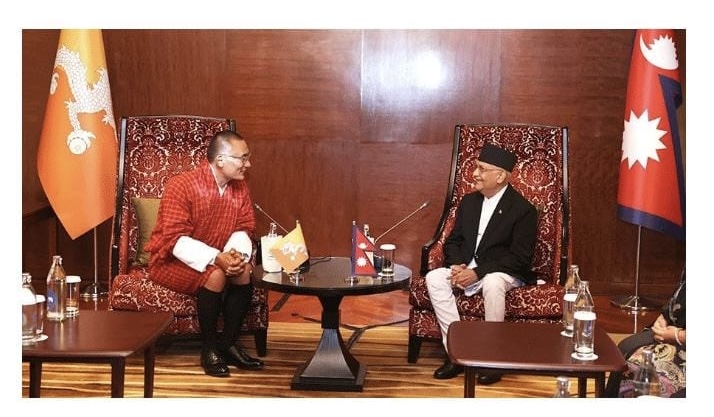
It would be a mistake to read this account as suggesting that verification and resettlement were morally equivalent paths, chosen with equal legitimacy by all parties. The shift from repatriation to resettlement as the international community's preferred "durable solution," formalized once UNHCR and the IOM began coordinated third-country resettlement in 2007, represented in practice an acceptance that the underlying citizenship dispute would not be resolved-only that its humanitarian consequences could be managed by relocating the people affected by it elsewhere. Whether that managed displacement should be understood as a genuine solution to the crisis, or merely as its geographic redistribution, is the question taken up in the following section.
Resettlement as Solution? The Politics of a "Successful" Humanitarian Programme
Between November 2007 and 2016, the coordinated resettlement of Bhutanese refugees from the camps of eastern Nepal became, by volume, one of the largest refugee resettlement operations the UNHCR and IOM had ever undertaken, eventually relocating more than 113,000 people to eight countries- the United States receiving the largest share, followed by Canada, Australia, and several European states (International Organization for Migration 2015; Sikkim Express 2025). By any conventional humanitarian metric, the programme was a substantial success: families who had spent fifteen to twenty years in bamboo-and-thatch camp housing, dependent on rationed food and without secure legal status, gained citizenship pathways, education, and employment in stable democracies. It is for this reason that most general-audience accounts of the Lhotshampa crisis written in the past decade treat resettlement as its effective conclusion.
The most rigorous recent fieldwork on the programme's reception among the refugees themselves complicates this conclusion considerably. Neikirk and Nickson's (2024) decade-long ethnographic study of Bhutanese refugees in Nepal and Australia found that a meaningful share of the population, particularly older refugees who had spent the most active years of their lives advocating for return, did not experience resettlement as a justice outcome at all, but rather as an alternative to one: durable and materially beneficial, but categorically different from the repatriation and citizenship restoration they had originally sought. Some refugees interviewed for that study described declining resettlement specifically because accepting it felt, to them, like forfeiting a claim to Bhutanese nationality that they considered more important than the material improvements resettlement offered; others who did resettle described the programme less as a right they had been legally empowered to pursue than as something closer to a lottery, granted for good conduct in the camps rather than secured through their own decades of advocacy (Neikirk & Nickson 2024). This is not a criticism of the resettlement programme's humanitarian value, which by any measure was considerable, but it is a necessary corrective to the assumption, common in retrospective journalism, that resettlement and justice were synonymous, or that the underlying citizenship dispute was resolved simply because most of its victims were no longer physically present in the camps where it had been most visible.
It is for this reason that most general-audience accounts of the Lhotshampa crisis written in the past decade treat resettlement as its effective conclusion.
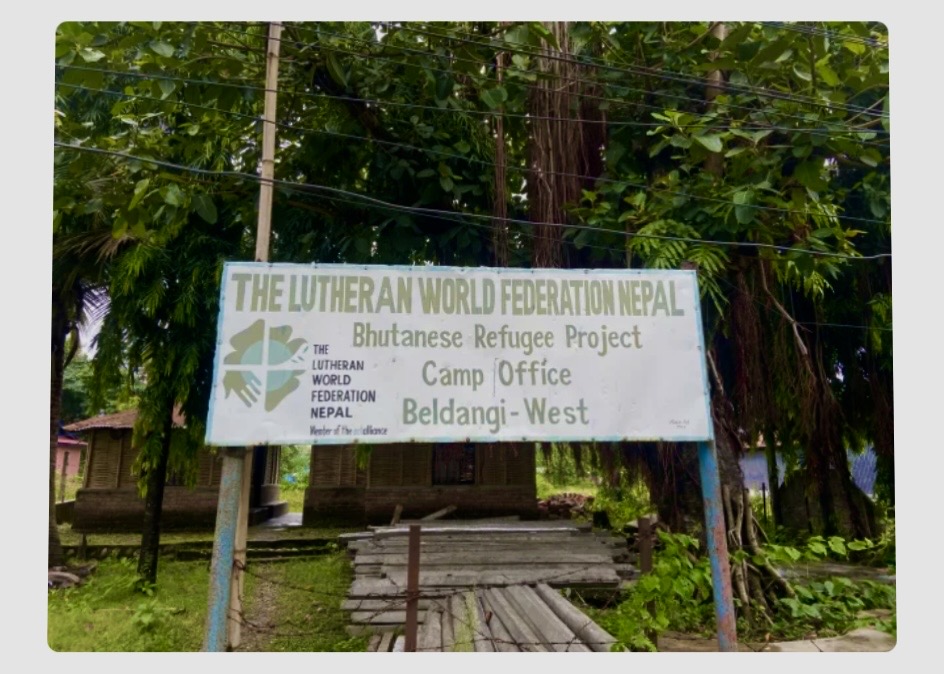
That assumption also obscures who, precisely, resettlement left behind. By the time UNHCR formally ended direct camp assistance in 2016, an estimated 6,500 to 7,000 refugees- disproportionately elderly or medically infirm, and in many cases reluctant to leave family graves, ancestral claims, or simply the remaining hope of return-remained in two consolidated camps, Beldangi and Sanischare, in Nepal's Jhapa and Morang districts (Sikkim Express 2025; Neikirk & Nickson 2024). Without UNHCR's direct support, this residual population has been left dependent on informal and frequently exploitative labour, lacking the legal status that would allow either local integration in Nepal, which the Nepali government has consistently declined to extend, citing its own non-signatory status under international refugee law, or any renewed claim on Bhutan (Sikkim Express 2025). Their situation is, in the strict legal sense, indistinguishable from the situation of every Lhotshampa refugee in the early 1990s: stateless, without a recognized claim on any government, dependent entirely on the residual goodwill of a host state under no binding obligation to provide for them. The resettlement programme did not so much resolve this condition as reduce, by more than ninety percent, the number of people experiencing it- an achievement worth honouring without mistaking it for a closed case.
The Second Exile: U.S. Deportations and the Reopening of Statelessness, 2025–2026
The clearest evidence that the Lhotshampa crisis was never definitively closed by resettlement emerged not from Bhutan or Nepal but from an unrelated shift in United States immigration enforcement policy. Beginning in March 2025, U.S. immigration authorities deported a number of Bhutanese-born refugees-individuals who had been lawfully resettled in the United States under the UNHCR-coordinated programme nearly two decades earlier, most following criminal convictions for which they had already served their sentences-to Bhutan, treating them, for deportation purposes, as Bhutanese nationals (Kathmandu Post, 11 April 2025). Until that point, U.S. immigration enforcement records showed no completed deportations to Bhutan in years, precisely because the Bhutanese government had consistently declined to accept the return of people it did not recognize as its citizens. What changed in 2025 was not Bhutan's underlying position on the refugees' citizenship, which it has never altered, but the diplomatic leverage the U.S. government was willing and able to exert to compel a small number of third countries to accept deportees they had previously refused.
The clearest evidence that the Lhotshampa crisis was never definitively closed by resettlement emerged not from Bhutan or Nepal but from an unrelated shift in United States immigration enforcement policy.

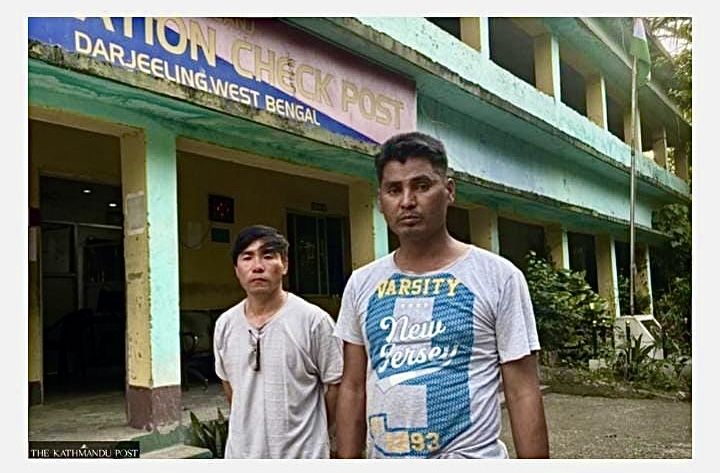
Ashish Subedi, one of the deportees deported by the US, at the camp in Eastern Nepal. Source: CNN World
The result was a sequence that exposes, with unusual clarity, the structural fragility of "durable solutions" achieved through resettlement rather than through resolution of the underlying citizenship dispute. At least eighteen individuals were deported from the United States to Bhutan in this period; Bhutanese authorities, on arrival, confiscated their travel documents, declined to register them as citizens, and transported a number of them to the Bhutan-India border, from where they crossed into India and ultimately into Nepal-the only country among the three with which they retained any prior residential connection, however informal (Kathmandu Post, 11 April 2025). Having entered Nepal without valid documentation, several of the deportees- including Ashok Gurung, Roshan Tamang, Ashish Subedi, and Sandeep Darji-were arrested by Nepali immigration authorities at or near the Beldangi camp on charges of illegal entry (Kathmandu Post, 17 April 2025). Nepal, as noted in Part I, is not a party to the 1951 Refugee Convention and has no domestic refugee law; its government initially moved toward deportation or prosecution before a habeas corpus petition reached the Supreme Court.
The court's intervention, in a pair of orders issued in April 2025, is itself an instructive episode in regional jurisprudence on statelessness. An interim order by Justice Hari Prasad Phuyal on 17 April halted the deportations, citing Nepal's obligations under the Convention Against Torture and the customary international law principle of non-refoulement-obligations the court applied despite Nepal's non-membership in the refugee-specific conventions that would more directly govern the case (Kathmandu Post, 17 April 2025). A subsequent joint-bench ruling on 24 April, by Justices Bal Krishna Dhakal and Nitya Nanda Pandey, partially granted the petition, ordering that the individuals be transferred to their original refugee camps rather than held in immigration detention, while directing further investigation into their status. The practical effect of these rulings was neither repatriation, nor resettlement, nor formal recognition of any citizenship-merely a judicially supervised return to precisely the same stateless, camp-bound condition from which these individuals' families had been "durably" resettled nearly twenty years earlier.
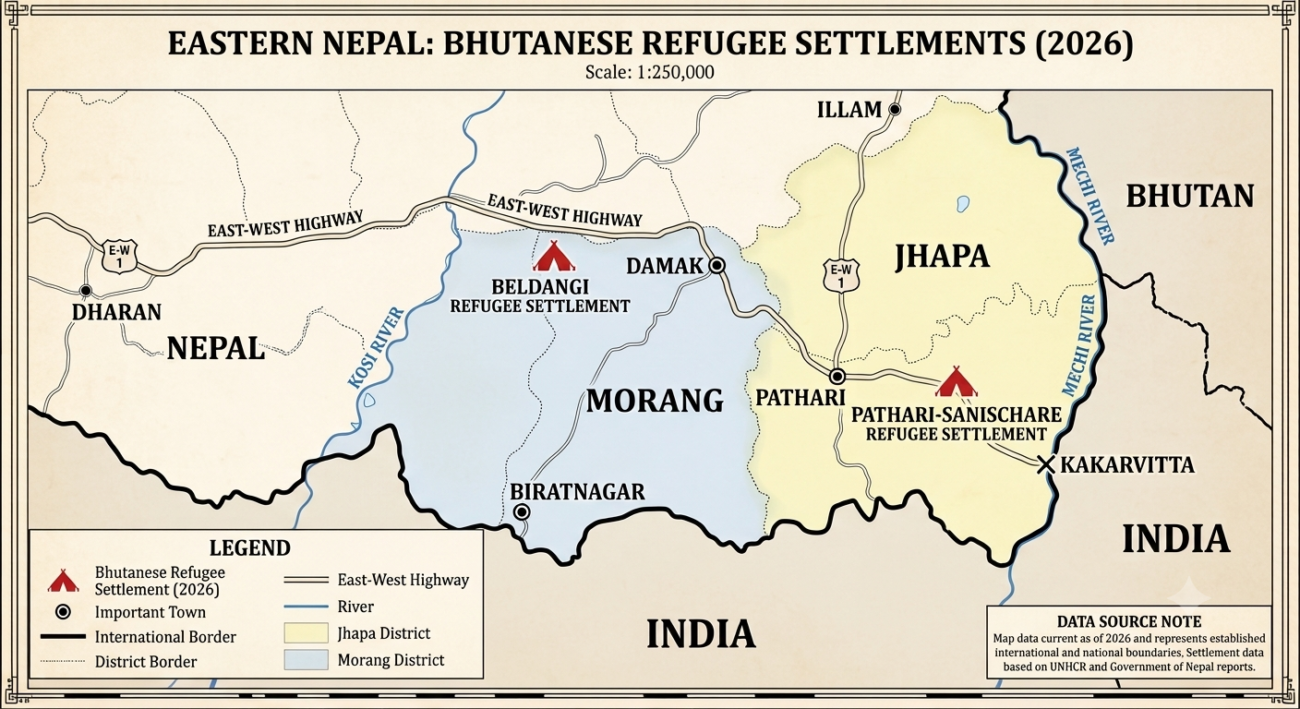
Refugee Camps at Morang and Jhapa Districts in Eastern Nepal where 6000 to 7000 remaining Refugees still reside as of 2026.
It is worth being precise about what this episode does and does not demonstrate. It does not establish that the U.S. resettlement programme was poorly designed, or that resettlement as a policy instrument is inherently unstable; the great majority of resettled Bhutanese refugees, including the deportees' own extended families in most reported cases, remain settled and have in many instances acquired the citizenship of their resettlement country, which would ordinarily extinguish any renewed risk of statelessness. What it demonstrates is narrower but, we think, more analytically important: that for individuals whose legal personhood originates in a contested or denied national citizenship, the protection conferred by a "durable solution" achieved through a third country's domestic policy remains contingent on that country's continued willingness to extend it. When a resettlement country's own immigration enforcement priorities shift, as occurred in the United States after 2025, a person whose original statelessness was never formally resolved-merely relocated and overwritten by a second country's legal status-can find that underlying condition reactivated with very little warning and no remaining recourse to the country that first dispossessed them. Bhutan's refusal to accept its own former citizens in 2025, more than three decades after denaturalizing them, is among the clearest possible confirmations that the citizenship dispute at the heart of this crisis was never actually settled by anyone's resettlement, court order, or verification exercise; it simply went, for most of two decades, unobserved by an international community that had moved on to describing the matter in the past tense.
Political Imprisonment and the Persistence of the Past
A second, longer-running indication that the crisis remains open is the continued detention of Bhutanese political prisoners, almost all of them Lhotshampa, whose cases originate in the same period of unrest described in Part I. According to Human Rights Watch's most recent published accounting, at least thirty individuals remained imprisoned as of mid-2026 under sentences connected to the late-1980s and 1990s protests or to a smaller cohort arrested in 2008 for advocating refugees' right of return; most are serving life sentences with no possibility of parole, a sentencing structure under Bhutanese law that permits release only through a royal prerogative of clemency known as kidu (Human Rights Watch 2026). Several of the longest-held prisoners, among them seven former Royal Bhutan Army soldiers accused of joining pro-democracy demonstrations while in service, have been held since 1990 at Rabuna, a remote military facility that former detainees and human rights monitors have repeatedly described as marked by severe isolation and minimal medical provision (Human Rights Watch 2026).
According to Human Rights Watch's most recent published accounting, at least thirty individuals remained imprisoned as of mid-2026...
The death in custody of Sha Bahadur Gurung, a 65-year-old former soldier who had been imprisoned for thirty-five years on charges connected to a single demonstration he was alleged to have attended in 1990, drew international attention to these conditions in a way that years of slower advocacy had not. Gurung died at Chamjang (Chemgang) Central Prison near Thimphu on 15 December 2025; his family and Nepal-based human rights organizations reported that he was found unconscious that morning after years of what they describe as untreated chronic illness and inadequate medical response, and called for an independent investigation into the circumstances of his death (Amnesty International Nepal 2026; Human Rights Watch 2026). Notably, Rizal had already observed in his own memoir that Chemgang Central Prison had a longstanding reputation as a "death camp," its construction and operation marked by the torture and deaths of several Lhotshampa detainees (Rizal 2009: 49).
A joint communication from six United Nations human rights experts in 2025 had already raised concern, prior to Gurung's death, that Bhutan's political prisoners faced inadequate food, heating, and medical care, warning that this neglect may have contributed to the death of two detainees even before Gurung's case (Human Rights Watch 2026). The UN Working Group on Arbitrary Detention separately found, in opinions issued across 2025 and 2026, that the continued detention of several of these prisoners violated international legal standards on multiple grounds (Human Rights Watch 2026).
Set against this record, two developments complicate any reading of the situation as simply static or worsening. First, Bhutan's own democratic transition, formalized between 2007 and 2008, has not been entirely without consequence for the political prisoner question, even if its effects have been slow and partial: the country now has a constitutionally guaranteed, if so far rarely exercised, judicial avenue for rights claims, and successive governments have engaged, however reluctantly, with the European Union and UN human rights mechanisms that have raised these cases rather than dismissing them outright (Neikirk & Nickson 2024; Human Rights Watch 2026). Second, and more concretely, two of the remaining political prisoners- Chatur Man Tamang and Hasta Bahadur Rai, both arrested in 2008-were released by the Bhutanese government on 1 June 2026, shortly after the UN Working Group's opinion on their case was finalized (Human Rights Watch 2026). Human Rights Watch, in welcoming the release, was careful to describe it as a step in the right direction rather than a resolution, noting that at least twenty-eight prisoners remained and calling for their release in turn.
These releases do not erase the preceding thirty-five years, nor do they answer the calls from Amnesty International and Nepali rights groups for an independent inquiry into Gurung's death. But they are worth recording as evidence that the situation is not frozen: Bhutan has, under sustained but modest external pressure, taken at least incremental steps that a purely static narrative of unyielding repression would not predict. A balanced account of this dimension of the crisis - one that neither minimizes thirty-five years of imprisonment without parole nor forecloses the possibility of further, similarly incremental change - seems to us the most honest way of representing where matters currently stand.
Conclusion: Toward an Unfinished Reckoning
Part I of this article began by noting that Bhutan's international reputation and its citizenship record rarely appear in the same sentence, and across both parts we have tried to bring them into the same frame without collapsing one into the other. Gross National Happiness is not a fiction invented to disguise the Lhotshampa crisis, any more than the Lhotshampa crisis is the only fact worth knowing about Bhutan; both are true of the same small kingdom, and a serious account of either has to make room for the other.
What we hope these two parts have added to an already considerable body of writing is less a new moral verdict-readers will reach their own conclusions about where responsibility lies among the Bhutanese state, the government of Nepal, and an international community that for thirty years found bilateral talks, and then resettlement, easier than sustained pressure for repatriation-than a corrected sense of the crisis's shape in time. It is not a closed historical episode with a beginning in 1985 and an end in 2016, bracketed by legislation on one side and a resettlement programme on the other. It is better understood as a status: a category of contested or denied nationality that, once created, does not expire merely because most of the people who held it have since acquired a different, more secure status elsewhere. That status was reactivated in 2025 by a change in U.S. immigration enforcement that had nothing to do with Bhutan or Nepal, and it persists, in a different register, in the cells of Chemgang and Rabuna prisons, where men arrested as young soldiers in 1990 have grown old and, in at least one recent case, died.
Gross National Happiness is not a fiction invented to disguise the Lhotshampa crisis, any more than the Lhotshampa crisis is the only fact worth knowing about Bhutan; both are true of the same small kingdom, and a serious account of either has to make room for the other.
If there is a single recommendation this history supports, it is a modest one: that the institutions which oversaw resettlement as a "durable solution"-UNHCR, the IOM, the eight resettlement governments, and Bhutan and Nepal themselves - revisit, explicitly and jointly, what protection remains owed to people whose underlying statelessness was never resolved, merely relocated. This would include, at minimum, a clear bilateral or multilateral understanding about the status of resettled refugees who are later subject to removal proceedings in their country of resettlement, and continued, undiminished attention - diplomatic, not merely humanitarian - to both the residual camp population in Nepal and the remaining political prisoners in Bhutan. None of this requires treating Bhutan as an outlier among nations, or pretending its broader achievements do not exist. It requires only treating its unfinished citizenship question with the same seriousness that the kingdom has, for thirty years, successfully persuaded the world to extend to everything else about it.
References
Amnesty International Nepal. (2026, January 16). Mysterious death of prisoner Sha Bahadur Gurung must be independently investigated and accountability ensured. Amnesty International Nepal.
Human Rights Watch. (2007, February 14). Stateless refugee children from Bhutan living in Nepal. Human Rights Watch.
Human Rights Watch. (2026, June 10). Bhutan: 2 political prisoners freed, but 28 remain. Human Rights Watch.
International Organization for Migration. (2015, November 19). Resettlement of refugees from Bhutan tops 100,000. IOM.
Kathmandu Post. (2025, April 11). As Bhutan disowns, Nepal in a fix over 4 US-deported refugees.
Kathmandu Post. (2025, April 17). Supreme Court stays deportation of four Bhutanese refugees.
Neikirk, A., & Nickson, R. (2024). Transitions without justice: Bhutanese refugees in Nepal. International Journal of Transitional Justice, 18(2), 267–280.
Rizal, T. N. (2009). Torture Killing Me Softly: Bhutan Through the Eyes of a Mind-Control Victim.
Sikkim Express. (2025, February 28). The uncertain future of Bhutanese refugees left behind in Nepal.