Walk through any part of Gangtok, and you will notice something quietly sustaining life in the background. Small streams of water emerging from the hillsides. They are springs, locally known as dharas. For generations, they have been an essential part of everyday life. Even today, in a rapidly growing city, these natural water sources continue to support households, often in ways that go unnoticed.
More than just Water Sources
For many people in Gangtok, springs are not just an alternative. They are a necessity. A single household may require 50-100 litres of water per day for basic needs like drinking, cooking, and washing. Springs often help meet this demand where municipal supply is irregular. People collect water for drinking, washing, and other daily needs, especially in areas where access to municipal water is limited or uncertain. In some neighbourhoods, visiting a nearby spring is still part of the daily routine. During conversations with residents, this dependence became even clearer. A shopkeeper in Burtuk shared that not only his shop but several nearby households depend on this water source.
For many people in Gangtok, springs are not just an alternative. They are a necessity...During conversations with residents, this dependence became even clearer. A shopkeeper in Burtuk shared that not only his shop but several nearby households depend on this water source.
A City Growing Around Water
What is interesting about Gangtok is that many settlements have historically developed around these springs. Long before modern infrastructure, people chose to live close to reliable water sources. Today, even as the city expands and changes, this connection still exists.
What is interesting about Gangtok is that many settlements have historically developed around these springs. Long before modern infrastructure, people chose to live close to reliable water sources. Today, even as the city expands and changes, this connection still exists. In many areas, springs remain embedded within urban spaces, beside roads, hidden between houses, and along forested slopes. They form a quiet network that continues to support the city. This network is not made up of springs alone. In Sikkim, along with springs, there are also jhoras (small natural streams that carry water down the hills). These jhoras help feed many springs along the way. But in many places, they are being blocked, polluted, or disturbed by construction and waste. When this happens, it also affects the springs that depend on them.
Changing Patterns, Growing Concerns
Many residents feel that some springs are not as abundant as they used to be. Changes in rainfall patterns, increasing construction are often seen as possible reasons. A homeowner in Deorali shared that since the construction of new houses began the water flow has noticeably reduced and may eventually dry up. He expressed concern that there should be stricter rules to prevent construction directly on or near natural springs.
Although many springs are perennial, residents say the flow decreases significantly during the summer months compared to earlier years. These changes are not always dramatic, but they are noticeable enough for people who depend on these sources daily. In some cases, the issue is not just natural changes but also everyday neglect.
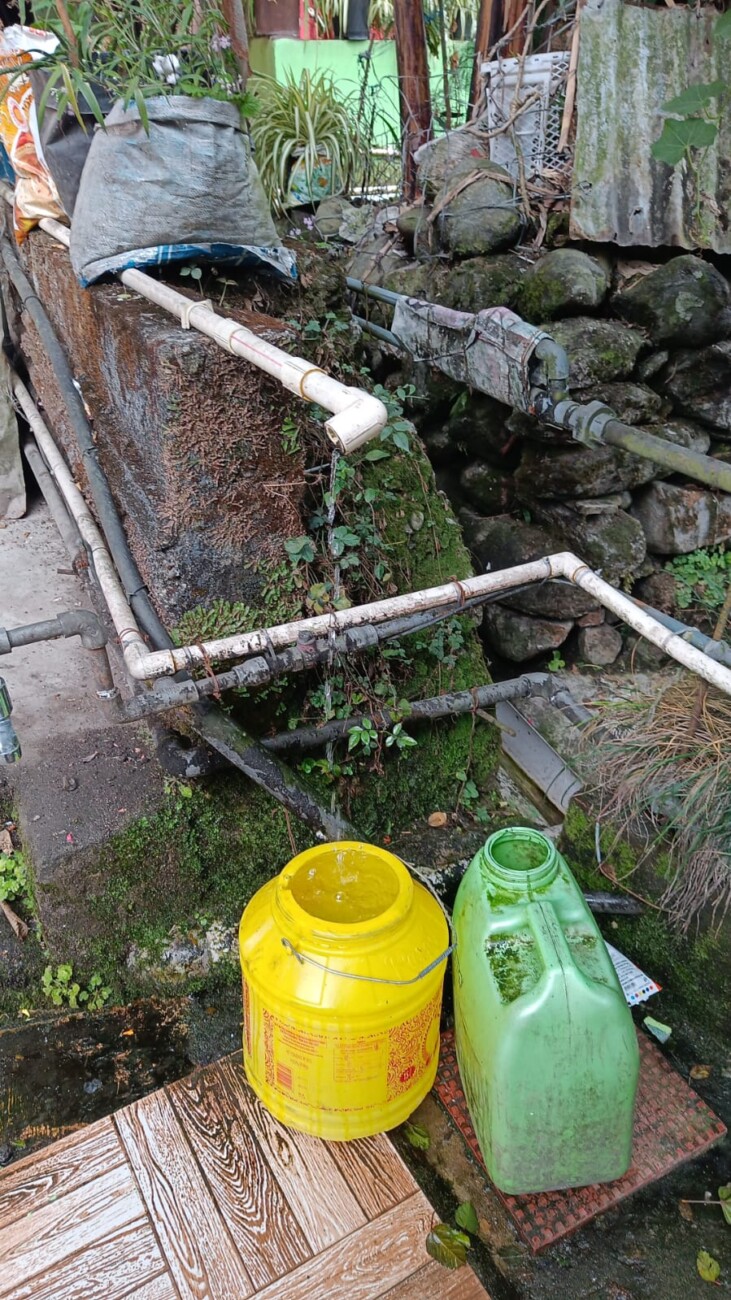
Although many springs are perennial, residents say the flow decreases significantly during the summer months compared to earlier years. These changes are not always dramatic, but they are noticeable enough for people who depend on these sources daily. In some cases, the issue is not just natural changes but also everyday neglect. For example, leaking pipes have been observed near Amdo Golai, where water is continuously lost due to the lack of maintenance. Such carelessness adds pressure on already limited water resources.
Community Care and Shared Responsibility
One of the most remarkable aspects of springs in Gangtok is how they are cared for. Even when there is no formal system in place, local communities often take responsibility in maintaining them. People clean the area, ensure the flow is not blocked, and share access with others. In many cases, these spaces are treated as common resources, regardless of whether they are on private or public land. This sense of shared ownership reflects a strong community connection to these water sources.
One of the most remarkable aspects of springs in Gangtok is how they are cared for. Even when there is no formal system in place, local communities often take responsibility in maintaining them. People clean the area, ensure the flow is not blocked, and share access with others.
Some springs are also well-maintained. For example, ‘Bardang Dhara in Bardang’ and ‘Gai Dhara in Tadong’ are known to be relatively clean and well-kept, showing how community effort can make a difference. However, not all springs receive the same level of care. One spring near TNA has the potential to be a well-maintained public space, but it is dirty and with continuous water flow there is waterlogging in the surrounding area.
In Tathangchen, a house owner explained that some springs have small reservoir systems built upstream to store water. However, these are located higher up in the hills and reaching them during the rainy season becomes very difficult, and often remains out of reach.
A Cultural Connection to Water
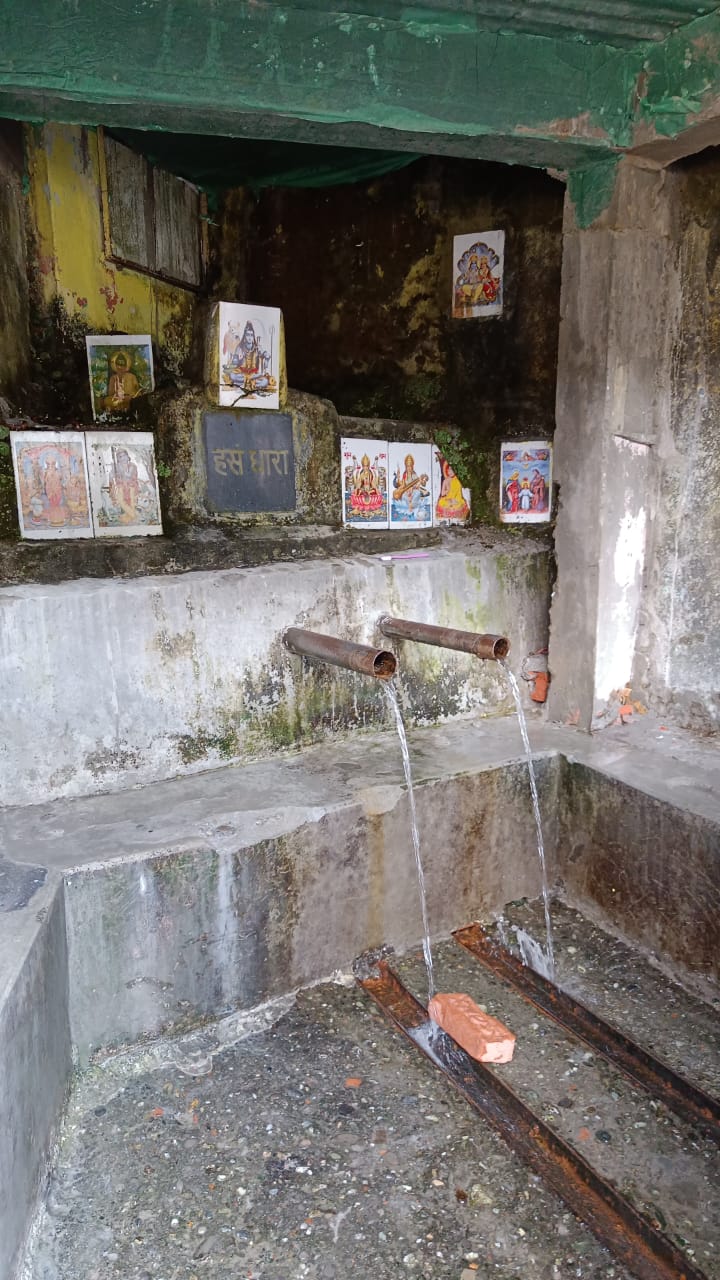
Springs are not only practical, but they also carry cultural meaning. Many are considered sacred and are associated with long-standing beliefs and traditions. Some are linked to local deities, and others are used during festivals and rituals. These practices bring people together and reinforce the importance of protecting these sites. A driver shared an example of a dhara in Ranipool, which is believed to be associated with Naag deities. According to local belief, these serpent deities reside in such water sources, giving them spiritual importance and encouraging people to treat them with respect. This cultural layer adds another dimension to why springs continue to matter.
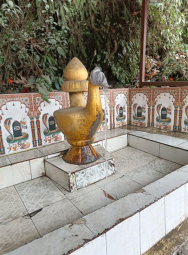
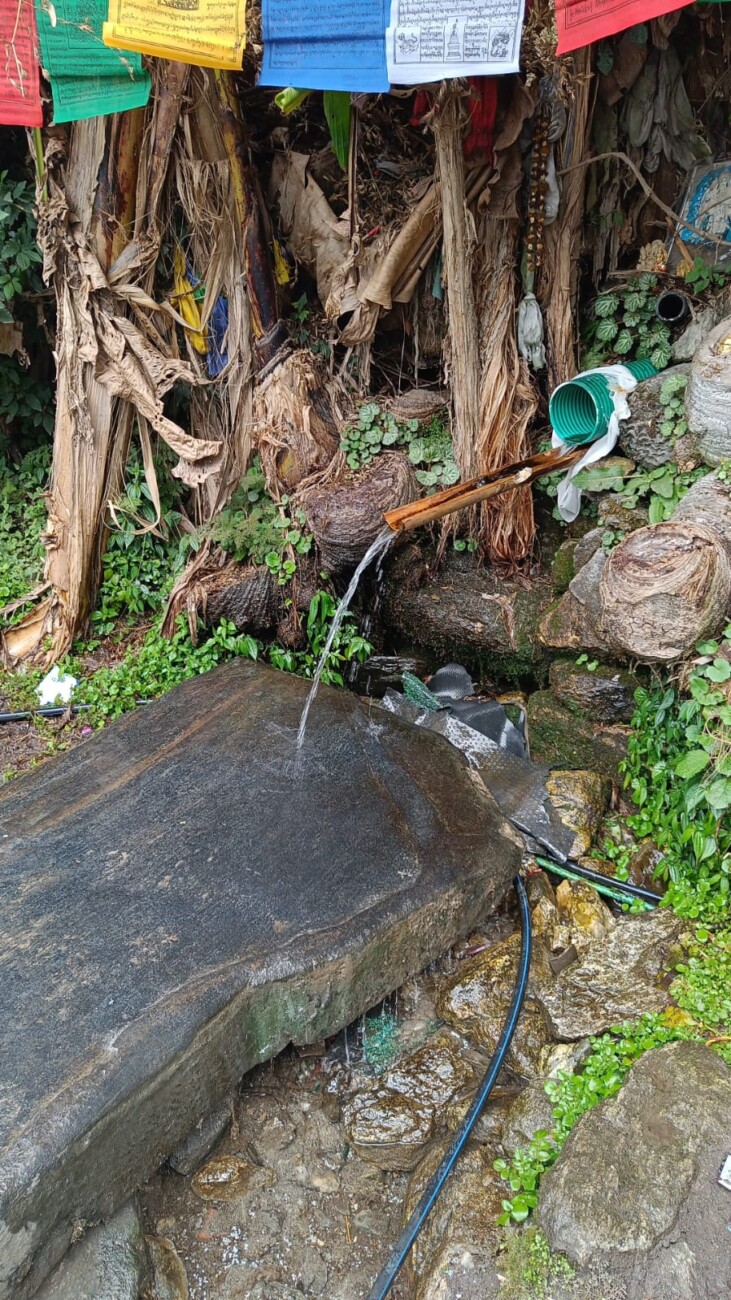
Springs are not only practical, but they also carry cultural meaning. Many are considered sacred and are associated with long-standing beliefs and traditions. Some are linked to local deities, and others are used during festivals and rituals. These practices bring people together and reinforce the importance of protecting these sites.
Looking Ahead
As Gangtok continues to grow, it is important not to overlook these natural systems. Springs are not outdated or temporary solutions. They are part of the city’s foundation. Protecting them means not only ensuring water availability but also preserving community practices and local ecosystems. Certain areas, such as Deorali ward, are known to have a high concentration of springs, making them especially important from a planning and conservation perspective.
As Gangtok continues to grow, it is important not to overlook these natural systems. Springs are not outdated or temporary solutions. They are part of the city’s foundation. Protecting them means not only ensuring water availability but also preserving community practices and local ecosystems.
Sikkim already has initiatives like the ‘Dhara Vikas Programme’ that focus on protecting and reviving springs. However, in urban areas like Gangtok, where land use is constantly changing, springs need more focused attention, as they are more vulnerable to construction and everyday pressures. Small steps can go a long way in maintaining these vital sources.
A Quiet but Essential System
In many ways, springs represent a parallel water system. Deeply rooted in the landscape and culture of the region they operate alongside formal infrastructure. They may not always be visible in plans or policies, but for many people in Gangtok, they remain indispensable. In the face of growing water challenges, they are more important now than ever. As the city grows, the question is not whether these systems still matter but whether we are paying enough attention to them.
In many ways, springs represent a parallel water system...As the city grows, the question is not whether these systems still matter but whether we are paying enough attention to them.
Author's Note:
The insights presented in this article were developed during my internship at the Ashoka Trust for Research in Ecology and Environment (ATREE). I am grateful to the team for their support and to Dr. Sailendra Dewan for his guidance, supervision, and the opportunity to contribute to vital spring conservation effort.
Niharika Bindal is an Environmental Engineer passionate about sustainability, water management, and environmental research. She holds a B.Tech in Civil Engineering and an M.Tech in Environmental Engineering. Her research interests focus on sustainability, nature-based solutions, wastewater treatment, and environmental management. She has worked on projects related to ‘Phytoremediation of textile wastewater’ and ‘GIS-based spring mapping and assessment’ in Gangtok. She is currently working as a Site Engineer in water and sewage treatment projects.