Stories of Farming, Climate, and Survival from the Eastern Himalaya
On a clear morning in Sittong, an elderly farmer Nima Tshering Lepcha walks down a narrow footpath that cuts through terraced fields clinging to the hillside. Twenty years ago, this land grew finger millet and barley-crops that fed families and shaped food traditions. Today, those same terraces are dotted with betel nut and black pepper plants, symbols of adaptation rather than choice. The farmer pauses, looks up at the sky, and says quietly, ‘The weather doesn’t listen to us anymore.’
This feeling echoes across villages in Sikkim and Darjeeling Himalaya. The data collected through focus group discussions and village-level surveys tell a deeply human story-one of resilience tested by climate uncertainty, knowledge gaps, and shifting livelihoods. Together, these villages form a living map of how climate change is rewriting agriculture in the Eastern Himalaya.
Crops that once defined life are disappearing
Across multiple clusters, traditional crops are steadily declining. In Sittong’s Lepcha Gaon and Mangar Gaon, farmers reported that finger millet, barley, kodo, and jowar no longer perform as they once did. Rising temperatures have reduced work efficiency and yields, while unexpected rainfall damages crops at critical stages. In Yang Makum- Upper Panbu village, paddy yields have fallen dramatically-from around ten quintals to barely three. Such numbers are not just statistics; they translate directly into food insecurity and economic stress.
Rising temperatures have reduced work efficiency and yields, while unexpected rainfall damages crops at critical stages.
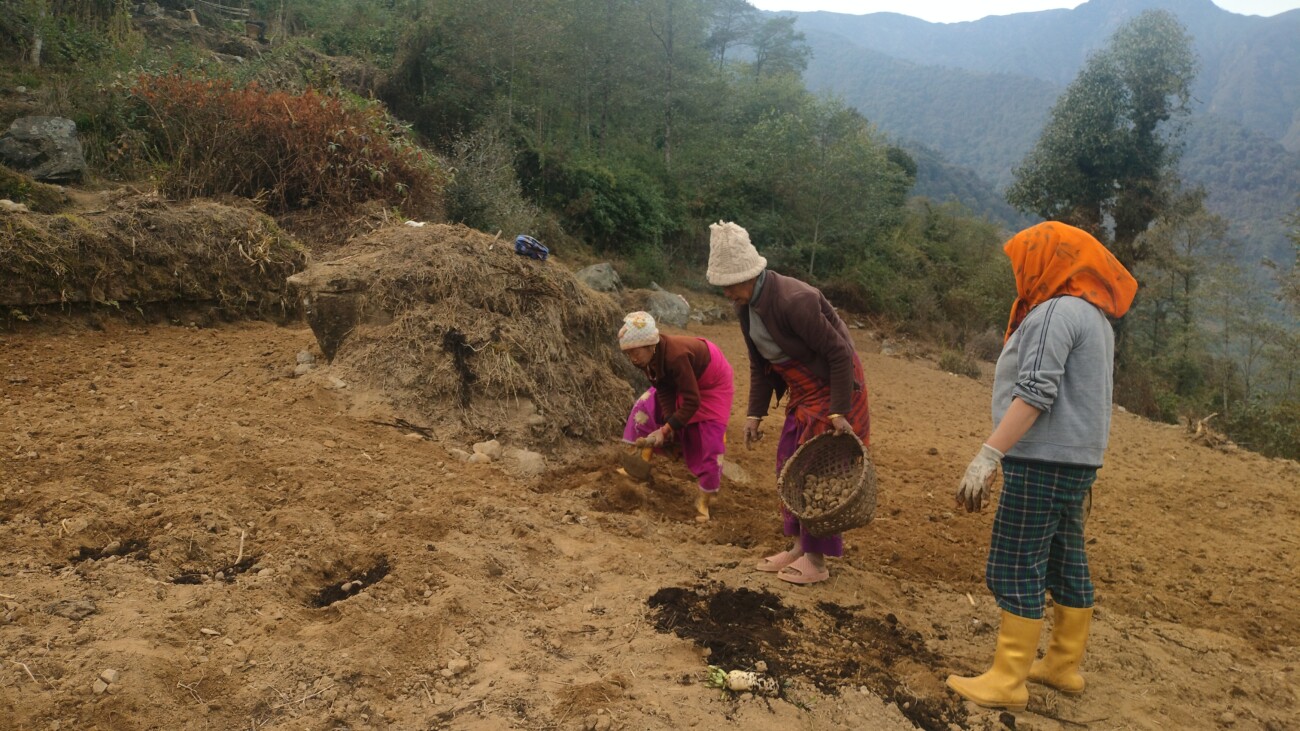
In Sarantar village of West Sikkim, snowfall used to act as a natural water reservoir, slowly releasing moisture into the soil. With reduced snowfall today, the soil dries faster, and crops struggle to survive. Farmers such as Amar Tamang, Amrit Chettri and Birta Lepcha continue to cultivate maize, potatoes, and peas, but many fear that even these crops may not be reliable in the coming years.
Rain that comes at the wrong time
Rain is no longer a blessing that can be predicted or planned around. In Dhaki Gaon, a single episode of sudden October rainfall destroyed mustard leaves, radish, carrots, and squash. Red cherry pepper dried up in open fields, while cauliflower failed due to lack of irrigation during winter months. Similar stories emerged from Rimbick, Sepi, and Timbure, where irregular rainfall patterns have led to repeated crop losses.
Most villages still depend heavily on rain-fed agriculture. Irrigation infrastructure is minimal, and when rainfall becomes erratic, farmers have little room to respond.
Most villages still depend heavily on rain-fed agriculture. Irrigation infrastructure is minimal, and when rainfall becomes erratic, farmers have little room to respond. Even where initiatives like rainwater harvesting exist, as seen in Dhaki Gaon, ongoing technical support is missing, limiting long-term benefits.For example, regular visits by trained extension workers could help by checking for leakages and silt accumulation in storage tanks, teaching villagers simple repair techniques such as sealing cracks and cleaning filters, advising on efficient irrigation methods like drip or pitcher irrigation, and guiding farmers on crop planning based on stored water capacity. Such targeted technical assistance would ensure the systems remain functional and farmers can adapt better to changing rainfall patterns.
Soil is tired, but farmers don’t know why
Soil degradation is a silent crisis across the region. Many farmers sense declining fertility but lack the tools to understand or address it. In Limbu Gaon, Thambi, Timbure, and Beech Gaon, soil samples were collected years ago, yet laboratory reports were delayed, unread, or issued in languages farmers could not understand. In some cases, reports were never collected at all.Without clear guidance, farmers rely on guesswork. Some use chemical inputs like insecticides without proper training, while others depend entirely on manure and compost, unsure if it is enough. In landslide-prone villages, farmers suggested reversing soil layers to restore fertility, but admitted they lacked the technical knowledge to do so safely.
...farmers’ indigenous knowledge is rarely integrated into scientific recommendations, creating distrust and disengagement.
This gap between helpful technology and farmer understanding happens for several reasons. First, top-down project implementation dominates: experts collect samples and generate data, but fail to translate results into locally meaningful advice. Second, there is a language and literacy barrier-reports are rarely provided in local languages or simplified formats. Third, weak extension services mean there are few trained personnel to visit villages, explain findings, and demonstrate practical solutions. Fourth, institutional follow-up is poor; once data is collected, projects often end, leaving farmers without continued guidance. Finally, farmers’ indigenous knowledge is rarely integrated into scientific recommendations, creating distrust and disengagement.
Thus, while soil testing technology exists and has the potential to improve farm productivity, its impact remains limited due to failures in communication, training, and institutional support. Bridging this gap requires not just better technology, but better translation of knowledge-through field demonstrations, local-language soil cards, regular extension visits, and participatory learning methods that respect farmers’ experiences. Only then can scientific tools truly serve those who need them most.
Pests are winning the battle
As warmer temperatures have allowed pests to spread into regions that were previously unaffected. Potato crops in West and North Sikkim are increasingly damaged by red ants (Solenopsis species), which attack tubers underground, create entry points for fungal infections, reduce market quality, and often result in complete crop failure. Traditional crops such as maize and millet are also under threat from the fall armyworm (Spodoptera frugiperda), a newly invasive pest linked to rising temperatures. Feeding on leaf whorls, it causes ragged leaves, stunted growth, and can devastate entire fields. In villages like Fangtar and Tsong, increasing pest pressure has coincided with changes in cropping patterns, pushing farmers away from long-grown staple crops.
Potato crops in West and North Sikkim are increasingly damaged by red ants (Solenopsis species), which attack tubers underground, create entry points for fungal infections, reduce market quality, and often result in complete crop failure.
Shifting to cash crops and to non-farm work
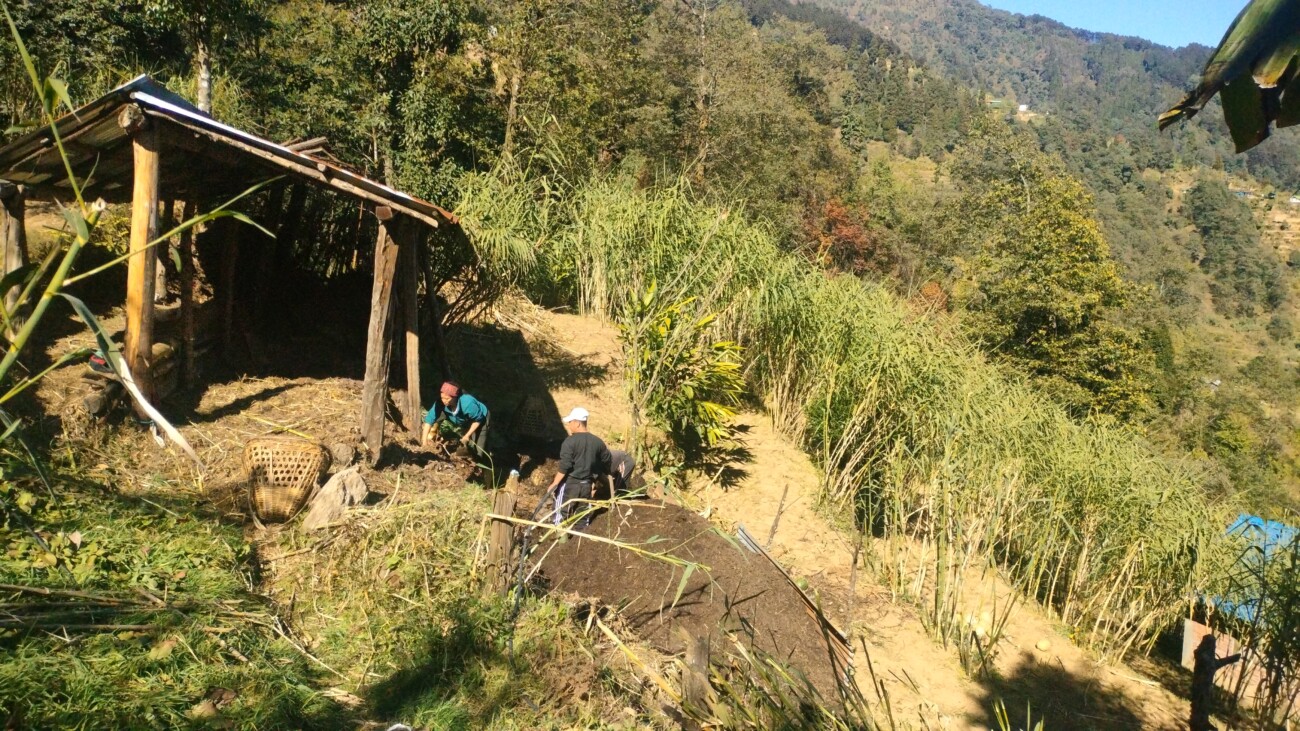
As food crops fail, cash crops appear more attractive. Betel nut, broomstick, cardamom, ginger, and Indian bay leaf are increasingly common across Sittong, Panbu, and Yang Busty. In some villages, oranges are grown commercially, though early decay and pest infestation have become serious concerns.
At the same time, agriculture is no longer the primary livelihood for many households. In Panbu’s Samthar village, farmers such as Kamal Bhujel, Gopi Bhujel are diversifying into poultry, milk distribution, broomstick cultivation, and eco-tourism.
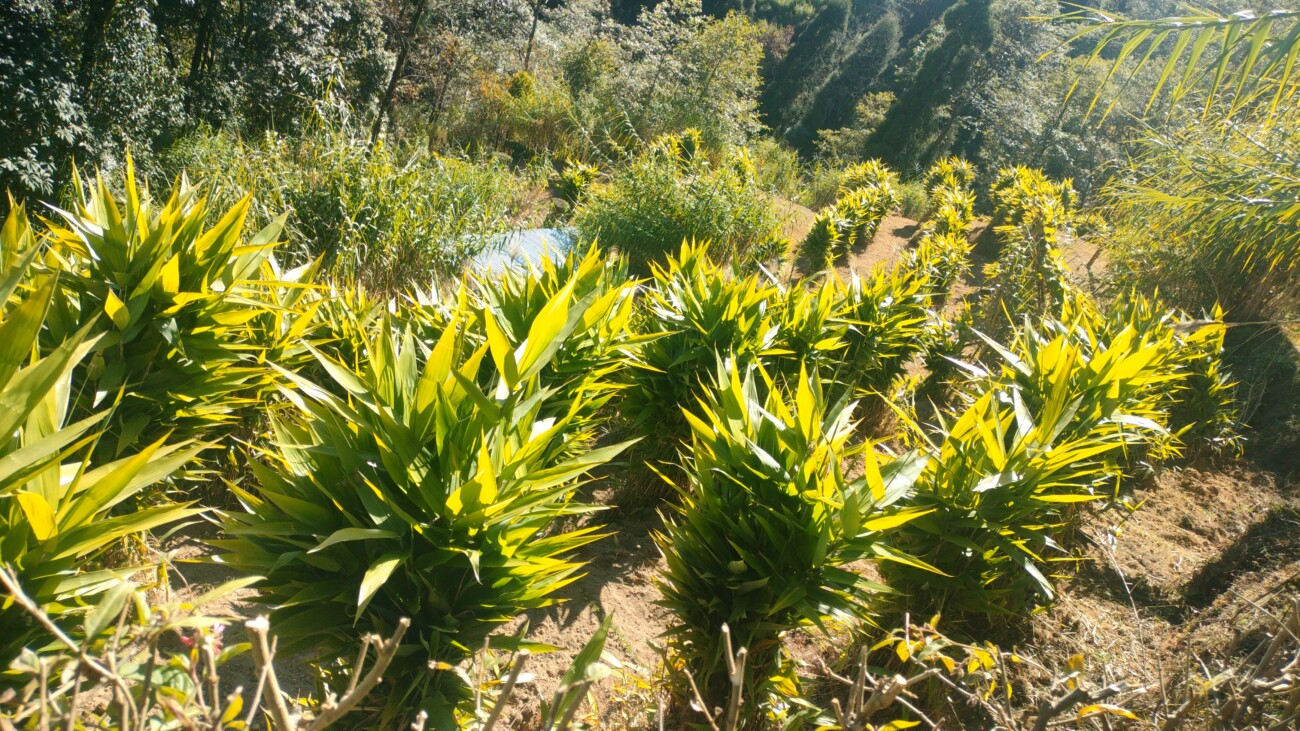
At the same time, agriculture is no longer the primary livelihood for many households. In Panbu’s Samthar village, farmers such as Kamal Bhujel, Gopi Bhujel are diversifying into poultry, milk distribution, broomstick cultivation, and eco-tourism. In Rammam and Sepi, homestays and trekking-related income have reduced dependence on farming. Migration, both seasonal and permanent, is becoming a survival strategy, particularly among youth.
Remittances now support households where agriculture once did. While this provides short-term relief, it also leaves fields fallow and weakens local food systems.
Knowledge exists-but it doesn’t reach farmers
One of the strongest messages from the data is not a lack of solutions, but a failure of communication. Government departments, research institutions, and NGOs conduct studies and trainings, yet farmers repeatedly describe these efforts as theoretical, inaccessible, or irrelevant. For instance, soil testing data is collected from villages, but results are often delivered months later, written in technical language or English, and never explained through demonstrations.Colour-coded soil cards were distributed, but there was little clarity on what terms like “low nitrogen” or “medium phosphorus” meant in practical terms for crop management. Without follow-up meetings or guidance, the information has largely remained unused.
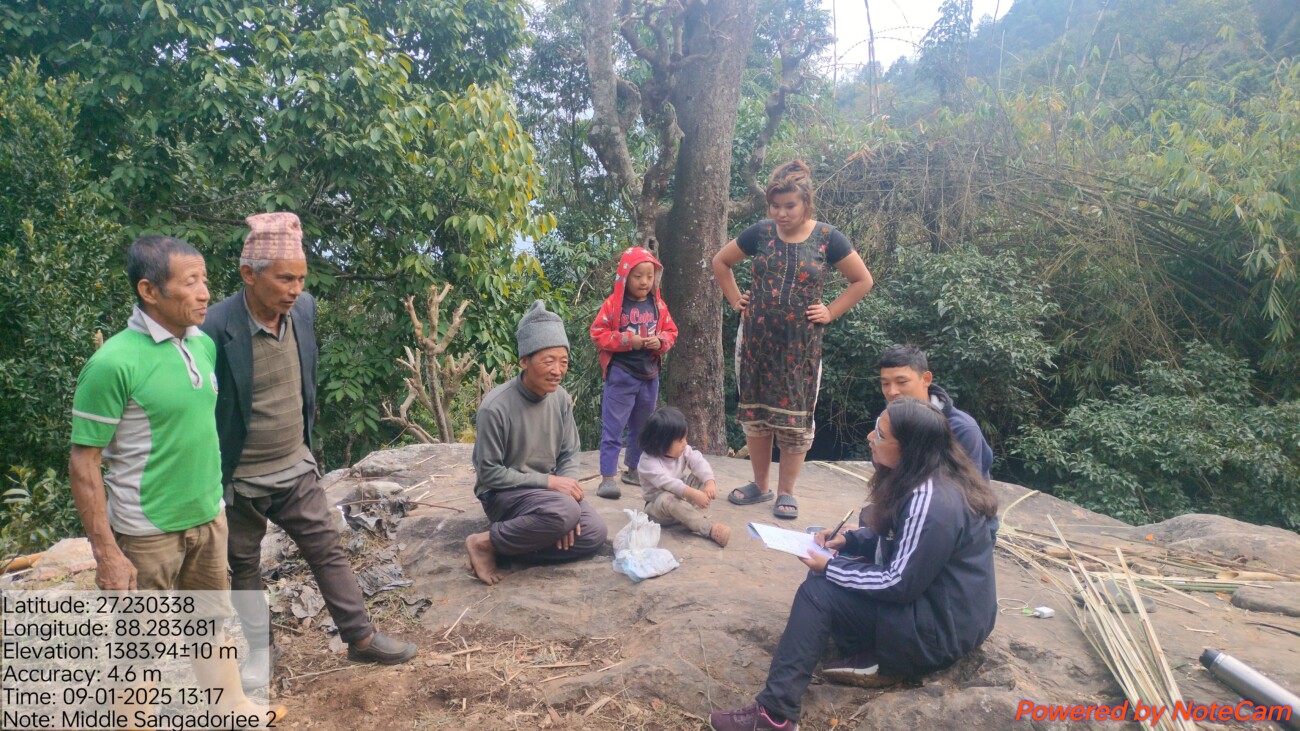
One of the strongest messages from the data is not a lack of solutions, but a failure of communication. Government departments, research institutions, and NGOs conduct studies and trainings, yet farmers repeatedly describe these efforts as theoretical, inaccessible, or irrelevant.
Training sessions often lack practical demonstrations. Soil reports are issued in technical English. Climate-smart agriculture remains a buzzword rather than a usable toolkit. Farmers in Tingvong village openly expressed frustration with research teams that collect data and leave without offering tangible solutions.After data collection, research teams never returned to share findings. In Tingvong, farmers like Dup Lepcha felt “used” as research subjects rather than partners. He mentioned:“They took soil, photos, and our time – but we never heard back.”
Meanwhile, farmers like Anita Khawas, Deepa Chettri are eager to learn. They ask for simple guidance on soil sampling, drip irrigation, seed preservation, organic pest deterrents, and crop selection suited to changing climates. They want examples from similar villages, not abstract models.
Digital tools: small screens, big potential
Despite connectivity challenges, mobile phones have emerged as powerful tools for agricultural communication. WhatsApp groups, SMS alerts, and Facebook updates are already used informally to share weather forecasts and local information. Farmers repeatedly emphasized the need for timely, localized updates-especially during extreme weather events.
However, digital literacy remains uneven. In some villages, farmers are unfamiliar with agricultural apps or online platforms. Training on how to use digital tools is just as important as the information they deliver.
The missing link: markets and value addition
Even when crops are grown successfully, market access remains a challenge.For example, farmers like Sunita Lepcha in Darjeeling and Dolma Tamang from West Sikkim reported that to sell vegetables like cauliflower and potatoes, they must hire shared jeeps to reach the nearest market. During the monsoon, landslides frequently block roads, forcing farmers to either wait for days or carry produce on foot for several kilometres. By the time they reach the market, a large portion of the produce is already damaged or wilted, reducing its price. Because transport costs are high, farmers often sell to local traders at very low rates, even when urban markets offer better prices. This makes farming less profitable and discourages surplus production.
Capacity-building initiatives for agri-entrepreneurs and SHGs should focus on market-oriented product development strategies, consumer-friendly packaging, shelf-life enhancement, presentation standards, and compliance with FSSAI regulations.
Value-added products-orange juice, dried vegetables, pickles are seen as opportunities, but farmers lack knowledge about processing, packaging, and pricing. Targeted value-addition training can help farmers develop market-ready products. Capacity-building initiatives for agri-entrepreneurs and SHGs should focus on market-oriented product development strategies, consumer-friendly packaging, shelf-life enhancement, presentation standards, and compliance with FSSAI regulations.
Without these links, agriculture remains high-risk and low-return, pushing farmers further toward non-farm livelihoods.
Resilience is already here-it needs support
Despite these challenges, the region is not a story of failure. Farmers practice crop rotation, intercropping, agroforestry, mulching, and terrace farming. Indigenous knowledge continues to shape farming decisions. Community farming, shared labour systems, and collective learning are still alive.
Climate-resilient agriculture cannot be imposed from outside, it must grow from within villages, supported by practical training, local language materials, and responsive institutions.
What is missing is sustained, respectful support that builds on these strengths. Climate-resilient agriculture cannot be imposed from outside, it must grow from within villages, supported by practical training, local language materials, and responsive institutions.
The Eastern Himalayas are changing, and agriculture must change with them. But adaptation cannot happen in isolation. Farmers need knowledge they can use, systems they can trust, and policies that recognise their lived realities.
As that farmer in West Sikkim looks at his fields, he is not asking for miracles. He is asking for guidance, timely information, and a future where farming is still worth believing in. The data makes one thing clear: if we listen closely to these voices, the path forward is already visible.
Srijana Sharma is a Research Associate at ATREE, hailing from Rinchenpong, West Sikkim. Her work explores sustainable livelihood generation opportunities in the Himalayas, with a focus on community-based initiatives, conservation-linked livelihoods, and strategies that balance ecological sustainability with local economic development.