From afar, Sikkim seems wrapped in abundance. A land of clear streams, cascading waterfalls, and endless freshwater flowing through its hills. Every slope appears to hold a hidden spring; every spring seems to promise water. It feels almost impossible to imagine that scarcity could exist in such a landscape.
According to meteorological data, in the recent months of 2025–26, Sikkim has been facing an alarming dry spell from December to February, with almost no rainfall recorded in Gangtok and Namchi districts. This severe lack of rain has placed immense pressure on local water sources, raising urgent concerns about drinking water availability as the pre-monsoon season approaches.
As the world marks World Water Day on 22 March 2026, the theme ‘Water and Gender’ helps us understand these challenges more closely.
The prolonged dry conditions have also heightened the risk of forest and bush fires, as vegetation across the state has dried out and become highly vulnerable to ignition. At the same time, natural springs are depleting rapidly, threatening agriculture and drinking water supply, particularly in rural areas.
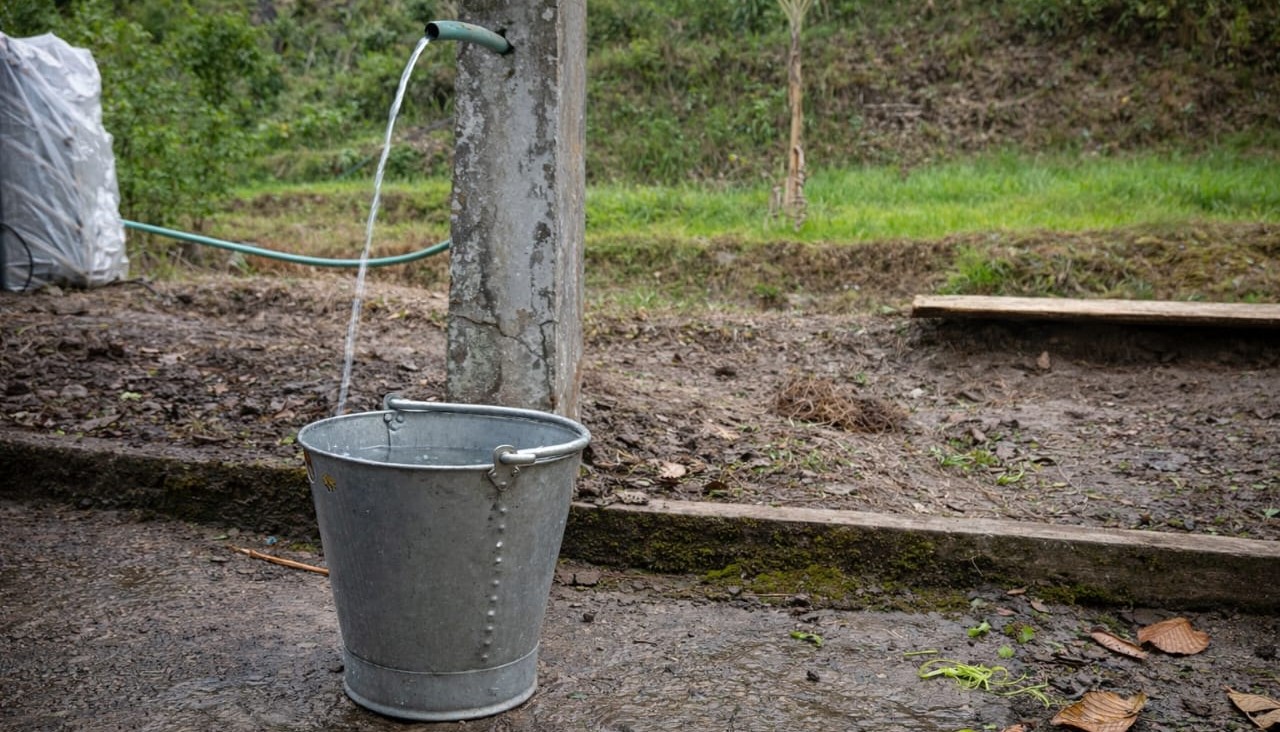
As the world marks World Water Day on 22 March 2026, the theme ‘Water and Gender’ helps us understand these challenges more closely. It reminds us that when water becomes scarce, the burden often falls on women and girls. Anita Gurung, who lives near the bazar, shares how her mornings are planned around the water supply. ‘We store as much as we can before the flow reduces,’ she says. Since water is available only for a few hours each day, daily life is carefully arranged around that short window of supply.
Existing water supply system and key issues in Rinchenpong
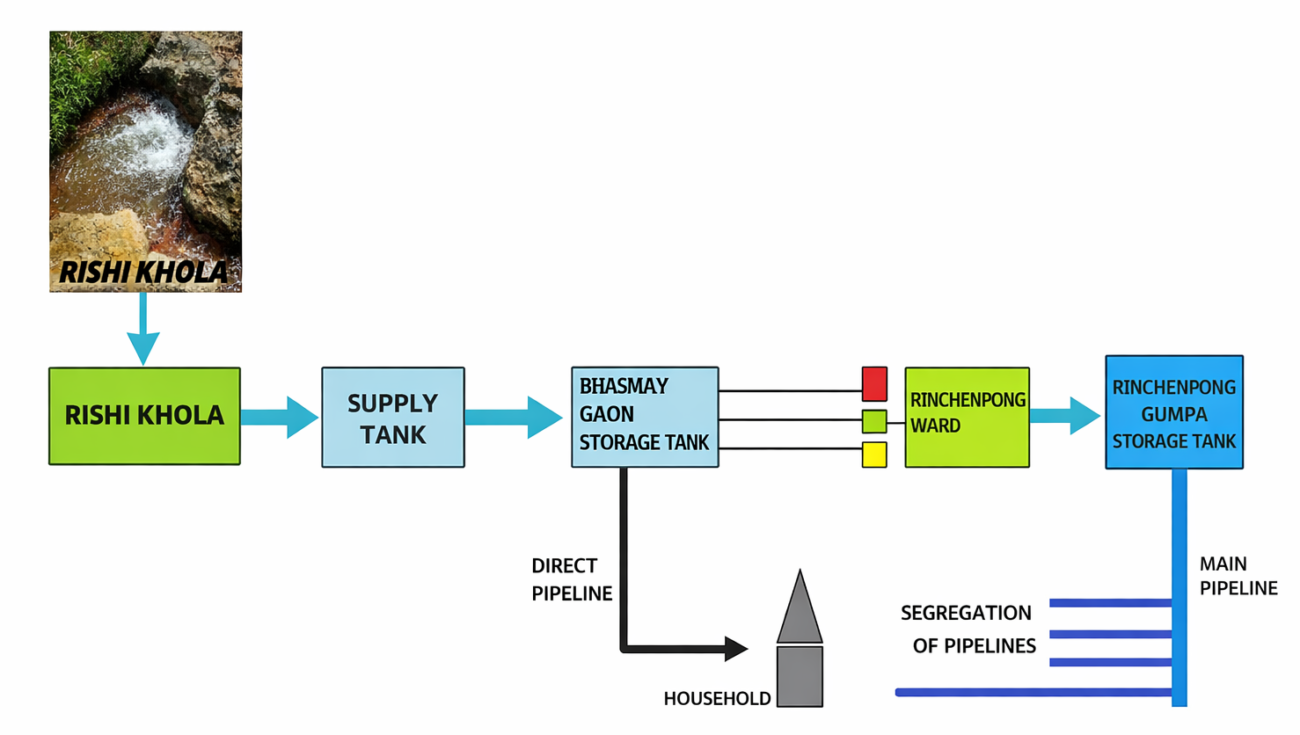
Rinchenpong, perched at about 1,700 metres above sea level, depends heavily on a depression-type spring in the bazar area. Dalum Kuan, locally called ‘Kuwa ko pani’ for generations,has supported more than 120 households. Alongside this spring, surface water from Rishi Khola is supplied by the Public Health Engineering Department (PHED). Despite the presence of both systems, supply remains limited to approximately four hours a day, largely confined to morning hours, indicating a chronic mismatch between availability and demand. Seasonal tourism further amplifies consumption, particularly by hotels and resorts, placing disproportionate pressure on already constrained resources.
Strained springs and rising demand
The town’s population rose from 1,313 in 2001 to 1,458 in 2011, and tourism has grown rapidly in recent years. As an evolving tourism destination, the settlement depends almost entirely on spring-fed and surface water sources to meet both domestic and commercial needs. Despite receiving relatively high rainfall and being situated near perennial water sources, Rinchenpong experiences a condition of ‘scarcity amidst plenty’ marked by unreliable spring flows and inconsistent distribution.
Tika Sharma, who runs a hotel business in the area, notes that peak tourist seasons strain the supply. Hotels and resorts draw water from both PHED pipelines and the spring itself. ‘When visitors come, water use doubles,’ she explains. Tourism supports livelihoods-but it also deepens demand on fragile sources.
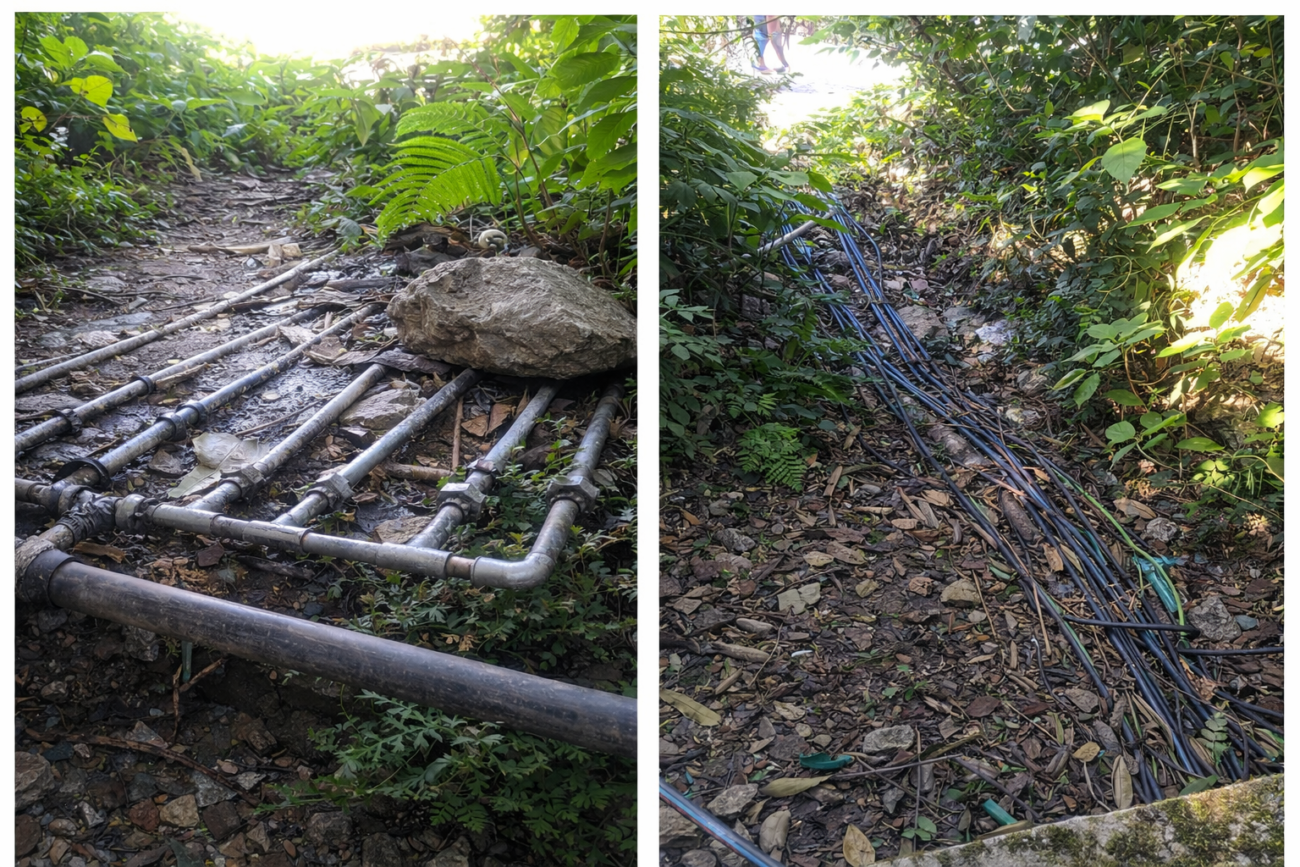
Photo: Srijana Sharma
Before 2008 spring was open and now it has been cemented for water security.
Supply vulnerabilities and water quality concerns
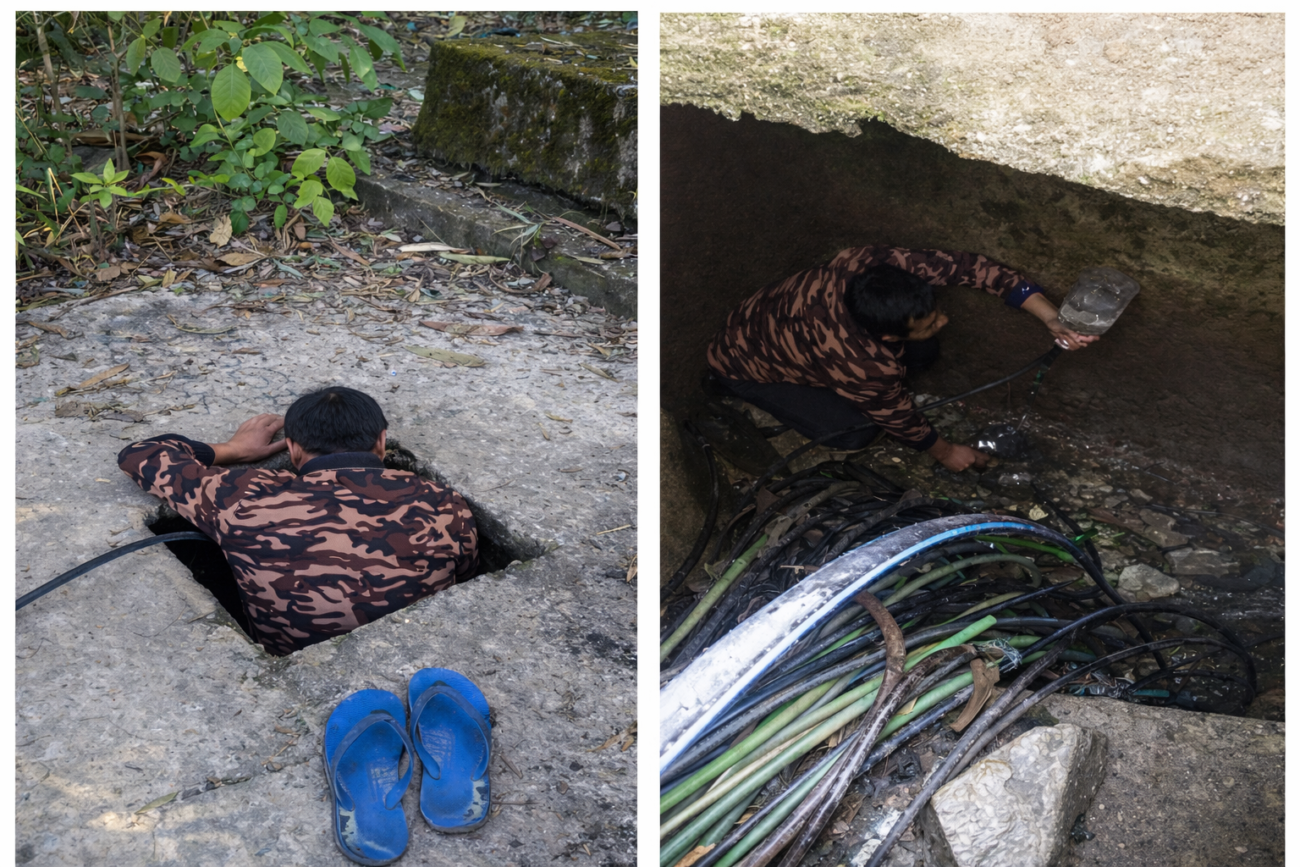
The pipelines are connected directly at the tip source of the spring and reach the household tap. In many village areas, pipelines are sometimes cut and diverted by others to connect water to their own homes. This often creates disputes within the community. As a result, someone has to physically go inside the spring structure to fix the damaged connection. Such issues often lead to local-level tensions and village politics around water access. Before 2008 spring was open and now it has been cemented for water security. The average household dependency is very high with more than 50 household connections within the bazar area and other villages of Rinchenpong block.
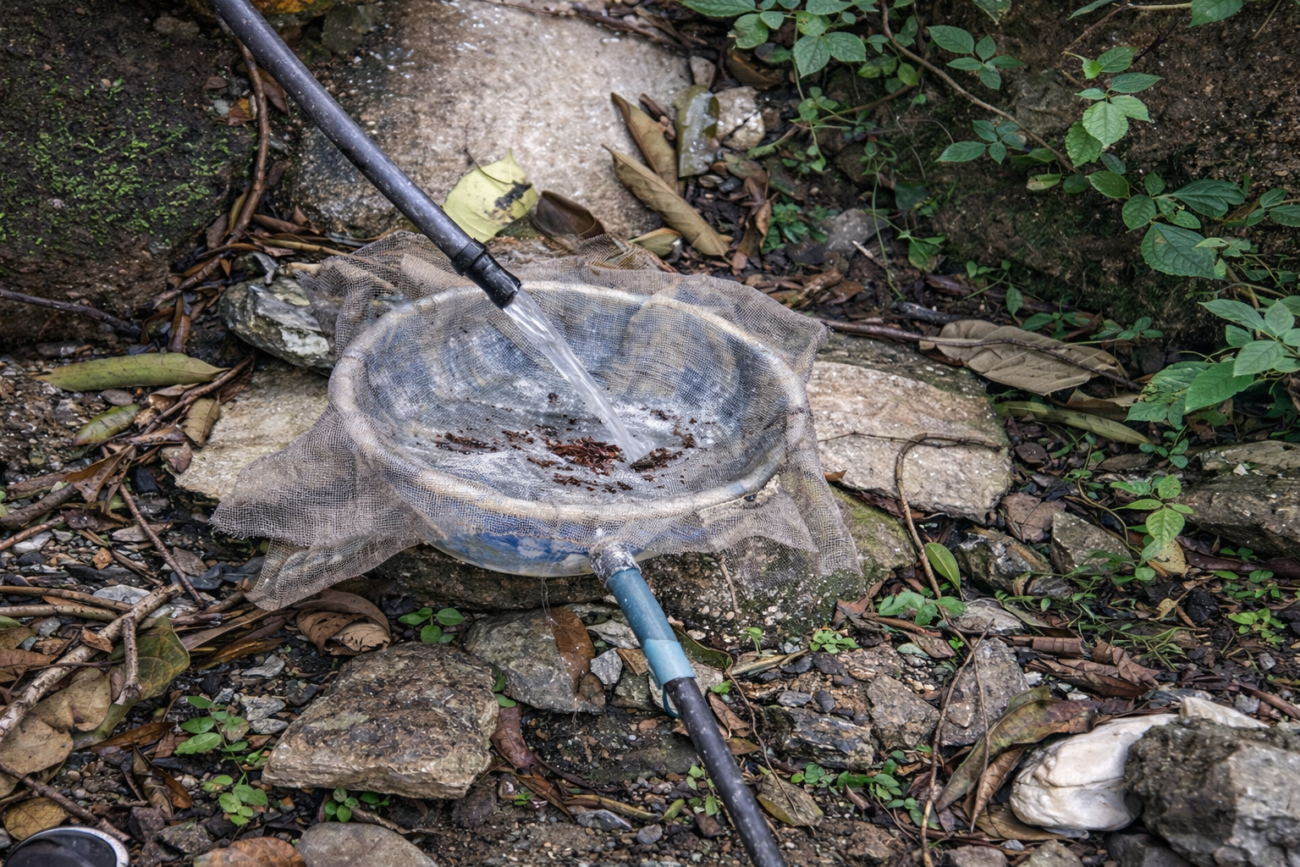
Photo: Srijana Sharma
A pipe directs water into a bucket covered with a thin cloth or mesh. This cloth acts as a basic filter, trying to stop leaves, insects, and visible dirt from entering the storage line. It is an affordable and easily available method, managed and maintained by the community themselves. Cheme Bhutia recalls how the water sometimes turns visibly muddy during heavy rains. ‘We let it settle before using’ she says. Yet not all impurities are visible. During the monsoon season, the situation becomes more serious. The survey found that the water often carries heavy sediments, small plant parts, and even leeches. The large amount of mud and debris blocks the pipes, slowing down the water flow and reducing the supply frequency. Because the filtration method is very basic, it cannot remove fine particles or harmful contaminants.
The leaking network
Water loss is another hidden problem. Nearly 20 per cent of supplied water is lost due to leakages. Many pipelines run along or across roads. Vehicles cross over polyethylene and galvanized pipes connected to households. Landslides frequently disturb the network. When pipes crack, dirt mixes with the flow before it reaches homes.
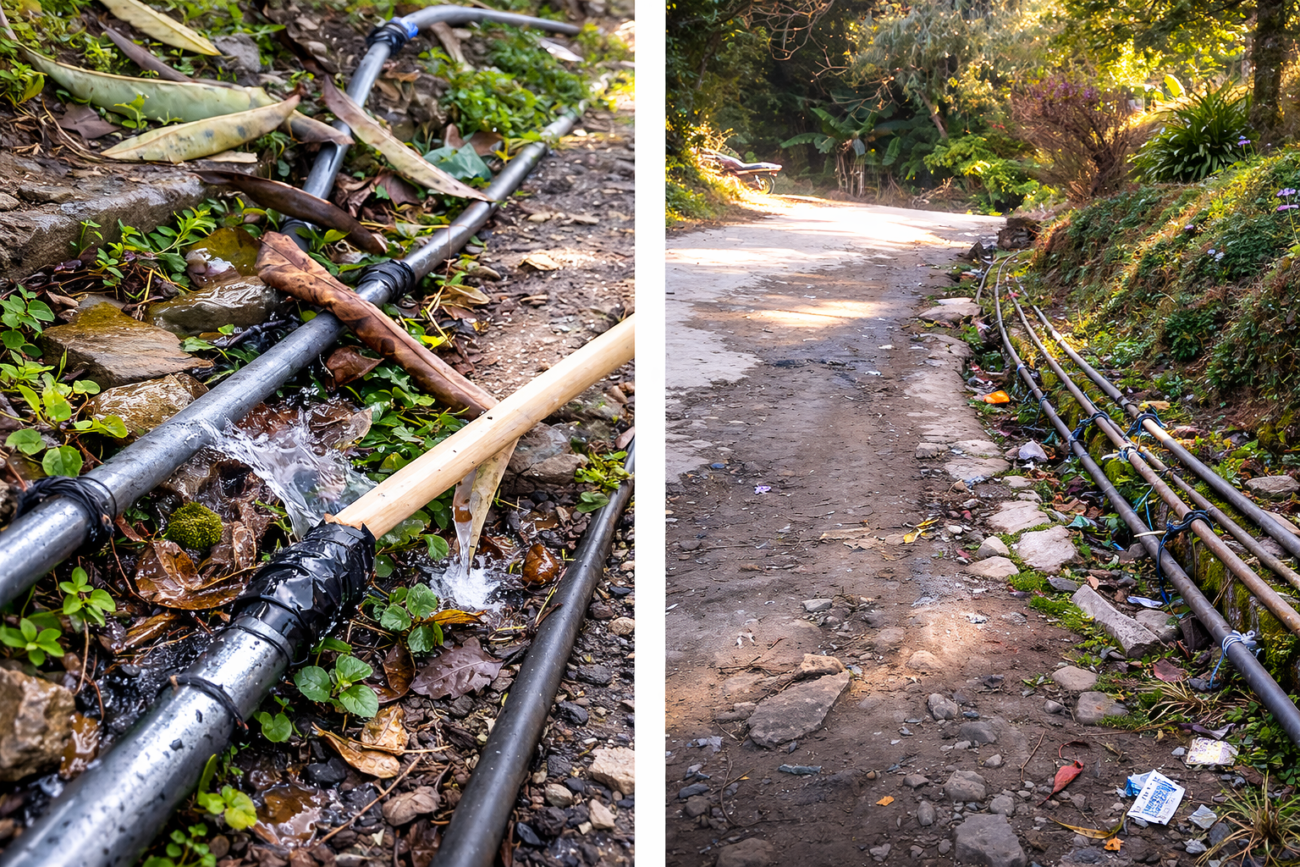
Photo: Srijana Sharma
Marmit Lepcha explains their repair method simply: ‘We tie it with strong rubber.’ It is a temporary solution, but often the only immediate option. Officials cannot always reach remote stretches quickly. Over time, improvisation has become part of the system.
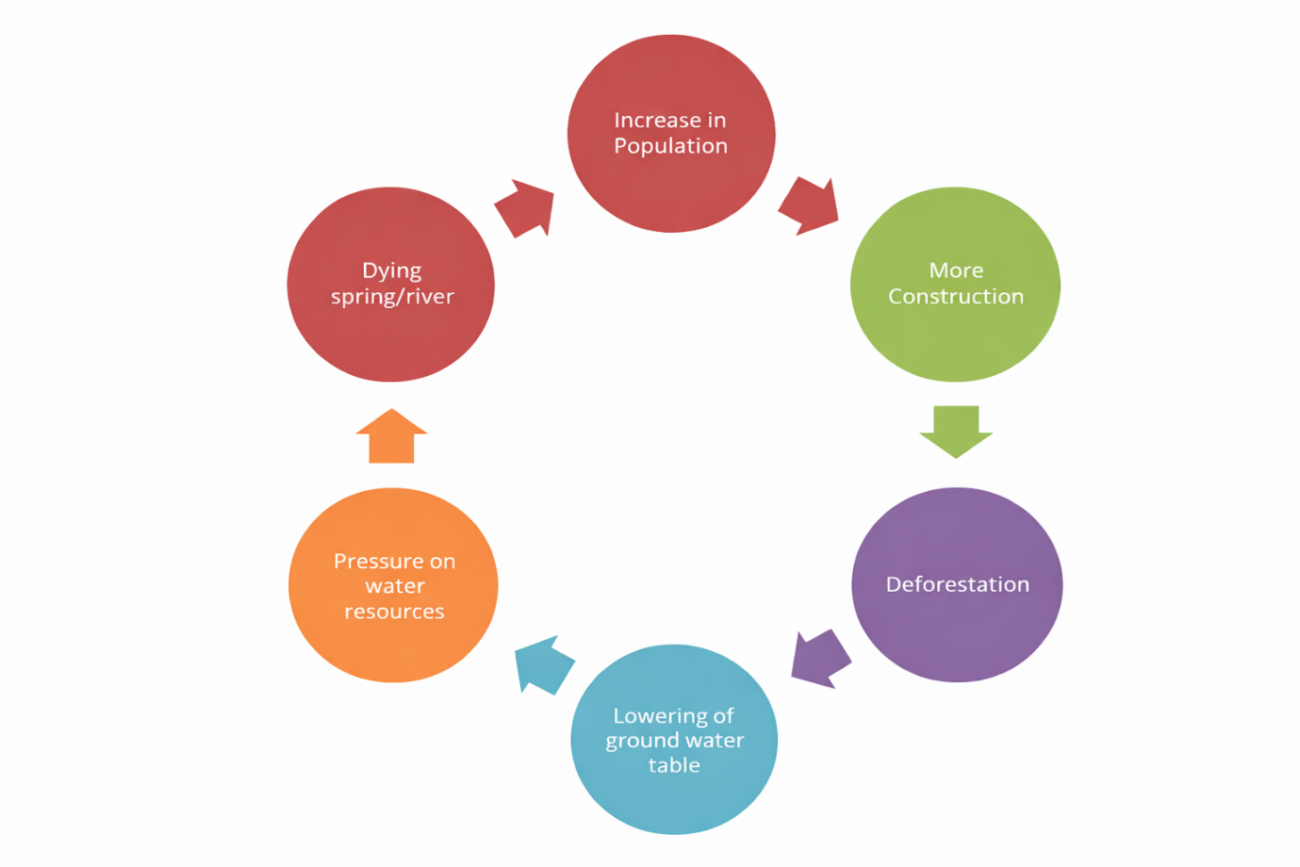
The diagram explains how water scarcity develops step by step in a growing town or village. As the population increases, the need for houses, roads, and other infrastructure also rises. This leads to more construction, which often results in deforestation. When trees are cut down, rainwater cannot properly soak into the ground, causing the groundwater level to drop. With less groundwater available, there is greater pressure on existing water resources such as springs and rivers. Over time, this continuous pressure and lack of recharge cause springs and rivers to dry up. The cycle then continues, as growing demand and environmental damage further worsen the water crisis.
Women and the Weight of Water
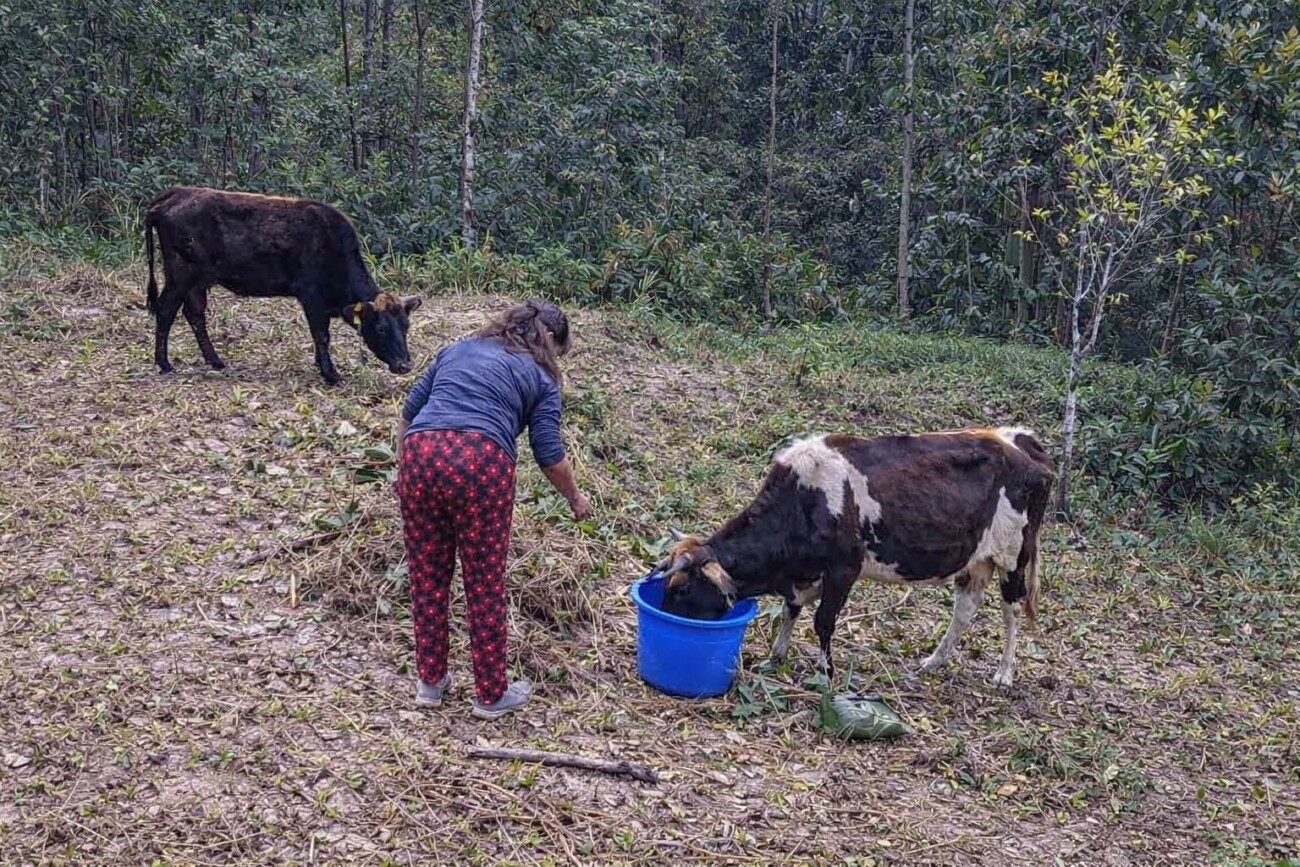
In most households, fetching water has long been a responsibility carried mostly by women. During dry winters, when water becomes scarce, the burden on women grows even heavier. Every day, they walk up and down steep hillsides carrying heavy buckets just to bring enough water home. Manita Pradhan, for instance, wakes up at 4 a.m. in the quiet, biting cold of the morning to collect a pail of water from a nearby spring before the small supply runs out.
During times of severe shortage, especially in large joint families, water becomes so limited that women sometimes skip bathing for weeks, raising concerns about hygiene and health. In most households, it is women who manage this scarcity-carefully planning how much water will be used for cooking, washing utensils, cleaning, and feeding livestock. When the supply runs low, they ration every drop so the household can get through the day. This burden often goes unnoticed, yet it shapes the rhythm of daily life.
Data from the National Family Health Survey shows that in about 71 percent of rural households, women aged 15 and above are solely responsible for collecting water. Their everyday effort reminds us that water scarcity is not only an environmental challenge but also a social one that places a heavy, often invisible responsibility on women.
Sikkim, however, has also shown that springs can be revived.
Learning from Revival and Rethinking Rinchenpong’s Future
Sikkim, however, has also shown that springs can be revived. Under the leadership of Sandeep Tambe, large-scale spring rejuvenation programmes were introduced across the state. Springs were scientifically mapped, recharge areas protected, native vegetation planted, and recharge trenches constructed. Most importantly, communities were involved in monitoring and maintenance.
Many drying springs showed signs of recovery. The approach demonstrated that Himalayan water systems are interconnected soil, forest, slope, and community stewardship all matter. Rinchenpong’s water stress reflects ageing pipelines, rising tourism demand, limited recharge, and fragmented management. Springs should be treated as shared community resources, with controlled private connections and protective zoning.
Possible solutions are visible: improved filtration at PHED storage tanks, protection of recharge zones, rainwater harvesting for hotels and new constructions, reducing leakages through better pipeline design, early repair systems, and landslide-resistant construction can save significant water. Community monitoring and awareness programmes in schools and neighbourhoods can also improve conservation. Water metering for commercial establishments may help regulate excessive use. But more than infrastructure, what is required is shared responsibility.
The story of Rinchenpong’s spring is not only about scarcity. It is about resilience, adaptation, and quiet labour. In a Himalayan state that appears rich in water, survival depends not on abundance but on care.
Srijana Sharma is a Research Associate at ATREE, hailing from Rinchenpong, West Sikkim. Her work explores sustainable livelihood generation opportunities in the Himalayas, with a focus on community-based initiatives, conservation-linked livelihoods, and strategies that balance ecological sustainability with local economic development.


...and also, how resourceful and resilient our women are!
Congratulations Srijana for this very insightful case study on a topic that is so important for the region!
Such an insightful article which showcases how our hill communities suffer because of rising water scarcity, and how often the burden falls on women