This article reflects upon a possible path for the relatively fast-growing medium of children’s literature in the subcontinent with a very particular focus on inclusion. In the expansion in volume of producing children’s literature in the past two and a half decades ( 2000 - 2025), ‘both production and consumption of children’s books are mere drops in terms of actual needs’ (Menon S, Rao S.(eds)), Children’s Books An Indian Story , Eklavya Foundation, 2024). Presently, there seems to be an open playing field to announce, perform, retell and read stories of all kinds. In order to ensure that this field becomes a meadow we need to ensure that we provide a more complex layered support and space towards representation of stories from all of human experience because children deserve 'mirrors, windows and sliding glass doors '(Bishop, R. 1990), to understand themselves and the world. As we move forward with a growing awareness of spaces for children to engage with literature we need to be most mindful of remembering and honouring old ways of being, quiet and rich corners of our country whilst not merely reproducing dominant ways of knowledge reproduction and representation. It is time to make spaces in Children's Literature as we expand our breadth, width and depth.
In order to ensure that this field becomes a meadow we need to ensure that we provide a more complex layered support and space towards representation of stories from all of human experience because children deserve 'mirrors, windows and sliding glass doors '( Bishop, R. 1990) to understand themselves and the world.
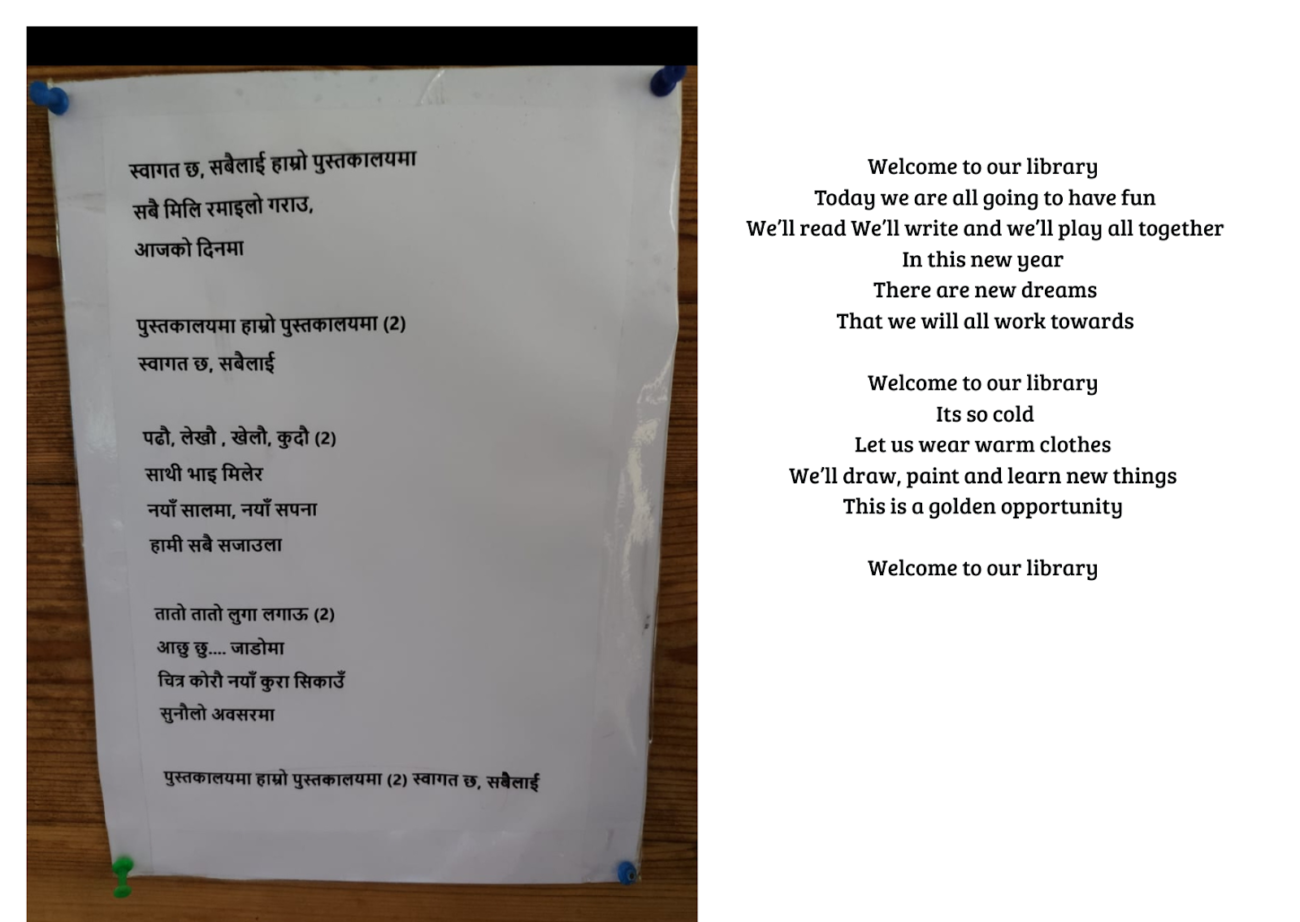
In the village of Dumigaon nestled in the Himalayan foothills there is a library called the Reading Room- it shines like a lighthouse reflecting the sun that comes in from the East every day. If you have the fortune to be at the library on the opening day of any event that unfolds there, you will hear the team sing the Library Anthem. If you are reading this essay, you can hear it here. As we think about the space for children’s literature, we may need to ask ourselves, would the library anthem be considered a part of the canon we call Children’s Literature. If yes, why and if no, why not?
When formal ways of organising knowledge came to our part of the world, boundaries in thinking of what constitutes literature came with these organised systems. Even today, many people, including scholars, find it hard to include the oral, the regional, the unheard-of voices in the canon we call literature. We need to think more about this. What do we mean when we use the word literature. Is it only the printed word or are we open to unwritten content as well? Stories, songs, sayings, and riddles that have been passed down from generation to generation across the linguistic breadth and width of this land. Stories that an elder shares within the community to remember. Anecdotes that are passed on from mother to daughter about ways of being. Lessons sons learn from their mothers by listening to how she plays with words. Ganesh, a library child of 14 years, responded to a comment about a blunt pair of scissors during a complex craft in the library saying, “Nachna najannele aangan tedo bhanchan”, which is such a richer cultural equivalent to ‘a bad workman blames his tools’ and possibly never heard of in more formal literate spaces. We need to think about how we could include more of these and you may rightly ask why.
Even today, many people, including scholars, find it hard to include the oral, the regional, the unheard-of voices in the canon we call literature.
Young children in hundreds of schools across the mainland are taught to tell stories, and it comes as little surprise when they are asked if they know any story, one is likely to hear about the Thirsty Crow repeatedly. Yet each and every one of these children, irrespective of social location will have a number of home stories that will be far more delightful, intriguing, fresh and wonderful. But often, there is no space to bring these stories into the formal areas of schools and libraries because we may not include them as literature. So right at the beginning, we need to pause and reflect on what we are ready and willing to include into the category of children’s literature. It is here that we can speak of hope. Across the length and breadth of this country, a quiet movement around children’s library spaces is unfolding. DG Reading Room is one such space that becomes a story garden every Sunday and throughout a rich Winter Programme, where dozens of children gather to be stimulated into learning through story, song and activity. When library folk and other educators also begin to make that connection between the rich cultural corpus of story and song children bring with them and start formalising this in literate ways, we are indicating that we are open and ready to make space for stories of all kinds.
Anish was in a library class in the DG Reading Room Winter Programme exploring poems around Home. Using Juan Felippe Herrera’s poem Five Directions to My House as the anchor text, he wrote,
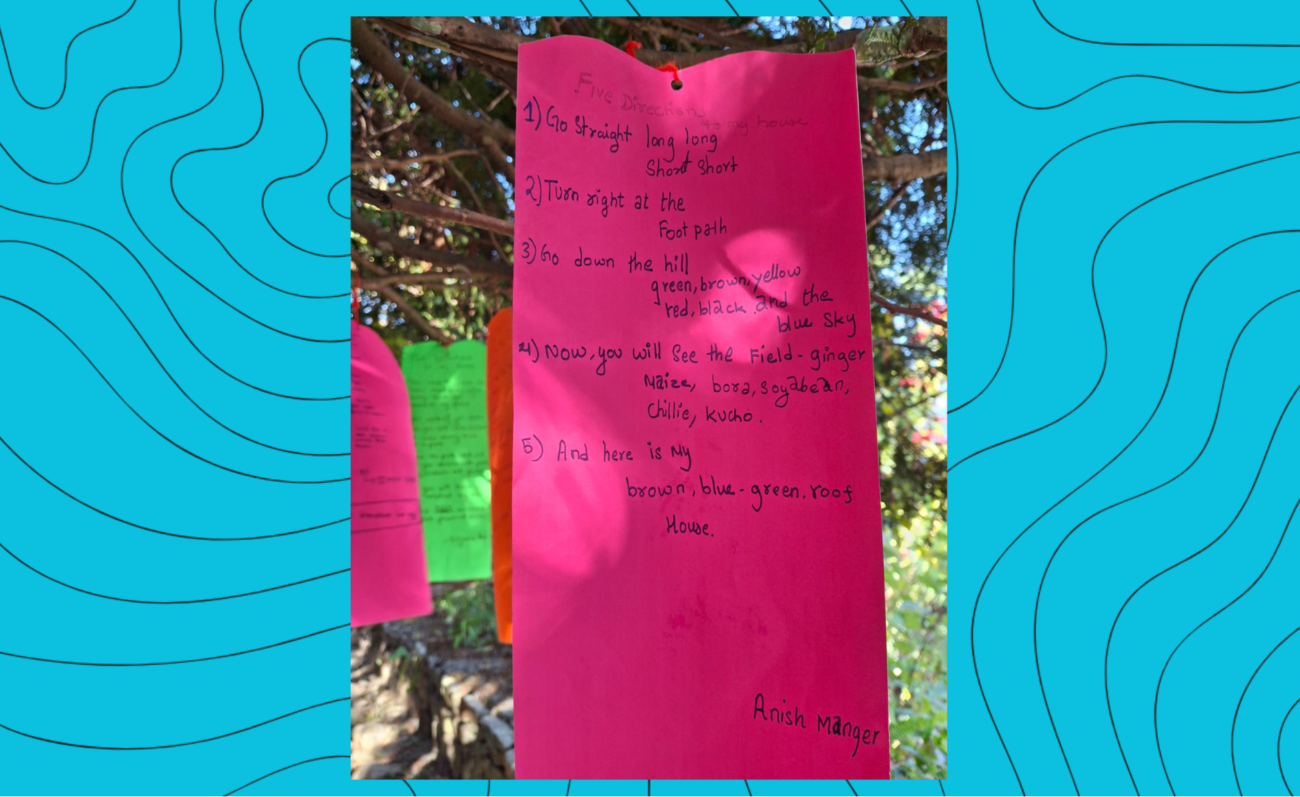
In a response to poetry in the library, Anish both expressed his world in words and came closer to grasping the complexity of existing literature. How tremendous all these possibilities are, when we invite more and more diverse writing into library spaces.
As the publishing of books for children inches towards some diversity, in our library, Bookworm, in Goa, we have captured many responses to books from adults looking back. We note here that stocking our shelves with diverse books, seeking as much representation as possible, is our breath and we are often gasping and wanting more.
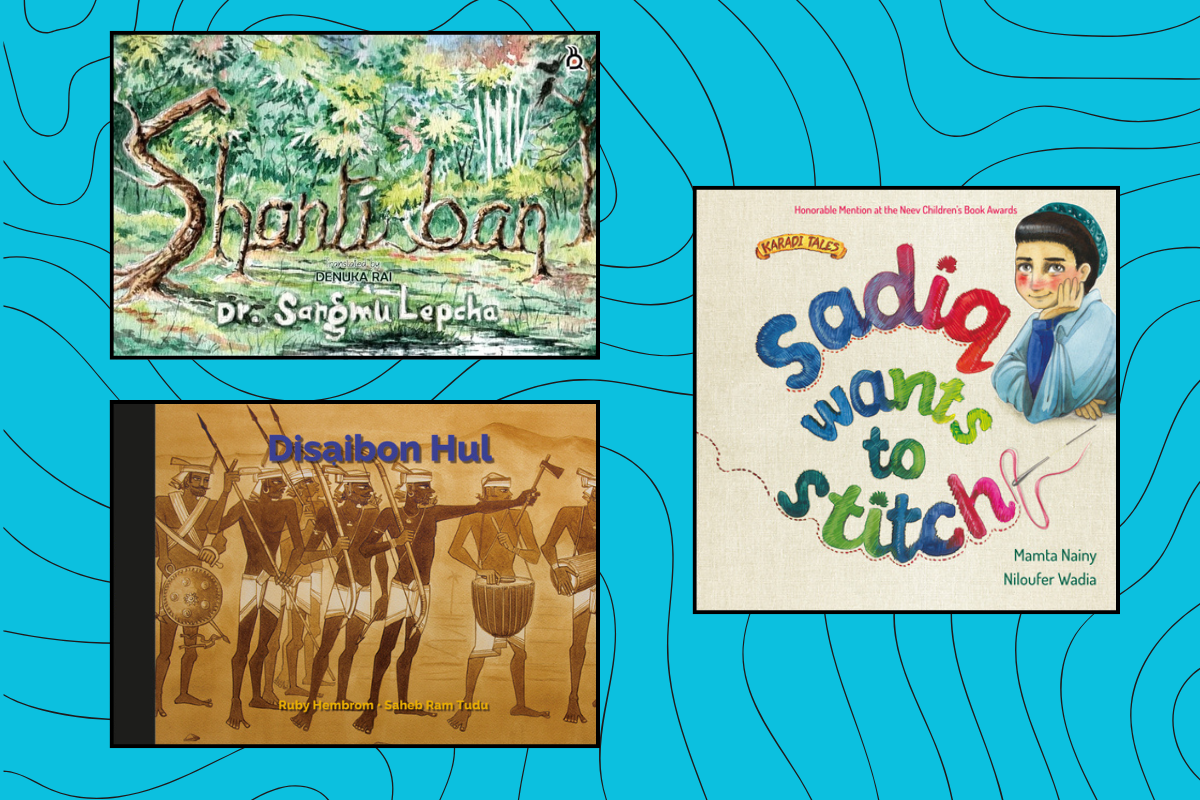
“ These are our goats. These are my people” said a young adult in the library when she found a book called Sadiq Learns to Stitch by Mamta Nainy ( Karadi Tales, 2020) set amongst the Bakarwal community of the Kashmir valley. “I never had a book about my life” she said, holding the text against her chest as she looked into the distance.
“I have never seen a children’s book written by a Lepcha” said another adult as her fingers gently trailed the author’s name, Dr Sangmu Lepcha on the cover of the book Shanti Ban (Bu Ant Kids, 2023)
“ This is our story. You have a book about it? I did not ever expect to see this and that too in Goa “ Said yet another adult educator visiting the library and holding Disaibon Hul by Ruby Hebrom and Saheb Ram Tedu ( Adivaani,2014)
Why are seemingly well-adjusted adults moved in such strong emotional ways to find a part of their lives reflected in children’s books? What did they miss when they were growing up and why does this matter? These are questions many of us who work with children and books constantly ask and argue about. Our response returns to the place of literature in our lives. From the earliest time, when humans shared with each other, telling stories through drawings or words or sounds or combinations of these allowed individuals to become community. Stories transformed the human experience and reflected it back. In that reflection, we all got to see our own lives and experiences as part of the larger human experience.
The absence of finding oneself and one's world reflected back is a matter of deep unexamined loss and a vacuum that we may suppress until we encounter that which we have missed.
In the modern age, reading the world and the word becomes a means of affirming ourselves and knowing that we matter. The absence of finding oneself and one's world reflected back is a matter of deep unexamined loss and a vacuum that we may suppress until we encounter that which we have missed.
If we examine this in terms of literacy and becoming formal readers of the printed world, despite romanticising the ease with which most dominant literates took to “Enid Blyton” and the like in the 1960’s and 1970’s, research in literacy affirms that we become literate when we make meaning of what we decode. Making meaning happens so much more naturally when I am decoding my world in text. Text books in schools specially in Languages, have made furious attempts to bring the local into the formal but we do not recognise these mass-produced annual offerings as a part of the collection that constitutes literature. Shelves in libraries are in dire need of more local stories, produced proudly and vibrantly for all.
Scholars like Rudine Sims Bishop remind us in writing that, "Books are sometimes windows, offering views of worlds that may be real or imagined, familiar or strange. These windows are also sliding glass doors, and readers have only to walk through in imagination to become part of whatever world has been created or recreated by the author. When lighting conditions are just right, however, a window can also be a mirror."
"Books are sometimes windows, offering views of worlds that may be real or imagined, familiar or strange. ...When lighting conditions are just right, however, a window can also be a mirror."
As we look upon the children’s book market in the subcontinent we may feel that it is rich and pulsing with a huge variety of books for children. We do not yet have a scholarship that examines the representation in these thousands of books for children that are published every year in many languages, but we can make an informed guess from informal studies to conclude that diversity is improving but not fast enough. We may find a few books that represent some communities but we could do with more. Much more. Representing more worlds in books is not only to provide mirrors but very much needed to provide windows into other people’s lives. This is yet another central tenet of literature. To enable us to see because in seeing another’s worldview, I understand the other better.
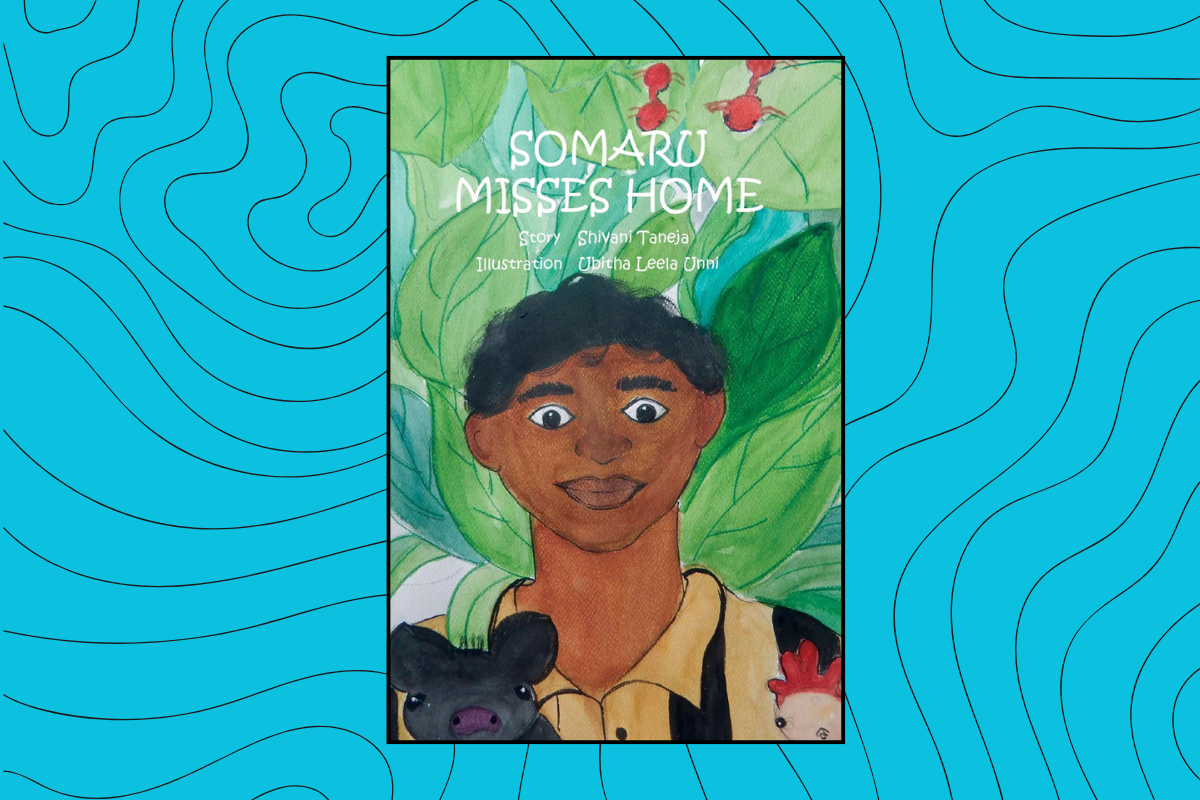
When a child in the Sunderbans reads about a story set in the mountains of Ladakh her worldview shifts and vice versa. Similarly, when a child from a dominant background does not get to read a window book, they grow up failing to understand the complexity and diversity of the world they inhabit and literature fails to fulfil its most powerful promise, of helping us to become better human beings in a complicated world. It is in books that children have the most precious opportunity to understand social realities, to understand the dangers of stereotyping, to respect beliefs and practices that may be different from their own and to meet people who are very unlike them but no less wonderful and enjoyable. As Bigyan read, Somaru Misses Home ( Muskaan, 2019) in the library, he was struck by everything Somaru misses and said he too would miss the food, the village and his friends, if he were to go to the hostel. Reading diversely allows children’s minds to expand and instills in them a world view that is at once reflective, sometimes wondrous and often times compassionate.
Reading diversely allows children’s minds to expand and instills in them a world view that is at once reflective, sometimes wondrous and often times compassionate.
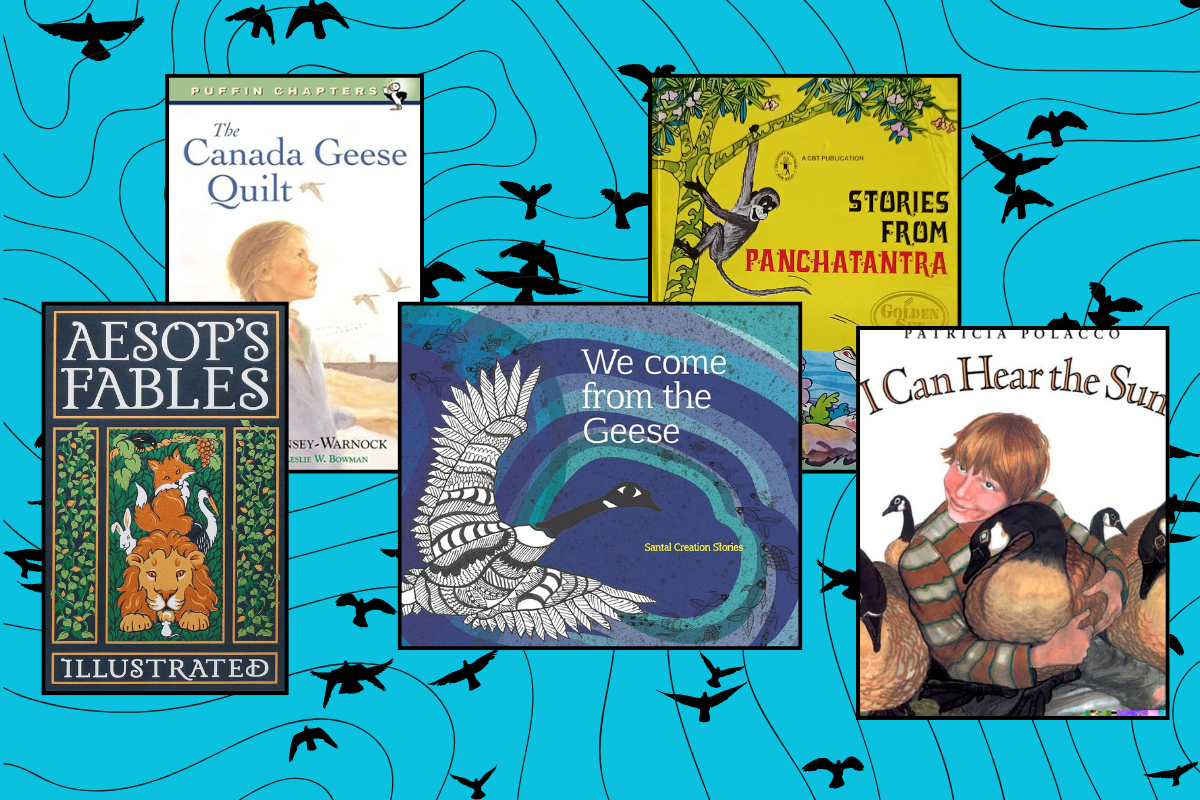
In a slim book titled Canada Geese quilt by Natalie Kinsey-Warnock I learnt about how the arrival of the geese in a farm in Vermont Canada signalled to young Ariel that it would soon be time for her mother to have the new baby. I experienced a window into another world as I read this book and further went on to read and learn how the geese were also a powerful symbol of freedom to slaves in parts of North America as they fled using the Underground Railroad towards Canada. Closer to home, we know of the story from the Panchatantra about the Flying Geese that tricked the hunter by pretending to be dead in his net and then flying away as a flock. In Aesop’s fables we all know about the Goose that laid a golden egg and in many motivational stories, we read about how geese fly, support each other and also care for each other in case one is injured. The Santhals have a precious origin story about how we all come from geese and Patricia Polacco’s, I Can Hear the Sun uses the flight of geese as an escape for a lonely boy who does not want to be put in a Home. One would or could imagine that this kind of a shelf of ‘geese’ books was a fairly rounded experience of windows, mirrors and sliding glass doors. But no, our world of human learning is limited in the face of a truly diverse people, that we are. Very recently, in Dumigaon I heard orally of a young girl who is sent out of the farmhouse to watch for the geese flying in formation. When she spots them, the whole family knows it is time to plant the cucumber seeds - the planting season has arrived. What a precious addition this story would make to the shelf in the library if it is to become a book for children.
This realisation about making space for more children’s stories, for diversifying the canon called children’s literature, is an urgent one. It is made more critical because of spaces like the Reading Room Library, Bookworm and others that are listening to and talking to children in ways that other learning institutions never have.
This realisation about making space for more children’s stories, for diversifying the canon called children’s literature, is an urgent one. It is made more critical because of spaces like the Reading Room Library, Bookworm and others that are listening to and talking to children in ways that other learning institutions never have. As we pledge more and more support and trust in what libraries can do for children’s well being, we need to also ensure that our children are able to celebrate similarities and differences through literature and see the world in new ways while seeing themselves as more purposeful, more capable and better human beings. We need more literature that represents more worlds and to enable that to happen, we must create space - both in our minds to include those we have excluded and in our publishing, marketing and stocking process to make space because wonder and hope will follow.
Sujata Noronha is the founder of Bookworm Trust, Goa. She specializes in library practices and early literacy. She is deeply committed to exploring the power of the printed word and the pathways of access, imagination, and growth it enables. Drawing on her experiences and sustained practices of shared reading, writing, and dialogue, she supports the creation of libraries across India in collaboration with children, librarians, and educators.


This brilliantly written article was deeply reflective.It made me pause and consider the usually unquestioned assumptions with respect to children’s literature.
Respect your work!