Guardians and Claimants
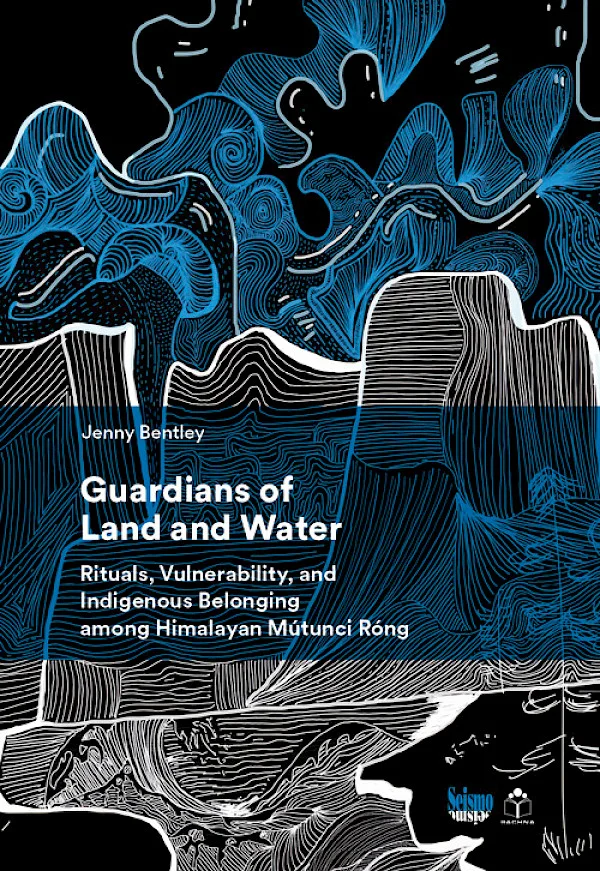
Guardians of Land and Water: Rituals, Vulnerability and Indigenous Belonging Among Himalayan Mútunci Róng by Jenny Bentley. Seismo Press, Zurich (2025);Rachna Books and Publications, India (2025). ISBN: 978-81-89602-21-5.
Jenny Bentley’s Guardians of Land and Water is a deeply reflexive ethnography that plunges into the lived realities, spiritual ontologies, and political negotiations of the Mútunci Róng community, widely known by their exonym, the Lepcha. Spanning over almost a decade of painstaking research across the Eastern Himalayas, specifically Sikkim and West Bengal in India, and Ilam in Nepal, Bentley’s work meticulously deconstructs the colonial and postcolonial categorisation of the community as a ‘vanishing tribe’. Rejecting the simplistic view of this narrative as mere victimhood, Bentley explores how the Mútunci Róng actively navigate a ‘damage narrative’ to assert their identity, negotiate state recognition, and claim socio-economic rights. Through a multi-sited methodology enriched by a collaborative partnership with Indigenous scholar Kachyo Lepcha, the author positions ‘vulnerability’ not as a paralysing condition, but as a potent driving force that compels the community to perform rituals, overcome precarity, and aggressively aspire toward a ‘good life’. At the theoretical heart of the book lies a sharp, analytical distinction between traditional ‘ritual practice’ and modern ‘ritual programmes’. Ritual practices such as the annual Sotáp Rumfát and Cirim in the Dzongu reserve of North Sikkim are deeply embodied, village-centric ceremonies led by initiated religious specialists known as búngthíng or mun. These practices are rooted in ‘Indigenous ontologies’ and are performed with immediate soteriological goals: to avert natural disasters like hail, prevent diseases, and ensure agricultural prosperity. The efficacy of these rituals hinges on a mythological contract of reciprocity (khe tóp) wherein villagers contribute material offerings such as millet beer (ci), rice, and animal sacrifices, which the specialist mediates to appease embedded more-than-human entities. Bentley vividly details the material culture of these practices, such as the lópfyet (plantain leaf altar), where eggs are meticulously placed to represent and appease specific directional deities. In this framework, ritual success is measured by non-events; the absence of catastrophe in the following year signifies that the deities have favourably received the community's spiritual tax.
Conversely, Bentley introduces ‘ritual programmes’ as consciously transformed, large-scale cultural festivals, perfectly exemplified by the revival of Tendong Hlo Rumfát. Spearheaded by urban ethnic associations like the Indigenous Lepcha Tribal Association (ILTA) and the Renjyong Mutanchi Rong Tarjum (RMRT), these programmes operate within ‘culturalist ontologies’. Here, fluid, ancestral oral traditions (lúngten sung) are entextualised, written down, and objectified into a packaged ‘culture’ meant for public consumption on a stage. This process makes the Mútunci Róng legible to the multicultural frameworks of the modern state, which demands a standardised cultural canon in exchange for Scheduled Tribe or Primitive Tribal Group (PTG) status and the accompanying welfare benefits. However, Bentley astutely observes that this top-down push for a unified, purified culture often creates intra-ethnic tension. It threatens to overwrite highly localised oral traditions and the natural ‘polysemy’ of Indigenous narratives, causing friction between traditional specialists and modern activists. The transfer of objectified rituals into traditional spaces like Dzongu is met with resistance by local búngthíng, who warn that divorcing rituals from their specific geographic and soteriological aims risks angering the more-than-human guardians and bringing ruin to the village.
Bentley provides a captivating cartography of the Róng cosmos, illustrating how spatial orientation is intrinsically tied to spiritual and physical security. The cosmos is layered along a vertical axis: the upper, northern realm is associated with snow-capped mountains and benevolent but dangerous deities like Kóngchen, the supreme mountain god. The lower, southern realm is linked to the plains, the underworld, and entities like the malevolent Cádúng Rázó. Importantly, Bentley argues that fertility and destruction are not static concepts bound to specific realms; rather, they are activated by movement between them. The most potent example is the descent of the ‘Kóngchen soldiers’: warrior spirits from the high mountains who bring diseases and disruptions to the human world. To protect the community from these mobile threats, the búngthíng employs a horizontal spatial strategy during village rituals. By verbally circumscribing the village and invoking local guardian deities (Lungjí Lungnóng) in an inward-spiralling sequence, the specialist effectively barricades the settlement, separating the safe ‘inside’ from the dangerous ‘outside’. This intricate, localised knowledge underscores the concept of Lyángdók Úngdók, the guardians of land and water, a polysemic identifier defining the Mútunci Róng as both the active protectors of their environment and the subjects safeguarded by its divine inhabitants.
A major triumph of the book is its historical and political contextualisation of these ritual powers. Bentley dismantles the notion that Indigenous mountain cults were fully subjugated and ‘tamed’ by Tibetan Buddhist hegemony. Through an analysis of the discontinued royal Kóngchen ritual (Pano Rumfát) and traditional Róng administrative offices like the gyápân and yúmí, she reveals that the pre-Buddhist deity Kóngchen remained the ultimate, untamed owner of the Sikkimese territory. The Sikkimese Namgyal dynasty, despite its Buddhist foundations, depended entirely on the Róng religious specialists, specifically the Gârkumtsum clan, to appease Kóngchen and secure the kingdom's prosperity and the monarch's right to rule. This ritual interdependence functioned as an official form of taxation and enacted a profound royal indebtedness to the Indigenous subaltern, placing immense political agency in the hands of the traditional Róng leaders. The political efficacy of these traditional practices waned with the demise of the Sikkimese monarchy in 1975, leaving the Róng to navigate a new political reality.
In contemporary times, the political utility of ritual has transitioned into the realm of modern ‘patronage democracies’. Bentley masterfully details how ethnic associations utilise ritual programmes like Tendong Hlo Rumfát as critical networking events where political and social capital are traded. Acting as brokers, these activists leverage the public display of their ancient heritage to secure political compliance from ruling governments, negotiating for community benefits such as educational reservations in Sikkim and the Mayel Lyang Lepcha Development Board in West Bengal. By equating the creator deity Ítbú Rum with a secularised ‘Mother Nature’, activists have even managed to bridge the gap between Christian and Buddhist Mútunci Róng, creating a unified political front. Yet, Bentley does not shy away from exposing the ‘dark side’ of this state patronage. She demonstrates how operating within state-sponsored frameworks forces activists into a constant performativity of marginality and need, often reinforcing structural inequalities, lacking grassroots accountability, and centralising power in the hands of an urban elite. The interplay of ontology, regionalism, and politics comes to a dramatic crescendo in Bentley's analysis of the contemporary anti-dam movement in the Dzongu reserve. Confronted by capitalist extraction and the construction of hydroelectric projects, young Róng activists rejected the state's narrative of economic development. Instead, they forged a powerful discourse framing Dzongu as the ‘holy land’ for all Mútunci Róng, symbolically repossessing their ancestral territory. This pan regional activism led to severe trans-border tensions. When Róng activists from Kalimpong attempted a religious pilgrimage to Dzongu in solidarity, they were physically blocked and evicted by the police and pro-dam locals, exposing deep-seated clashes over who possessed the legitimate right to claim belonging to the region. By asserting their identity as Lyángdók Úngdók, the protestors transformed their traditional environmental stewardship into a formidable political resource. This ontological resistance is deeply rooted in reality; when a devastating 6.9 magnitude earthquake struck Sikkim in 2011, heavily damaging dam sites, it was widely interpreted by locals not as a mere geological event, but as a failure of ritual efficacy; a clear sign that Kóngchen had withdrawn his protection and the neglected deities were exacting their wrath. This powerful local reaction proves that Róng Indigenous ontologies retain profound political and social agency in the modern world. In conclusion, Jenny Bentley’s Guardians of Land and Water is a thoughtful and meticulously researched contribution to ethnographic literature, Himalayan studies, and the anthropology of religion and politics. In many places, the book's conceptual scaffolding becomes dense, momentarily slowing the reader's pace. Yet the insights that emerge from it are seldom superficial, and the analysis remains consistently perceptive. By refusing to reduce the Mútunci Róng to static, colonial stereotypes of ‘pure’ nature worshippers or passive victims of modernity, Bentley presents a deeply humanised portrait of a complex, internally diverse community navigating the harsh realities of the ethno-contemporary world. She shows that ‘being Mútunci Róng’ involves a dynamic balancing act: performing objectified culture to navigate the bureaucratic demands of the Indian and Nepalese states, while simultaneously sustaining the profound, soteriological rituals that anchor their survival in a precarious Himalayan landscape. Rather than presenting the Mútunci Róng as relics of a disappearing past, Bentley portrays a community negotiating multiple pressures: environmental change, bureaucratic classification, religious pluralism, and internal diversity. Bentley does not resolve these tensions, nor does she attempt to present a single, unified picture of the community. Instead, she allows the contradictions to remain visible. The result is a study that is less a definitive portrait than a careful mapping of a complex terrain-one where land, ritual, and identity remain closely entwined.
Nyima Tenzing holds a PhD in Economics. His research interests lie at the intersection of history, politics, and economics, where he explores the complex and often overlapping dynamics that shape social and economic realities. He maintains Nyima Tenzing-Writing & Stories on Facebook. He can also be reached at nyima.tenzing@gmail.com